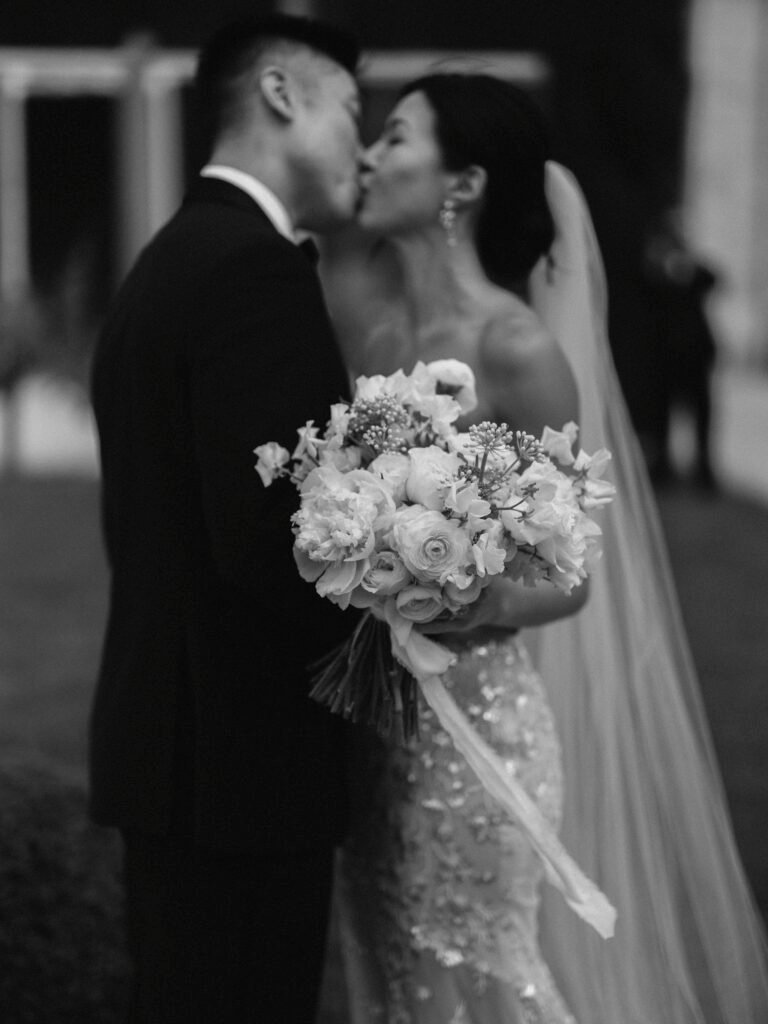
I walked into my first Haitian wedding with the same approach I’d use at a Parisian château. Compose carefully. Wait for the quiet moment. Let the emotion come to me. Within twenty minutes, I realized I needed to completely recalibrate. The emotion wasn’t coming to me, it was everywhere, all at once, moving faster than I could frame it. I’ve never pressed the shutter so many times in a single hour. And I’ve never felt more alive behind a camera.
Haitian celebrations taught me something fundamental about wedding photography that years of European weddings hadn’t: sometimes the best photographs happen when you stop trying to control the moment and let the moment carry you.
The energy that changes everything
I need to describe what a Haitian wedding feels like, because it directly impacts how I photograph it. Imagine a room where every single person is genuinely, vocally, physically joyful. Not polite joy. Not restrained appreciation. Full-body, singing, dancing, shouting celebration. The kind of energy that makes your sternum vibrate.
The music is central to this. Whether it’s kompa, racine, or zouk, the rhythm drives the celebration forward with an intensity that never plateaus. In a European wedding, there’s a build, quiet ceremony, gentle cocktail hour, gradual escalation through dinner to the party. Haitian celebrations start at a level that most European weddings reach at midnight, and they go up from there.
For a photographer, this means decisions are different. I can’t wait for « the moment » because every moment is the moment. I shoot wider than usual, the context matters as much as the couple. The guest who’s dancing with his eyes closed, the grandmother clapping from her chair, the children weaving through the dance floor, these aren’t background details. They are the story.
Colour as a visual language
European luxury weddings tend toward muted palettes. Ivory, champagne, dusty rose, sage. Beautiful, but quiet. Haitian weddings embrace colour with a confidence I find thrilling to photograph.
The guests arrive in outfits that would stop traffic in Paris, vivid blues, deep purples, bright yellows, patterns that mix geometric and floral with a boldness that fashion editorials try to manufacture. The table décor often follows suit: rich colours, metallic accents, flowers that prioritize impact over subtlety.
My Fujifilm GFX medium format system handles these saturated colours with the nuance they deserve. There’s a difference between « bright » and « accurate », cheaper sensors push everything toward neon, but the GFX preserves the actual colour temperature of the fabric, the true depth of the purple, the subtle gradation between gold and amber. In post-production, I lean into these colours rather than desaturating toward a European aesthetic. The images should feel like the celebration felt, alive.
The traditions I’ve learned to anticipate
Every culture has wedding moments that outsiders might miss. After photographing multiple Haitian celebrations, I’ve built an internal checklist of moments I know to look for.
The garter and bouquet traditions carry particular energy, they’re not the polite, slightly awkward affairs common at French weddings. They’re performances, complete with music changes, crowd reactions, and genuine competition among the participants. I always position myself wide for these, because the crowd reaction is half the photograph.
The late-night food service, whether it’s griot, pikliz, or a full midnight buffet, is a moment of communal joy that photographs beautifully if you’re still paying attention at 1am. Many photographers flag by this point. I don’t. Some of the most genuine, relaxed, unguarded images from any wedding happen in the final hours, and Haitian celebrations reward the photographer who stays.
And the speeches. Haitian wedding speeches are events in themselves, emotional, often bilingual (French and Creole), sometimes musical, always heartfelt. The speakers don’t hold back, and neither do the reactions. These are the moments I shoot with a long lens from across the room, catching the faces of people who’ve forgotten the camera exists.
What Haitian celebrations taught me about European weddings
Here’s something I didn’t expect. Photographing Haitian weddings made me a better photographer at European weddings. The experience shifted something in my eye.
Before, I approached luxury weddings with a certain reverence, careful compositions, measured timing, restrained editing. After experiencing the raw joy of Haitian celebrations, I started looking for that same energy at every wedding, even the quietest ones. It’s always there, somewhere. The father who tears up during the first dance. The friends who take over the dance floor at midnight. The couple who sneaks away for five minutes and just holds each other.
The difference is scale, not substance. A tear is a tear, whether it falls in a Parisian palace or a Port-au-Prince cathedral. My job is to find it and frame it, regardless of the setting.
Photographing Haitian weddings in France
Many of the Haitian weddings I photograph happen in France, couples from the Haitian diaspora who celebrate in the Paris region, often blending French venues with Haitian traditions. This combination is photographically extraordinary.
Imagine a 17th-century French château with kompa music shaking the walls. A bride in a classic European gown dancing with her father to a Haitian ballad. A cocktail hour with both champagne and Barbancourt rum. The visual contrast, classical French architecture filled with Caribbean colour and energy, creates images that belong in no single category. They’re something new.
These cross-cultural celebrations are among my favourite assignments, because they challenge me to hold two visual languages in one story. The composed elegance of the French setting and the vibrant spontaneity of Haitian celebration. When both coexist in a single frame, the result is something genuinely powerful.
For couples planning a Haitian celebration
Whether your celebration happens in France, in Haiti, or anywhere in between, I bring both technical excellence and genuine cultural appreciation. I know the traditions, I respect the rituals, and I’ve learned to match my pace to the energy of your celebration rather than asking the celebration to slow down for my camera.
If you’re looking for a photographer who understands that wedding photography isn’t one aesthetic fits all, who can shoot the quiet first look with the same conviction as a midnight dance floor, I’d love to hear your story.
Let’s talk about your celebration
Photography: Franklyn K Photography
Style: Editorial-documentary
Destinations: France · Caribbean · Worldwide
Published in: Vogue · Brides · Wedding Sparrow · Carats & Cake