An annual field report from Paris
By Franklyn K · First published June 2026 · Last updated June 2026
I write this from my studio in the 11th arrondissement, after a season of conversations I did not expect to have. The luxury wedding industry I photographed in 2022 is not the industry I photographed in 2024, and the industry I am photographing in 2026 has shifted further still. The changes are not surface-level. They are structural.
What follows is a field report, not a trends piece. I do not pull from press releases or industry surveys. I pull from the planners I talk to weekly, the couples who reach out for 2026 and 2027, and the venues that have been my second home since I left cybersecurity for photography in 2018. Five movements have become impossible to ignore. I document them here, and I will return to this page each quarter to add what the next season teaches me.
This is meant to be useful. To couples planning a wedding in 2027. To planners building their books. To photographers, florists, and designers wondering if what they see on the ground is what others see too. It is.
Five luxury wedding industry shifts shaping 2026 and 2027
Shift 1: The collapse of planning timelines
The first thing I noticed was the calendar.
For years, the rhythm of a luxury wedding booking was steady. A couple reached out twelve to eighteen months before their date. Sometimes two years. Three for the most organized. There was time to talk, time to plan, time to visit the venue twice before the day. That rhythm has broken.
In a four-week window at the end of April 2026, five couples or planners contacted me about weddings between July and October of the same year. Three to five months of runway for events that, in another era, would have been booked the previous summer. None of these couples were budget-constrained. They simply did not see the point of waiting eighteen months to make a decision they could make now.
I have been thinking about why. Three forces seem to converge.
The first is post-Covid muscle memory. Couples who watched friends postpone their weddings two, three, four times between 2020 and 2022 absorbed a lesson the industry has not fully metabolized: planning far in advance is not safer, it is riskier. The further out you book, the more variables can shift. Better to decide quickly and execute, the thinking goes, than to invest eighteen months of emotional energy into a date you cannot guarantee.
The second is decision fatigue. The same Pinterest abundance that was supposed to liberate couples has paralyzed many of them. I have spoken with brides who stopped looking at inspiration boards entirely because the volume of options had become unbearable. Compressing the planning window is, for them, a survival strategy.
The third is a personality type I have seen emerge clearly in the last two years. I think of them as the go-with-the-flow couples. They are not less sophisticated than the eighteen-month planners, and they are often equally well-resourced. They are simply allergic to the perfectionism that drove an earlier generation of luxury weddings. They want their day to be beautiful and meaningful and, above all, joyful. They are not going to spend six months choosing between two shades of napkin.
For photographers, this shift creates a counterintuitive truth. Open dates in peak months are no longer a sign of weakness. They are a commercial lever. The couple booking a Loire Valley château eight months out is often paying more attention to fit than to price, because she does not have time to compare ten portfolios. She has time to compare three. If you are one of those three, you are in a much better position than you would have been competing for the same booking eighteen months earlier.
The implication for my own process has been concrete. I have shortened my response times, simplified my proposals, and stopped pretending that a four-step sales tunnel makes me look professional. It made me look slow. The couples who contact me in April for an October wedding need clarity within forty-eight hours. They will get it.
This luxury wedding industry shift has not eliminated long-horizon planners. They still exist, and the conversations with them are often deeper. But the one-size-fits-all assumption that every couple wants twelve months of pre-wedding choreography is gone.
Shift 2: Pinterest is no longer the brief

The second change is harder to describe but more profound.
For most of my career, the first conversation with a couple involved a Pinterest board. A planner would forward a link, and I would scroll through 150 images of rooftop ceremonies in Marrakech, Italian olive groves, and minimalist Tuscan villas. The board was the brief. My job was to translate it into photographs that lived up to the moodboard.
That conversation has changed. The couples I work with in 2026 are not building their wedding from Pinterest. They are building it from their own life.
Last month, a bride described her vision for me without showing me a single image. She told me about a restaurant in the 6th arrondissement where she and her partner had their second date. She remembered the wallpaper, the way the light hit a copper bar at six in the evening, the smell of the bread basket. She wanted her wedding to feel like that room felt. She did not want me to recreate the room. She wanted me to understand the feeling, so I could photograph it without thinking about it.
This is a different conversation. The brief is no longer visual. It is sensory and biographical. The locations of first dates, the texture of a tablecloth at an anniversary dinner, the perfume of a hotel where they spent a difficult weekend and came out stronger. These are now the seed material for design choices that, on the surface, look similar to what Pinterest produced. But the intent underneath is different, and the difference is felt by everyone in the room.
The implication for the people who design weddings is enormous. A florist is no longer asked to produce roses-and-eucalyptus because that was the moodboard. She is asked to produce something that evokes a specific dinner in Lyon in 2019. A planner is no longer optimizing toward an aesthetic. She is translating a relationship into space and time.
For photographers, this is the most exciting shift I have seen in a decade. When the design of a wedding is built from a couple’s actual life, every wedding becomes visually distinct. The portfolio risk that haunted me five years ago, the fear that all my Italian weddings would start to look the same, has dissolved. They do not look the same anymore, because the couples are not aiming at the same image. They are aiming at their own image, and there is exactly one of those for each couple.
I have started asking different questions in my consultations. Where was your first weekend together. What hotel changed how you thought about hospitality. What restaurant do you still go to when you need to feel like yourselves. The answers are more useful to me than any moodboard ever was.
Shift 3: The one-day wedding is becoming the exception
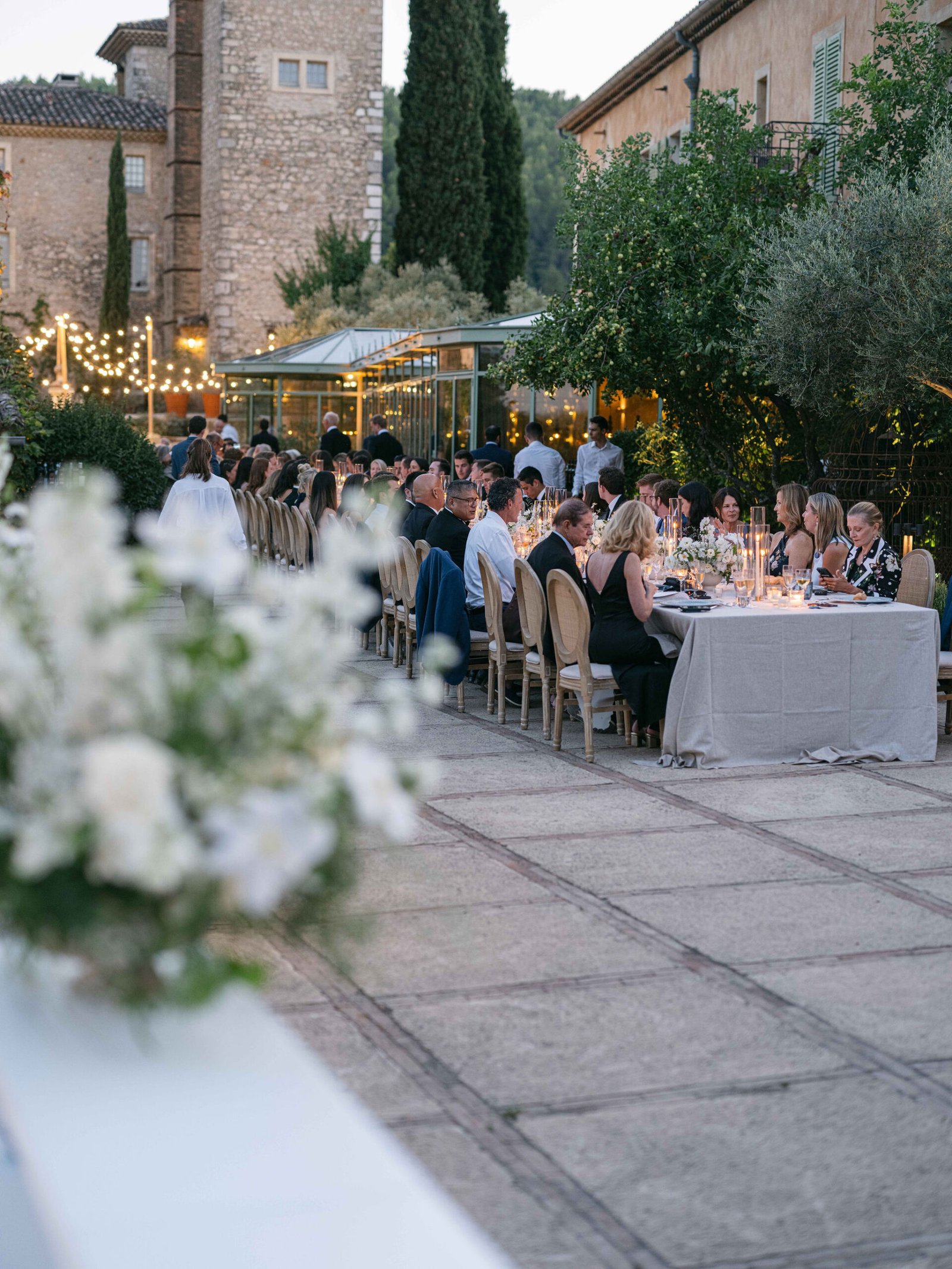
Wedding-as-event has been replaced by wedding-as-weekend. Sometimes wedding-as-four-days. This is not anymore reserved for the budgets that exceed seven figures. Couples with budgets between 150 and 250 thousand euros now routinely structure their celebrations across three to four days.
The economics of this shift are interesting. A couple who, in 2022, would have invited 150 guests to a single grand evening in Provence now often makes a different calculation. They reduce the guest list to 80 or 90 people. They keep the budget the same. They spread the budget across multiple intentional events.
Day one becomes a welcome dinner for thirty to fifty close family and friends. Day two might be a vineyard visit, a bateau-mouche aperitif, or a brunch in a private room of a restaurant the couple loves. Day three is the wedding itself. Day four is a closing brunch that recovers gracefully from the night before.
Each of these moments does not require a monumental floral installation or a fully designed scenography. What they require is intention. The right room. A menu that means something. A rhythm that lets eighty guests actually know each other by the time the ceremony begins.
The luxury market with budgets above five hundred thousand has gone further. The grand spectacle has not disappeared, but it has been distributed. Each day has its own designer, its own florist, its own ambiance. The welcome dinner is no longer the small event that precedes the main event. It is its own wedding-quality evening.
I think the cultural reason is simple. Couples have realized that the best memories of a wedding rarely come from the ninety-minute window of the ceremony itself. They come from the breakfast at the pool the morning before. The unplanned aperitif on a terrace. The minibus ride to the venue with the bridal party. When you spread the celebration across four days, you increase the surface area of those small moments by a factor of eight. The math favors the multi-day model.
For my work, the implication has been concrete and quantitative. Contracts that were one day are now two or three. Coverage that was eight hours is now thirty hours over a long weekend. The post-production volume has doubled. The endurance required, both physical and creative, has become a real selection criterion. Couples ask, can you still photograph well at hour twenty-six. The answer matters.
The pricing question follows naturally. A multi-day wedding is not three times a one-day wedding in cost, but it is also not the same wedding extended. It is a different product. I have rebuilt my proposals to reflect this, and I have stopped quoting hourly. Hours are the wrong unit when you are documenting a four-day arc.
For planners, the logistical complexity has become hotel-grade in earnest. The communication with eighty guests across four venues over four days is closer to running a small cruise than to running an event. The planners who have adapted are thriving. The ones who have not are quietly losing accounts.
Shift 4: Soft light replaces true-to-light at the top of the market
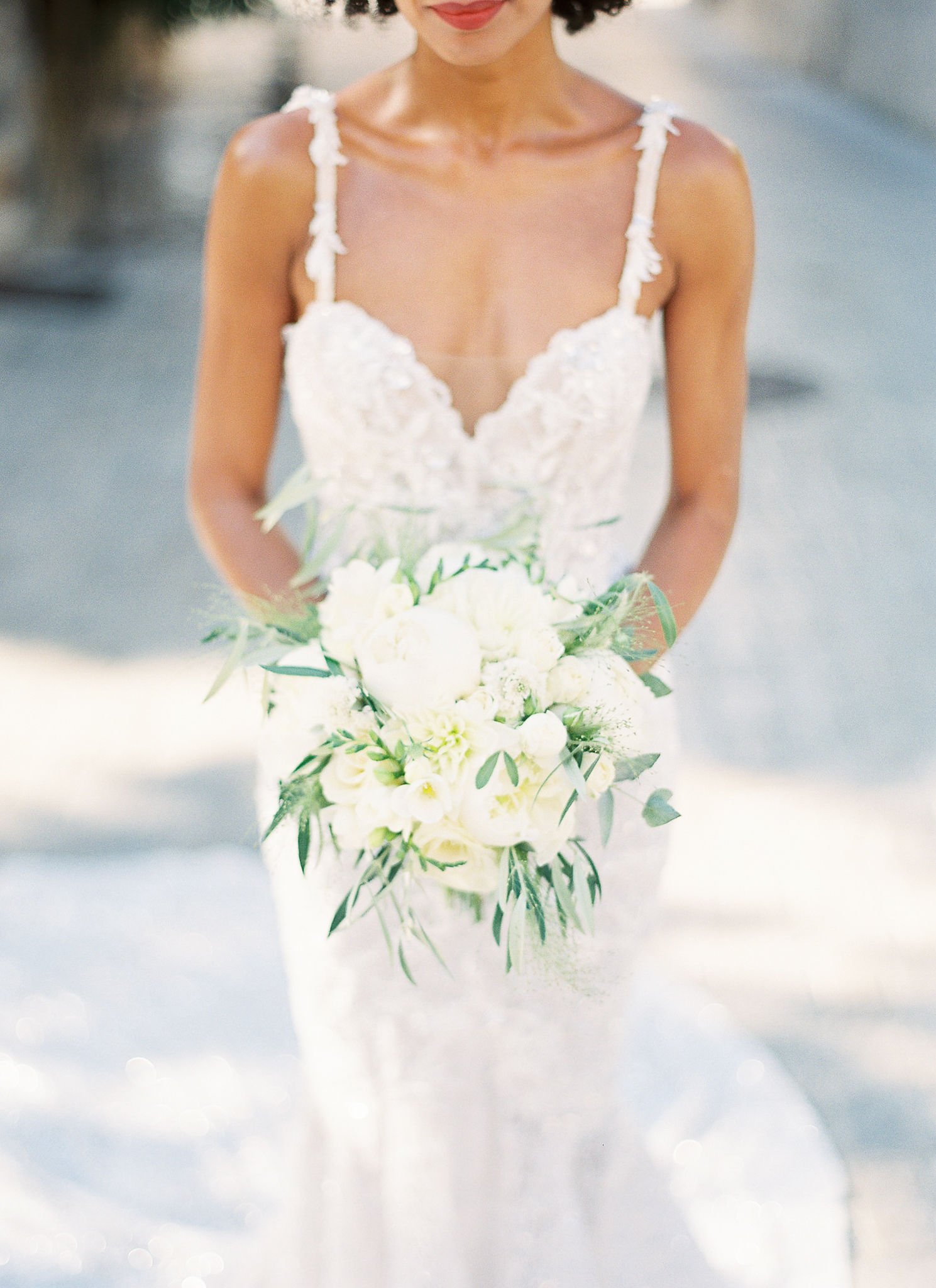
This shift is technical, but it tells a larger story about where the luxury market is moving.
For most of the 2020s, the dominant aesthetic among photographers charging twenty-five thousand or more per wedding was what the industry calls true-to-light. Faithful color rendering. Honest exposure. Crisp contrast. The image you delivered looked like the room felt, with no significant deviation from what an attentive observer would have seen with their own eyes.
This is changing. The photographers at the top of the luxury market are deliberately moving away from technical fidelity and toward something more interpretive.
The signs are specific. Highlights are being deliberately compressed. The brightest parts of an image, where a true-to-light treatment would preserve luminous whites, are being softened, almost matted. Contrast is being reduced in selective zones, creating images that look flatter on a histogram but feel softer to the eye. The overall rendering tilts toward something that recalls oil painting or overexposed seventies film, rendered with modern technical mastery.
Eric McVeigh and his Good Light preset series are often cited as a catalyst, but the movement is broader than one influence. It is a market-wide pivot from photographic accuracy to photographic interpretation. From documenting what was there to suggesting what it felt like to be there.
This matters because of what it signals about the luxury market itself. When the most expensive photographers in the world deliberately walk away from technical correctness in favor of authorial vision, they are saying something specific. They are saying that the buyers at the top of this market no longer want a perfect image of their wedding. They want a photographer’s interpretation of their wedding. The wedding is the raw material. The image is the artwork.
The risk is real. A softer rendering will not appeal to every couple. Clients accustomed to bright, sharp, optically precise photography may find the new aesthetic flat or muddy. Photographers who adopt it are positioning themselves to attract a specific kind of buyer and to lose another kind. That is a deliberate trade-off, and the photographers making it are doing so consciously.
I have been thinking about whether this is a permanent shift or a cycle. I suspect it is a cycle. The VSCO film aesthetic of 2012 to 2016, with its faded blacks and green-shifted shadows, eventually saturated the market and triggered the true-to-light reaction. The current soft-light movement is the next iteration, and it will likely run for three to five years before the industry tires of it and reaches for whatever the opposite is. Probably something more saturated, more contrasty, more cinematic.
What stays is the lesson. The luxury market does not pay for perfection. It pays for vision. A photographer with an identifiable point of view, even a polarizing one, is more valuable than a photographer who can do everything competently. The middle is where the market is hardest, and the middle is where the technical-perfectionist photographer often gets stranded.
Shift 5: Monochrome and architecture replace flowers
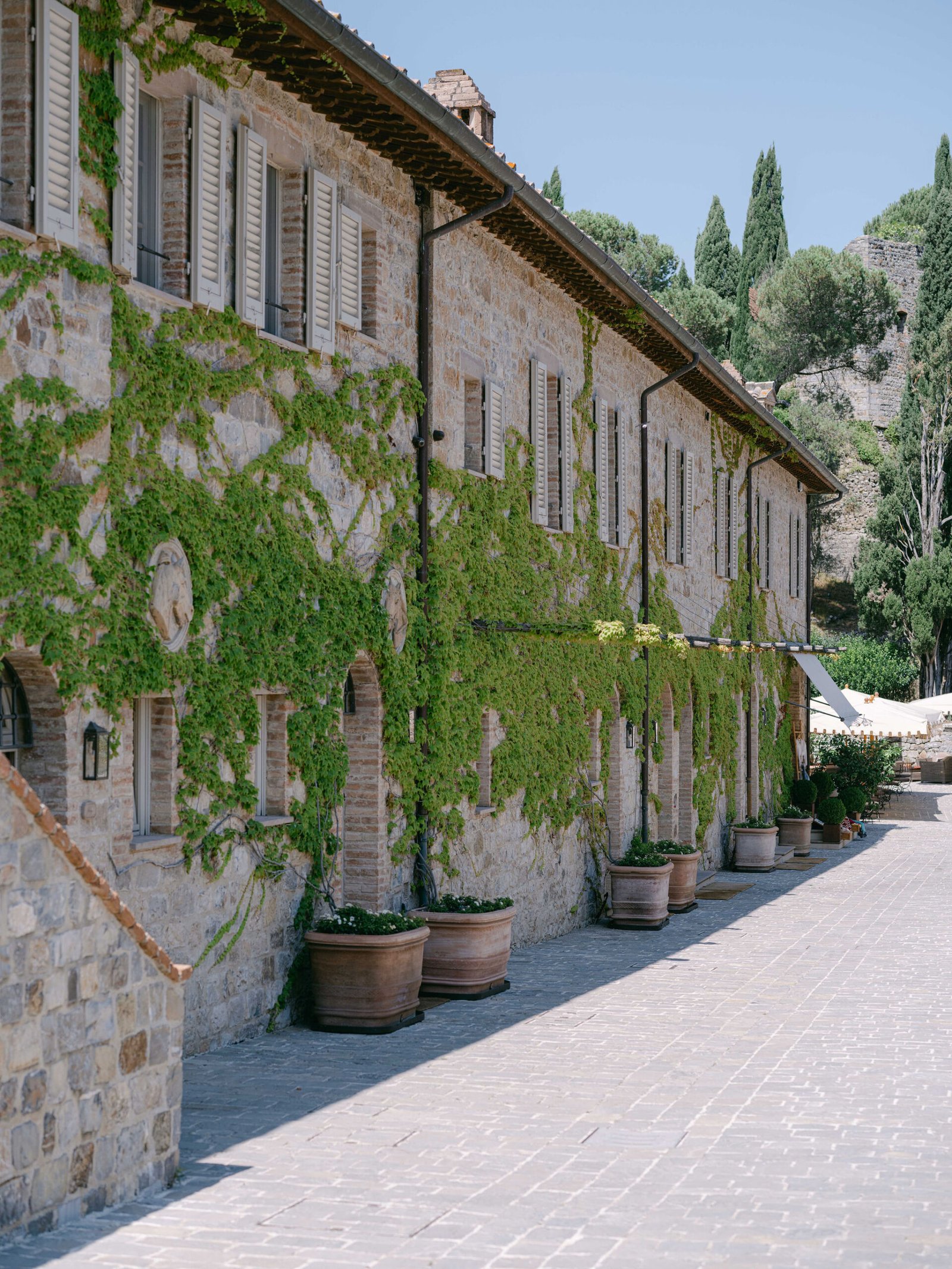
The fifth shift is design-driven, and it has been quietly building for two years.
The first half is about color. Couples are no longer choosing palettes built around three or four complementary hues. They are choosing one color, sometimes two, and exploring its full range in texture and saturation. A wedding entirely in off-white, with fifteen distinct fabrics and surfaces from linen to silk to plaster to bleached wood. A wedding entirely in terracotta, from peach through brick through deep rust, with copper metallics threading through. A wedding entirely in green, from moss to sage to forest to olive, with translucent and opaque variations carrying the design.
Monochrome forces the eye to attend to texture instead of color. A single-color wedding with extensive textural variation is visually richer than a four-color wedding with smooth surfaces throughout. It is design that rewards attention.
The connection to the second shift, inspiration from lived experience, is direct. When the brief comes from a hotel weekend in Kyoto, the palette is naturally restrained. When it comes from a palazzo dinner in Venice, the tones are ochre and gold. Real places are rarely multicolored. Inspiration from real places naturally produces monochromatic design.
The second half is about structure. The monumental floral installations that defined luxury weddings for the last decade, the flower walls and suspended cascades and three-meter peony arches, are giving ground to architectural and structural elements.
What replaces them is concrete. Wood, metal, and stone ceremony structures. Sculpted aisles and raised platforms. Architectural bar elements with marble counters and metal frames. Lighting installations that act as structure, not as decoration. Curves and arcs and frames that define ceremony and reception spaces without using a single flower. Floor treatments, rugs, sand, gravel, that participate in the design rather than disappear under it.
Several forces drive this. The cost of large-scale floral work is one. Monumental installations now run between thirty and one hundred and fifty thousand euros for a luxury wedding, and the impact-per-euro is harder to justify than it was three years ago. Sustainability is another. Couples sensitive to environmental questions struggle with the optics of investments that compost the next morning.
But I think the photographic dimension is underappreciated. Architectural elements photograph differently from flowers. Lines guide the eye. Curves create movement. Shadows fall predictably and create depth. A well-designed structural ceremony space gives me composition tools that a flower wall never did. The flower wall flattens. The architecture sculpts.
For the photographers who came up shooting flower-driven weddings, the adjustment is real. Architectural elements demand a different attention. The interplay of natural light with metal, wood, and stone is more technically demanding than the interplay with petals. But the resulting images, in my experience over the last twenty months, are stronger.
The thread that runs through all five
These five luxury wedding industry shifts are not independent. Read together, they tell one story.
The luxury wedding industry is migrating from performance to authenticity.
Performance, in this context, means showing the world that your wedding was perfect, expensive, and visually flawless. It is the wedding as Instagram product. It is the moodboard executed.
Authenticity means showing the world that your wedding looked like you, felt meaningful, and that the people who attended actually experienced something. It is the wedding as biography.
Compressed planning timelines come from couples who refuse to spend eighteen months staging a performance. Inspiration from lived experience replaces the performed image. Multi-day formats prioritize collective experience over single-event spectacle. Soft-light aesthetics value emotional truth over technical exactness. Monochrome and architecture value texture and intention over profusion.
Five luxury wedding industry movements, one direction.
The luxury wedding industry vendor who will win in 2027 is not the one who reproduces a Pinterest board most faithfully. It is the one who can listen to a story, translate it into images or design or food or music, and do so with the sensibility of an author rather than the execution of a technician.
Working in the luxury wedding industry on this kind of personalization costs more, naturally. Personalization built around a couple’s biography requires more consultation hours, more thought, more adaptation than reproducing a stock aesthetic. It is creation, not duplication. The vendors who invest that time can charge for it. And the couples seeking that personalization are willing to pay, provided they understand what they are paying for.
That last point is important. The transparency of the contract, the clarity of what is included and why, has become as important as the work itself. Couples paying premium rates want to know that the premium reflects creative investment, not arbitrary markup. The vendors who explain their work win. The vendors who hide behind opaque pricing lose.
What this means for couples planning a wedding in 2027
If you are reading this as a couple, three things matter.
The first is that you do not need to start eighteen months in advance to find the vendors you want. Most luxury vendors have open dates closer to the season than you might expect. Booking quickly often gets you a more focused conversation than booking far ahead.
The second is that your story is your brief. The most useful preparation you can do is not a Pinterest board. It is a list of the places, dinners, weekends, and rooms that have meant something to you as a couple. Your planner and your photographer can do more with that list than with a thousand pinned images.
The third is that the multi-day model is worth considering even if it sounds expensive. Distributing your budget across three or four intentional days produces more memorable experiences than concentrating everything into one evening. The cost difference is smaller than couples assume, and the return on memory is significantly higher.
What this means for the industry
If you work in the luxury wedding industry as a planner, florist, designer, or photographer, the work has changed.
The luxury wedding industry deliverable is still beautiful images, beautiful design, beautiful events. But the input has changed. You are no longer reproducing aesthetics. You are translating biographies. The skills that made a vendor successful in 2018, which were execution and consistency, are no longer enough. The skills that matter in 2027 are listening, interpretation, and authorial confidence.
Vendors who invest in becoming better listeners, better interpreters, better translators of personal story into physical experience, will move up the market. Vendors who continue to execute against generic briefs will compete on price, and price competition at the bottom of the market is brutal.
This is the most encouraging shift I have seen in my decade in the luxury wedding industry. It rewards creative depth instead of operational scale. It rewards the working photographer who knows how to read a couple over the studio that ships consistent product. It rewards the small planner with strong taste over the agency with a hundred accounts.
I will return to this report each quarter to update what the next season teaches me. The luxury wedding industry shifts described here are not predictions. They are observations from a vantage point on the luxury wedding industry that includes a Vogue feature, a Brides editorial archive eighteen entries deep, a Wezoree Top 20 listing for France in 2026, and weddings shot on medium format across France, Italy, the UK, and beyond.
If something in this report resonates, or if your experience contradicts mine, I would like to hear about it. Field reports get better when they are challenged.
This is a living document. The next update is scheduled for September 2026, after the summer wedding season closes. Subsequent updates: December 2026 (year-end reflection), March 2027 (the 2027 booking wave), and June 2027 (annual revision).
Franklyn K is a luxury destination wedding photographer based in Paris. His work has been published in Vogue, Brides, Martha Stewart Weddings, Wedding Sparrow, and Carats & Cake. He was named in Wezoree’s Top 20 Wedding Photographers in France for 2026.