The Bride’s Questions, No. 1. A series answering, in plain words, the questions brides ask before they book.
Short answer: a multi-day Indian wedding in Europe is photographed as one story told over several chapters. The photographer learns each ritual in advance, works with a second photographer so no moment is missed when two things happen at once, and builds the coverage around the haldi, mehndi, baraat, ceremony and reception rather than around a number of hours.
What does a photographer cover on each day of an Indian wedding?
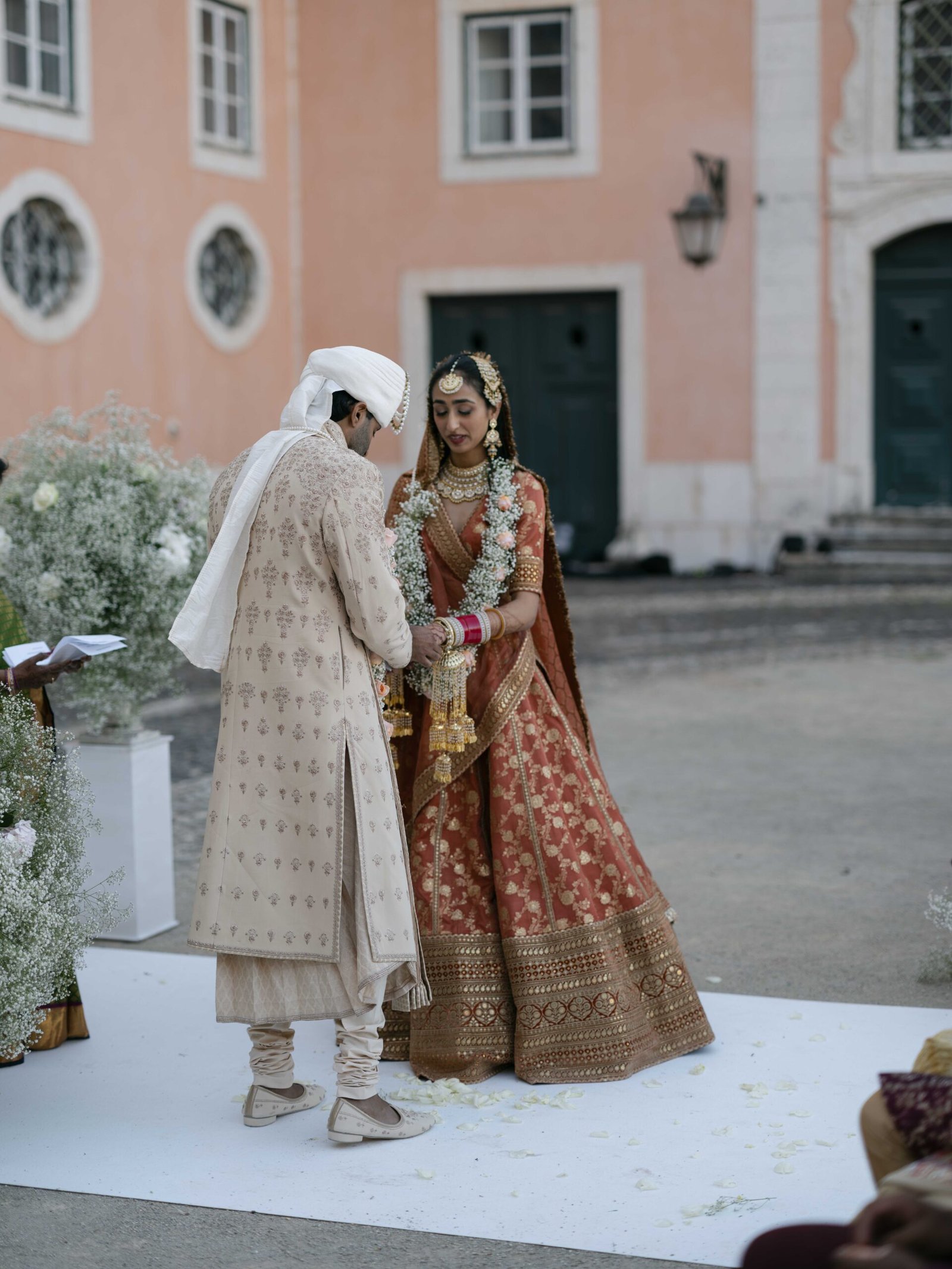
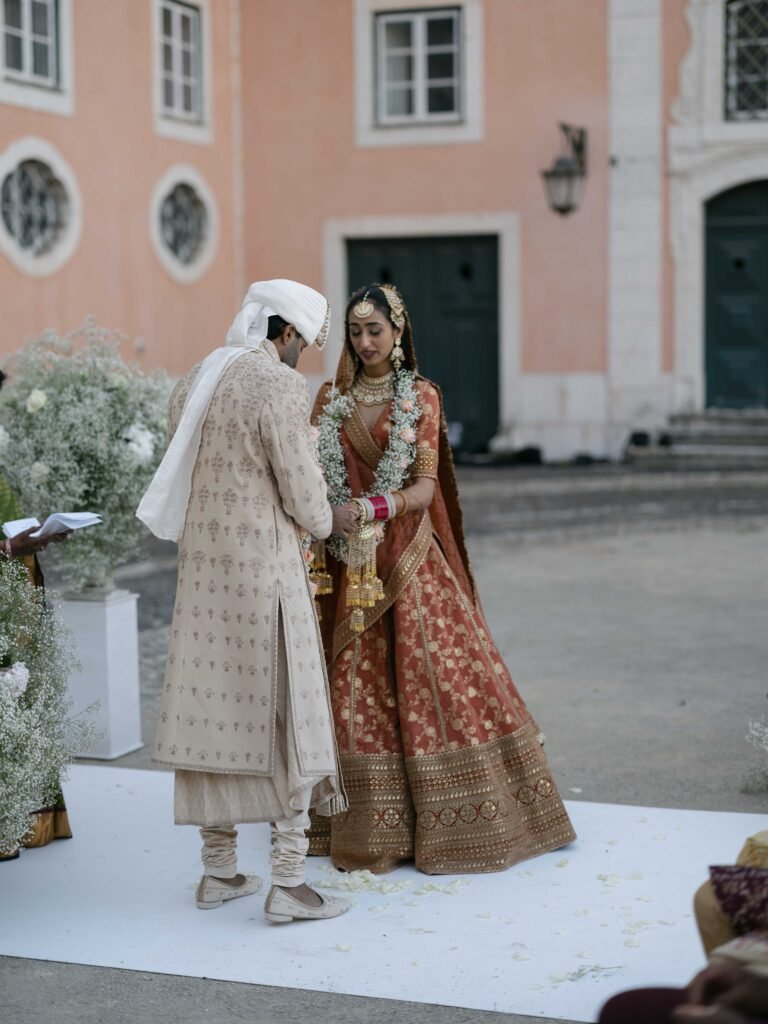
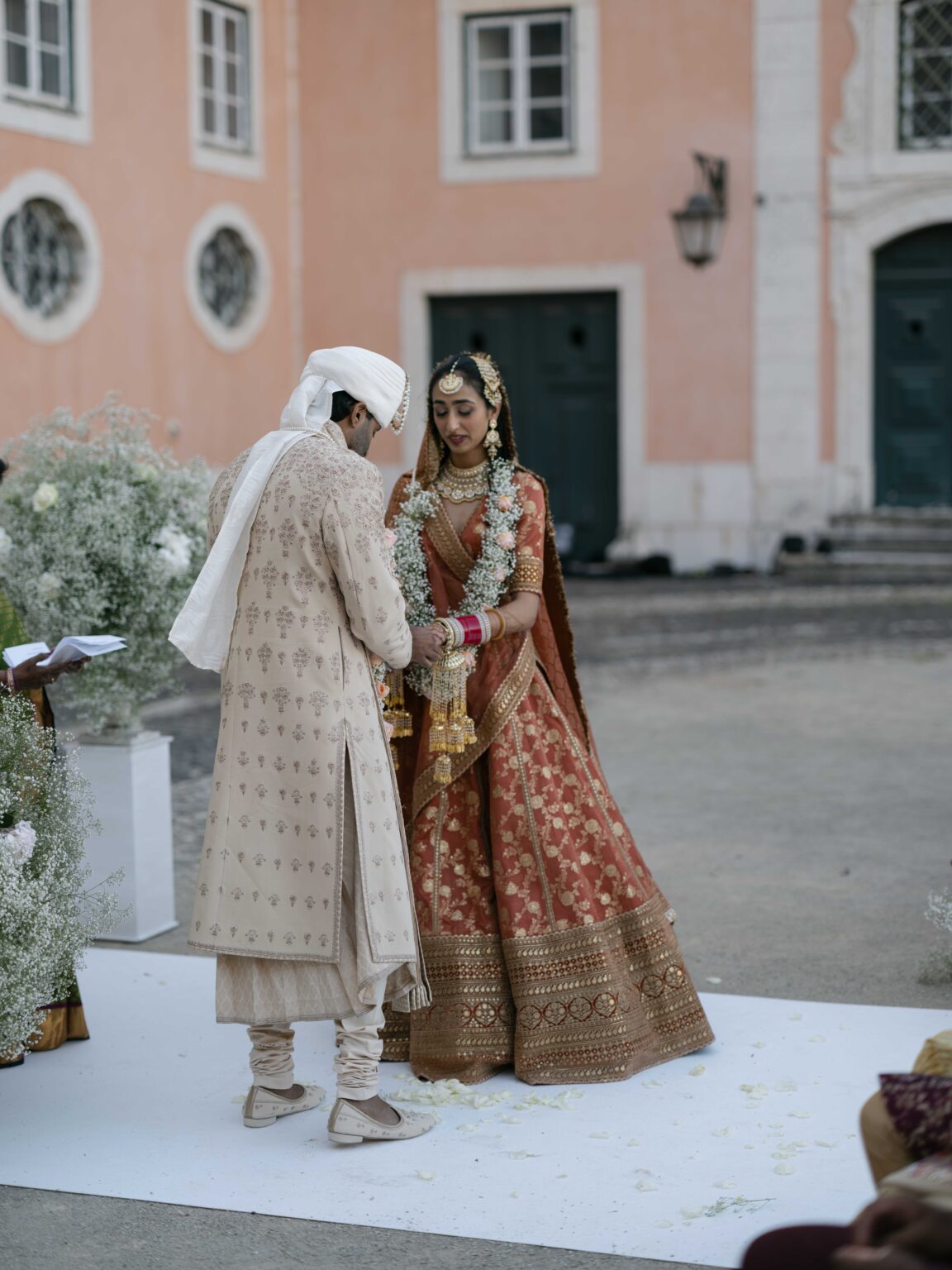
Every family celebrates differently, so the first thing I ask is which rituals you are keeping and in what order. For the Indian wedding I photographed in Lisbon, the celebration unfolded like this:
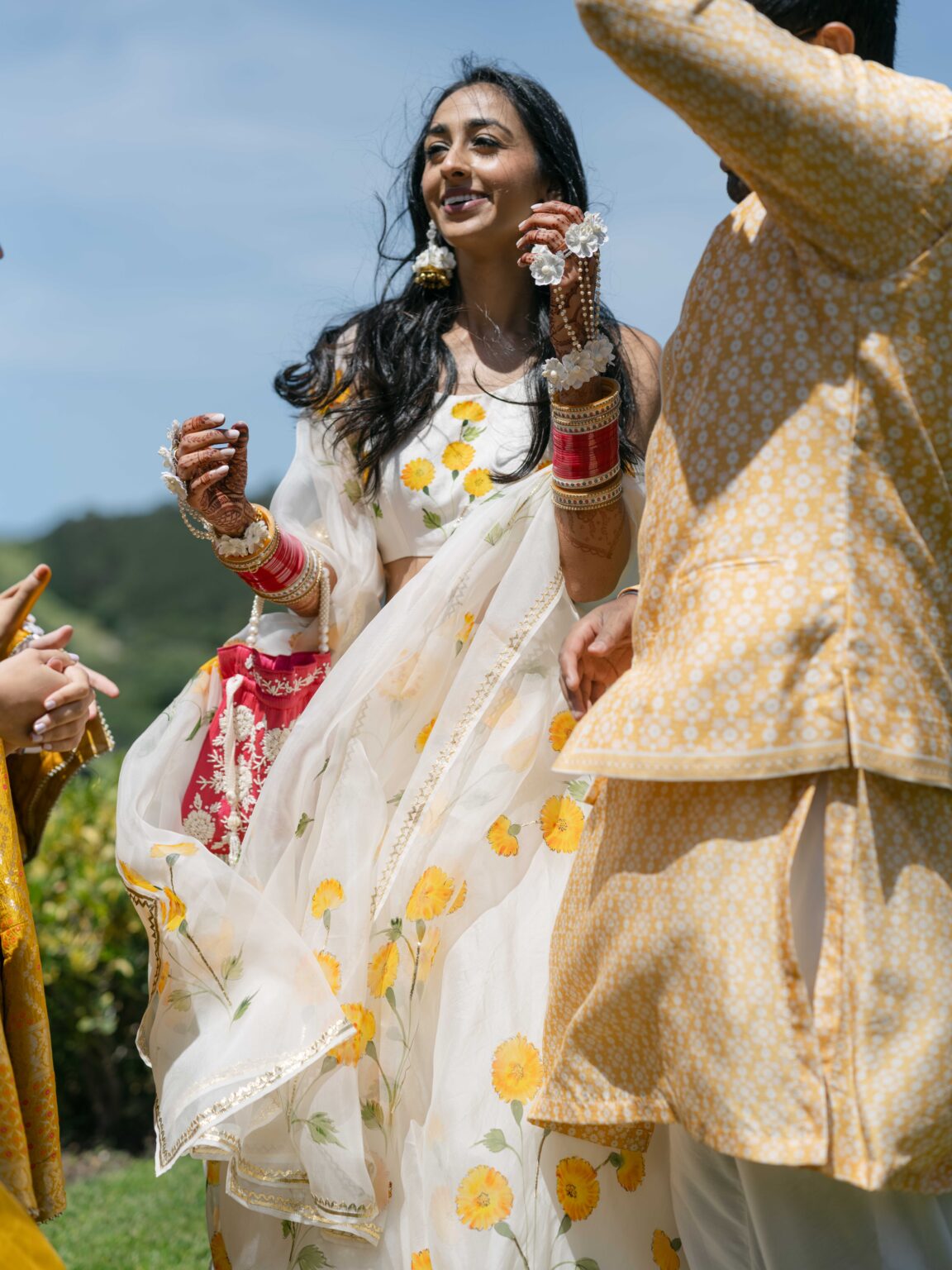
- Haldi: turmeric, laughter and family in full daylight. The photographs here are about faces and colour, often very close.
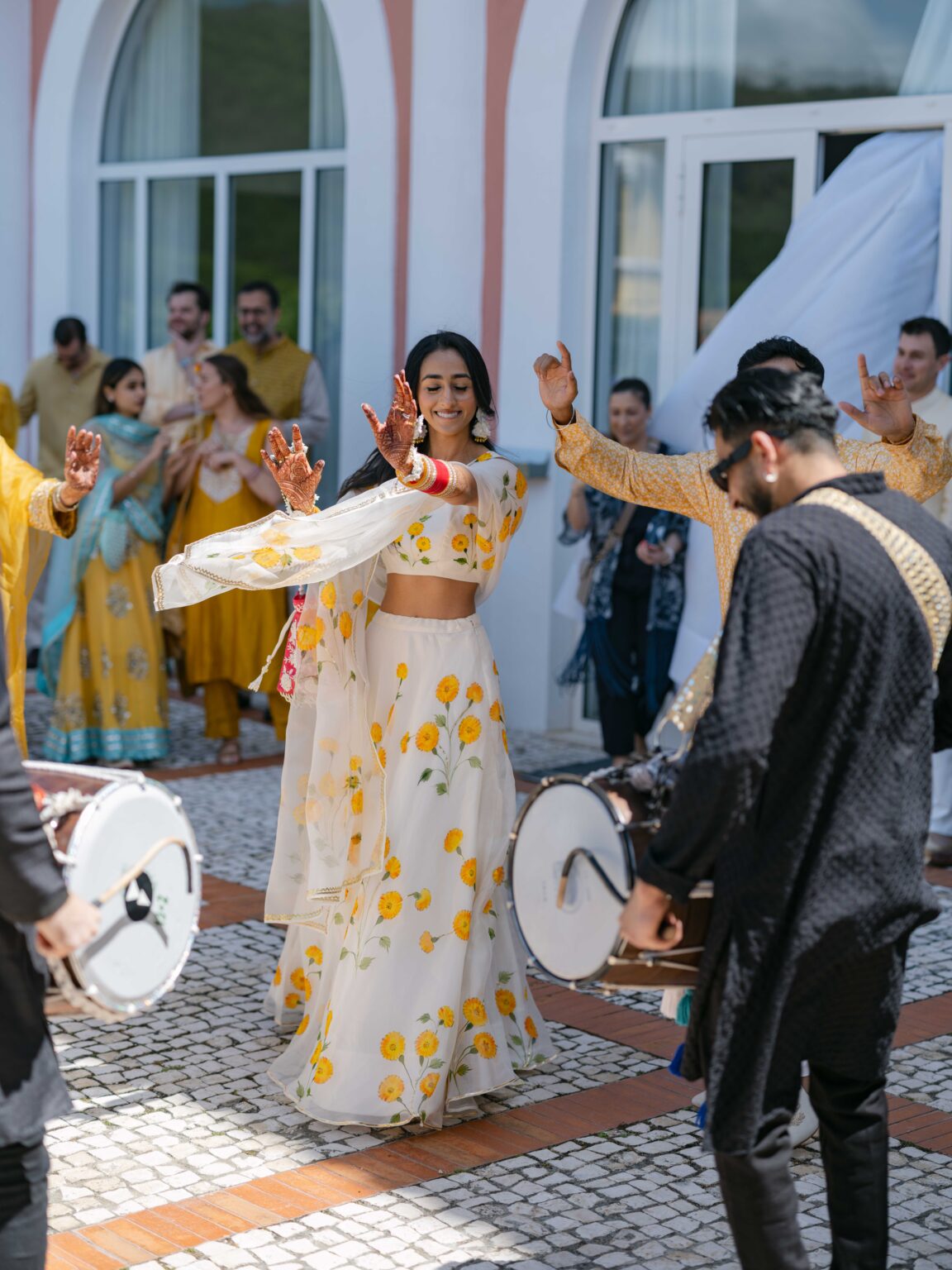
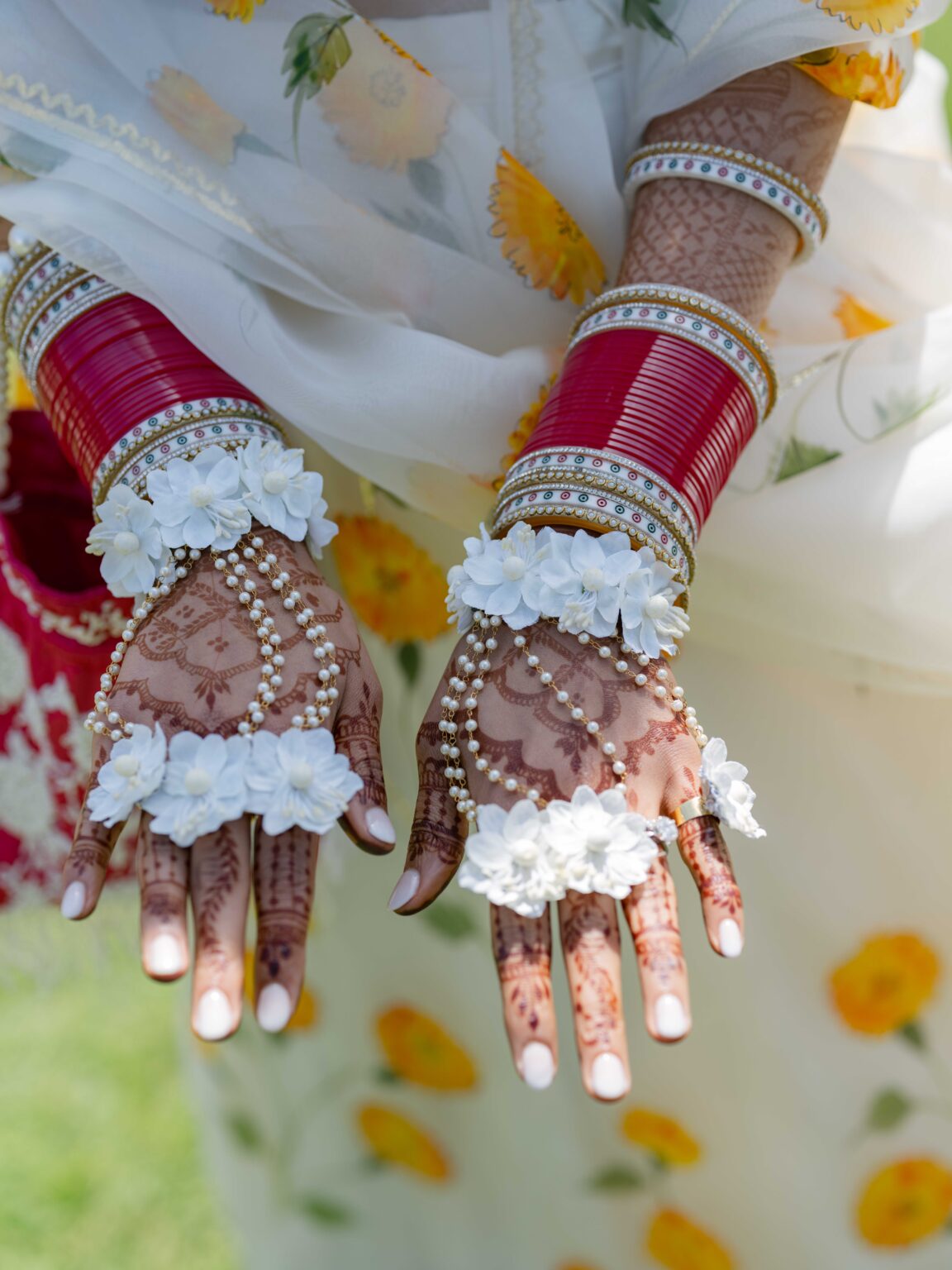
- Mehndi: henna, music and dancing. The details matter as much as the dancing: the bride’s hands, the bangles, the flowers.
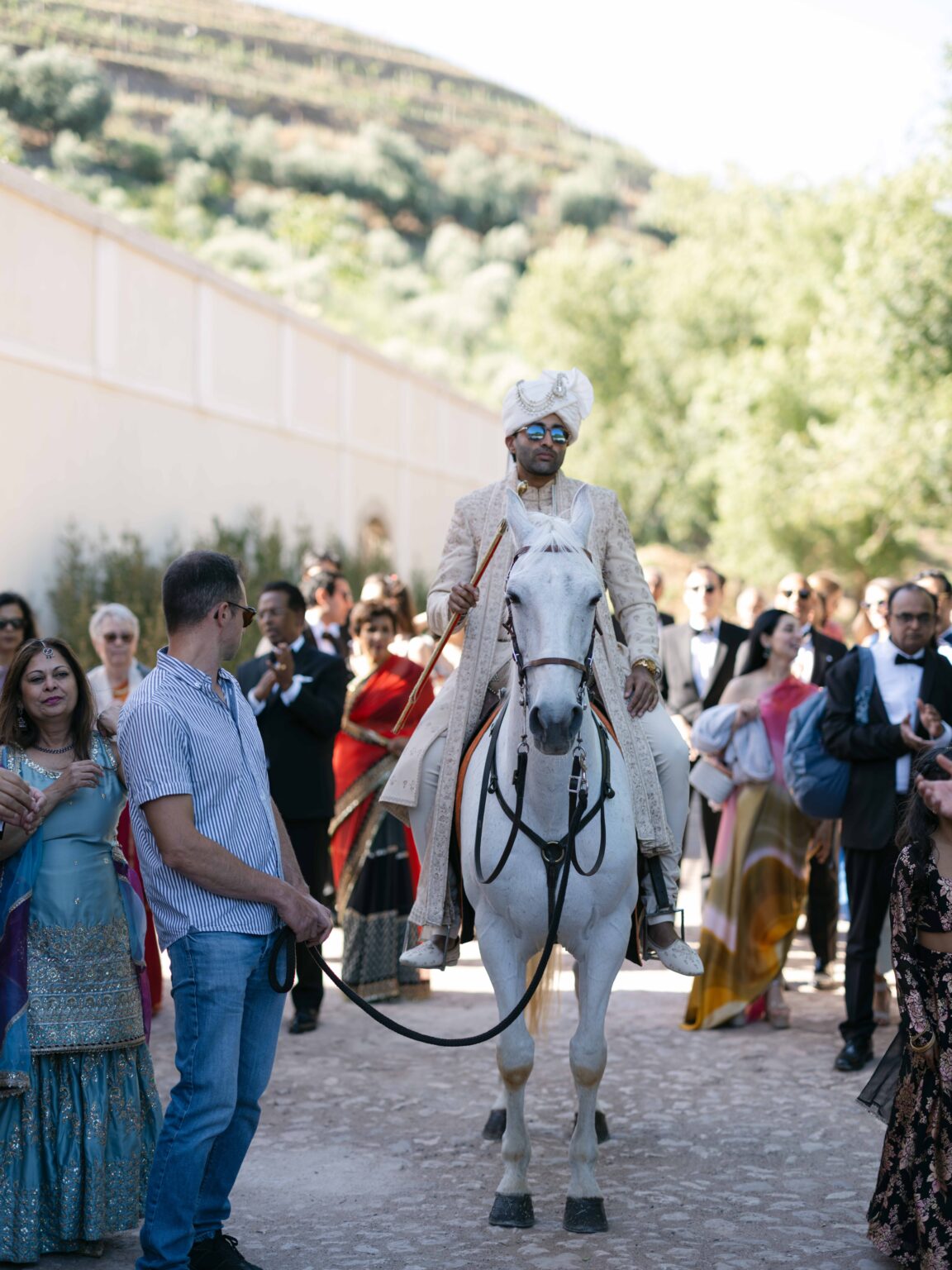
- Baraat: the groom’s arrival, often on a white horse, surrounded by friends and drums. It moves fast and it is loud, so I position myself ahead of the procession.
- Ceremony: the jaimala, the rituals around the fire and the family blessings. This is where I work most quietly.
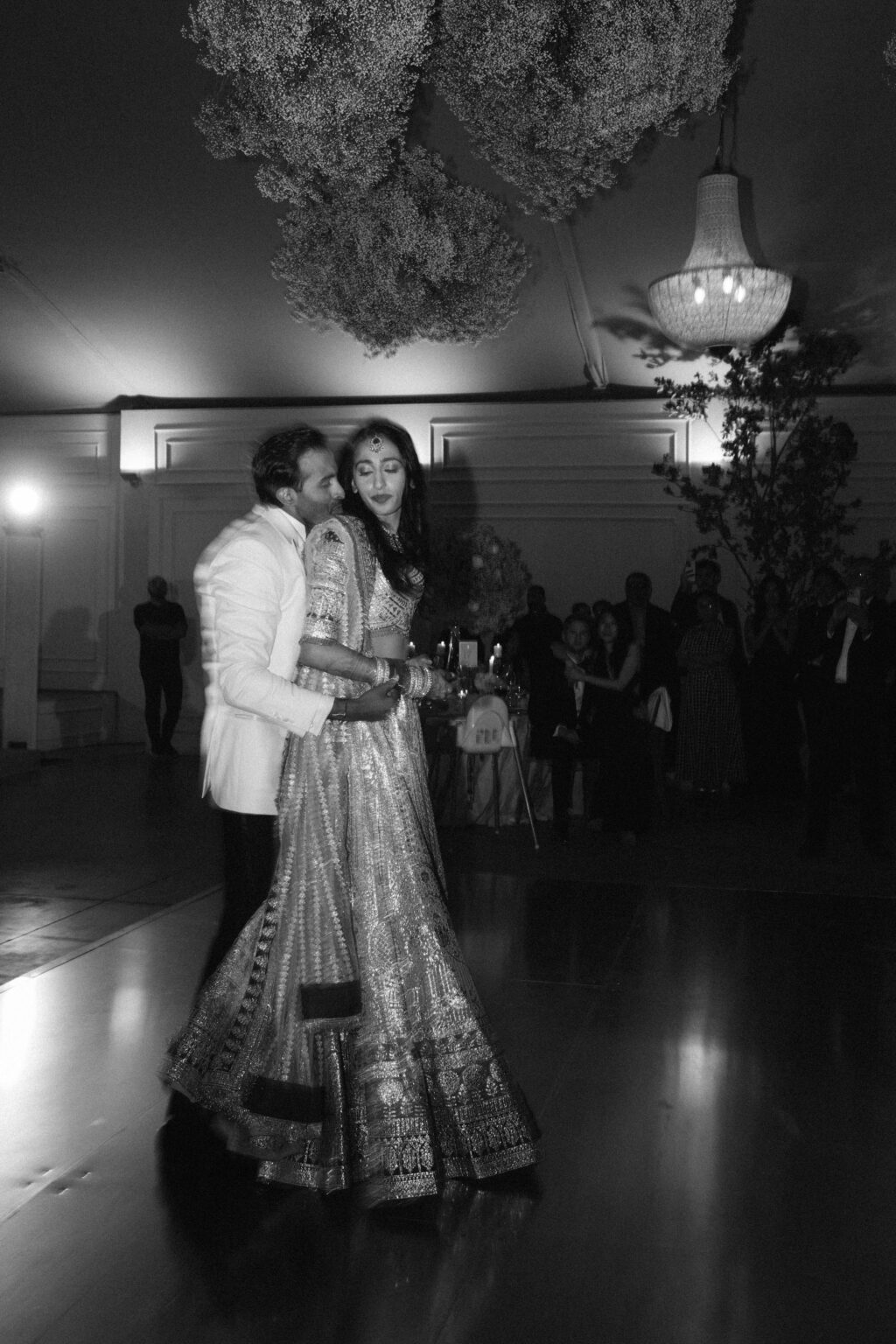
- Reception: toasts, the first dance and the evening light.
Do we need two photographers for a multi-day Indian wedding?
Yes. I never cover a wedding alone, and it matters most at an Indian wedding. The bride and groom often get ready in different places at the same time, the baraat starts while the bride is still with her family, and two family traditions can unfold close together. A second photographer means both sides of the family receive the same coverage and the same care, and nobody has to choose which moment to miss.
How should we plan the photography timeline across several days?
Plan around the rituals and the light, not around the clock. A few principles I share with every couple and their planner:
- Place the haldi in the morning or early afternoon: the colours are brightest in daylight.
- Give the baraat a clear start time and a route. It is the hardest moment to photograph if it starts early or changes direction.
- Keep twenty to thirty minutes for portraits of the two of you on each day, ideally in the hour before sunset.
- Share the full schedule of every event with the photographer and the planner at the same time, so the two timelines never overlap.
Which European cities work well for an Indian wedding?
The best cities give you very different settings within a short drive, so each day of the celebration has its own atmosphere. Lisbon is a strong example: a palace with painted ceilings for the ceremony, a pink manor house and its gardens, olive groves above the coast and the Atlantic at blue hour. In France, châteaux around Paris and in Provence offer the same range, with formal gardens for the ceremony and wide lawns for the reception.
What should the bride plan for her looks?
Most brides wear a different outfit for each event, and that variety is one of the joys of the gallery. Two practical points: tell your photographer which colours you will wear on which day, because a rust or red lehenga and a pale floral one call for different light, and keep your jewelry and kaleere aside for a few minutes before you dress, so they can be photographed on their own.
How many photographs do we receive, and when?
Across a multi-day celebration, expect 1,200 to 1,600 edited images. A sneak peek reaches you within 48 hours, and your full gallery within six weeks.
In short
- Choose a photographer who learns your rituals before the wedding, not on the day.
- Insist on two photographers for a multi-day Indian wedding.
- Plan coverage around the haldi, mehndi, baraat, ceremony and reception, and around the light.
- Keep a few minutes of portraits for the two of you on every day.
See the full Indian wedding in Lisbon gallery, read the 12 questions to ask your wedding photographer, or tell me about your celebration.