As a Paris wedding photographer, there’s something about this city that resists description. I’ve tried, in conversations with couples, in late-night editing sessions, in the quiet moments between ceremony and reception when the light hits the Seine just right. But the city always stays one step ahead of the words.
I’ve been photographing weddings here for years now. My studio is a short drive from the city centre, and yet every time I cross the Périphérique with my Fujifilm bag on my shoulder, Paris finds a way to surprise me. A reflection I’ve never noticed. A staircase that catches the afternoon light differently in October than it did in June. A couple who laughs at exactly the moment I wasn’t expecting.
That’s what I want to talk about here. Not a sales pitch. Not a list of « top 10 reasons » to get married in Paris. Just what I’ve actually experienced behind the lens: the venues that move me, the moments that stay with me, and the honest truth about what it takes to photograph a wedding in this city.
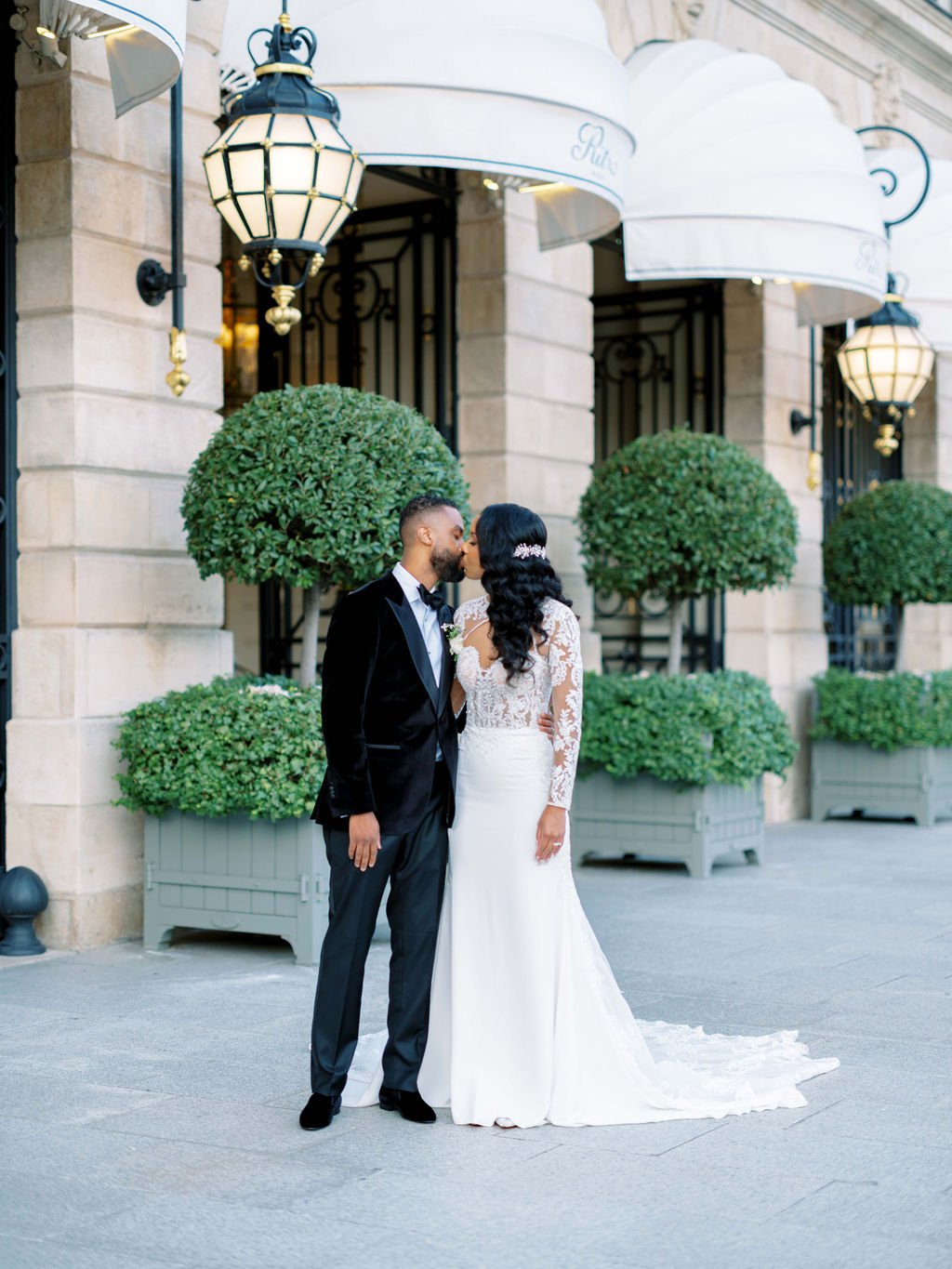
Why couples choose a Paris wedding photographer
I won’t pretend to be objective. I live here. I chose to build my life and my work around this city. But when I meet couples from New York, Lagos, London, or São Paulo who tell me they want to get married in Paris, I never ask why. I already know.
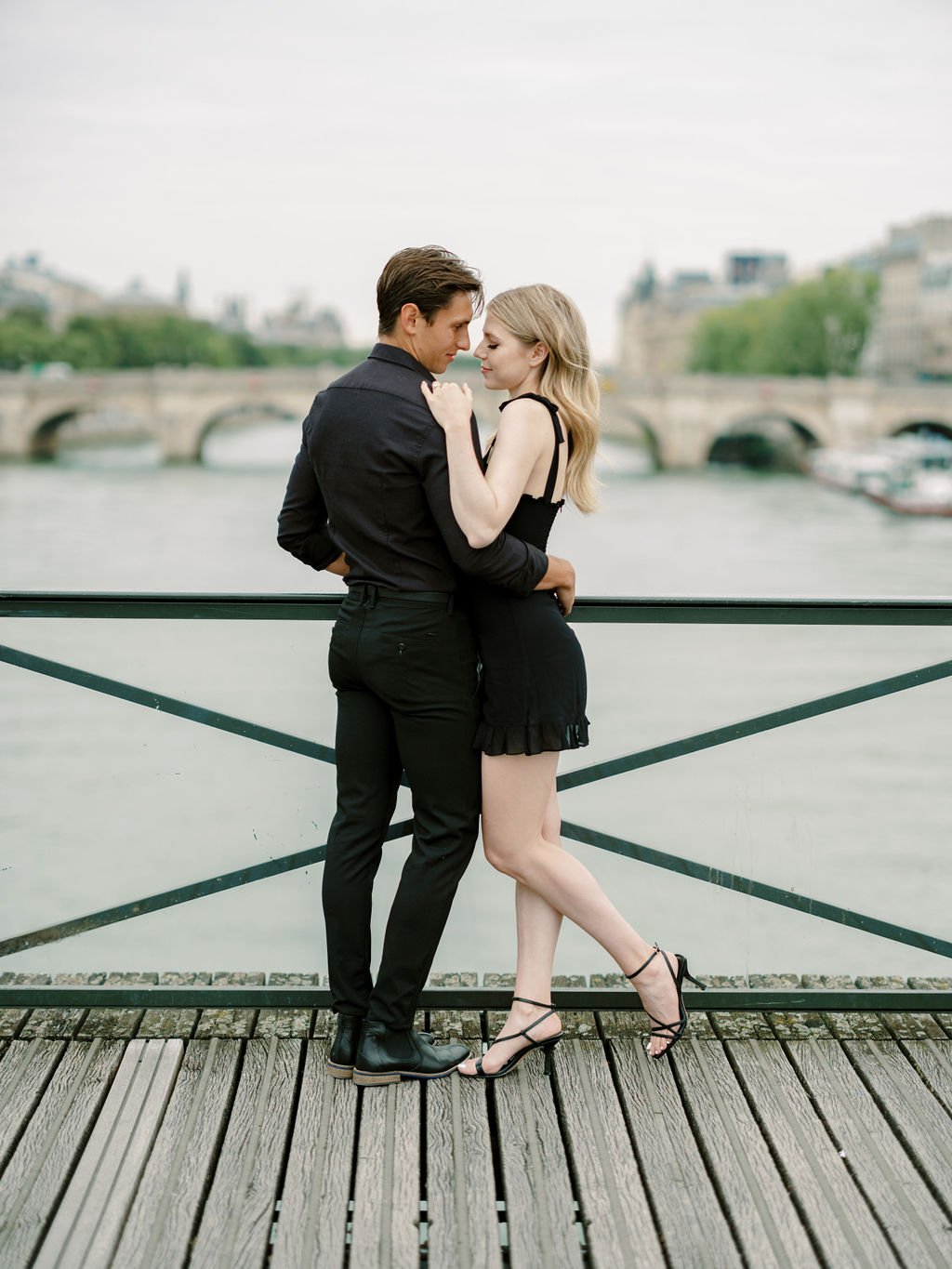
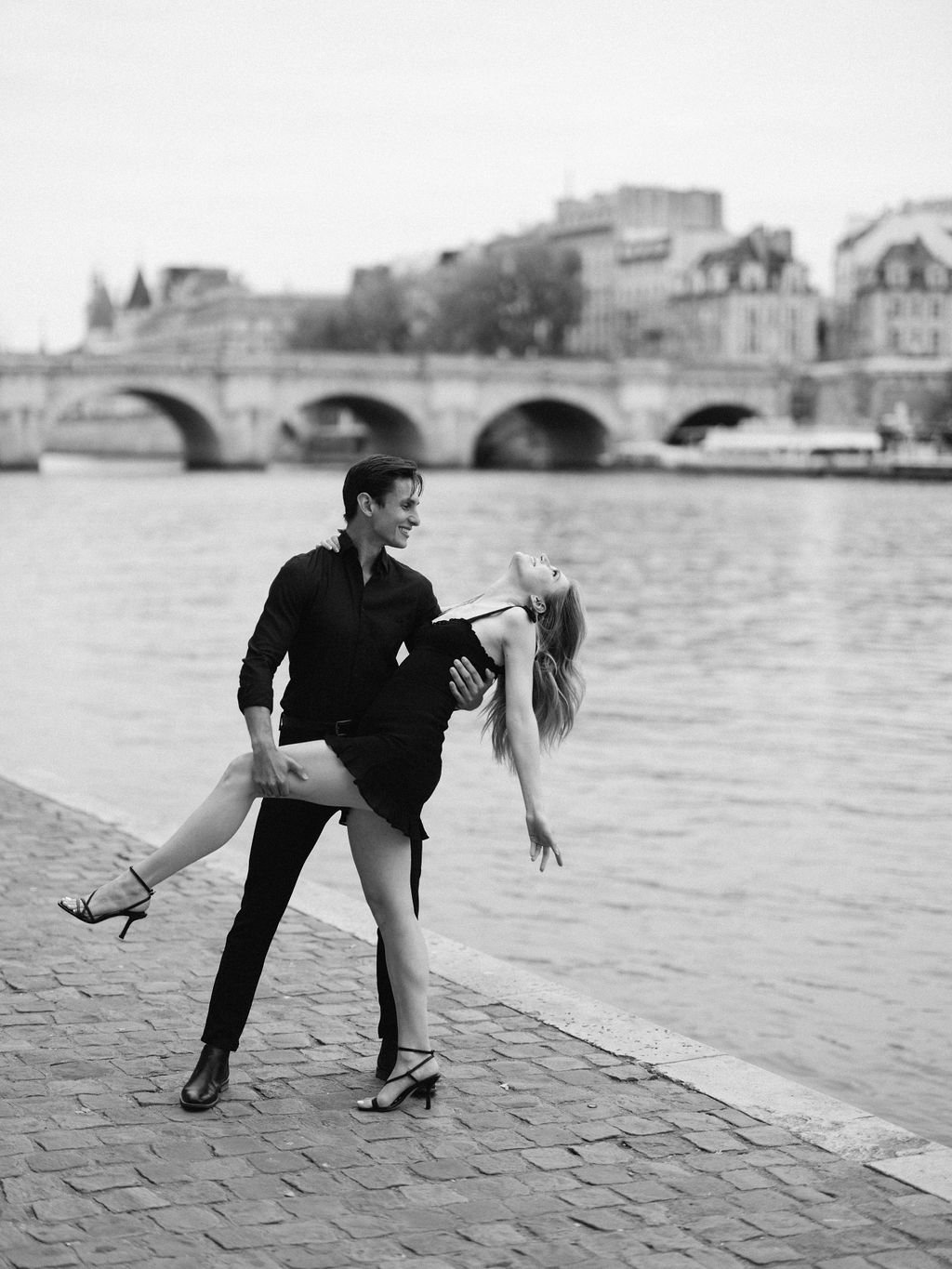
It’s rarely about the Eiffel Tower. That surprises people. The couples I work with are drawn to something quieter: the way stone buildings glow warm at golden hour, the sound of heels on cobblestones, the feeling that you’re inside a story that started centuries before you arrived and will continue long after.
Paris gives weight to the smallest gestures. A hand on a back. A whispered vow. A father’s face when he sees his daughter. The city holds these moments like it was built for them.
The venues I keep coming back to
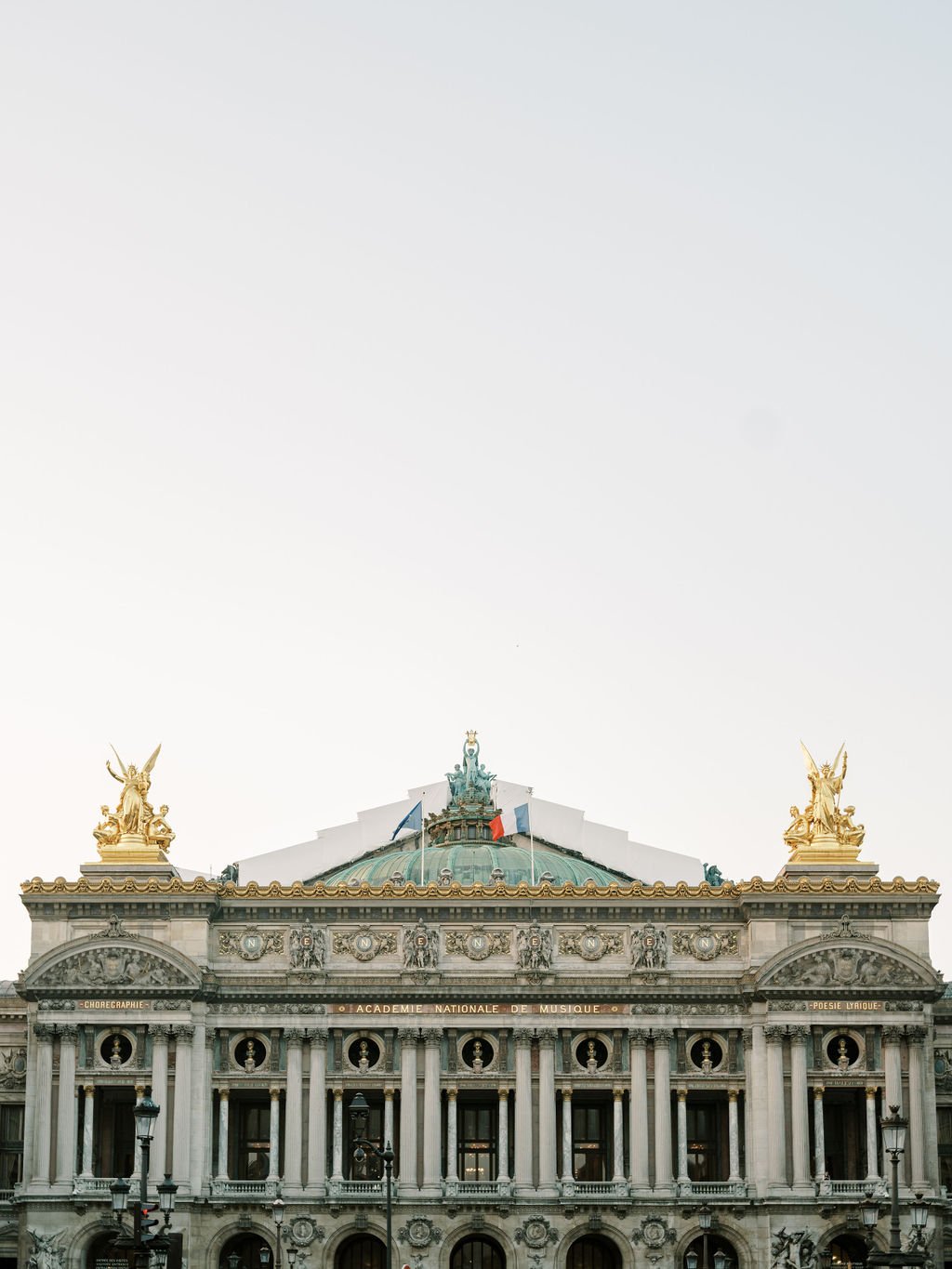
Opéra Garnier
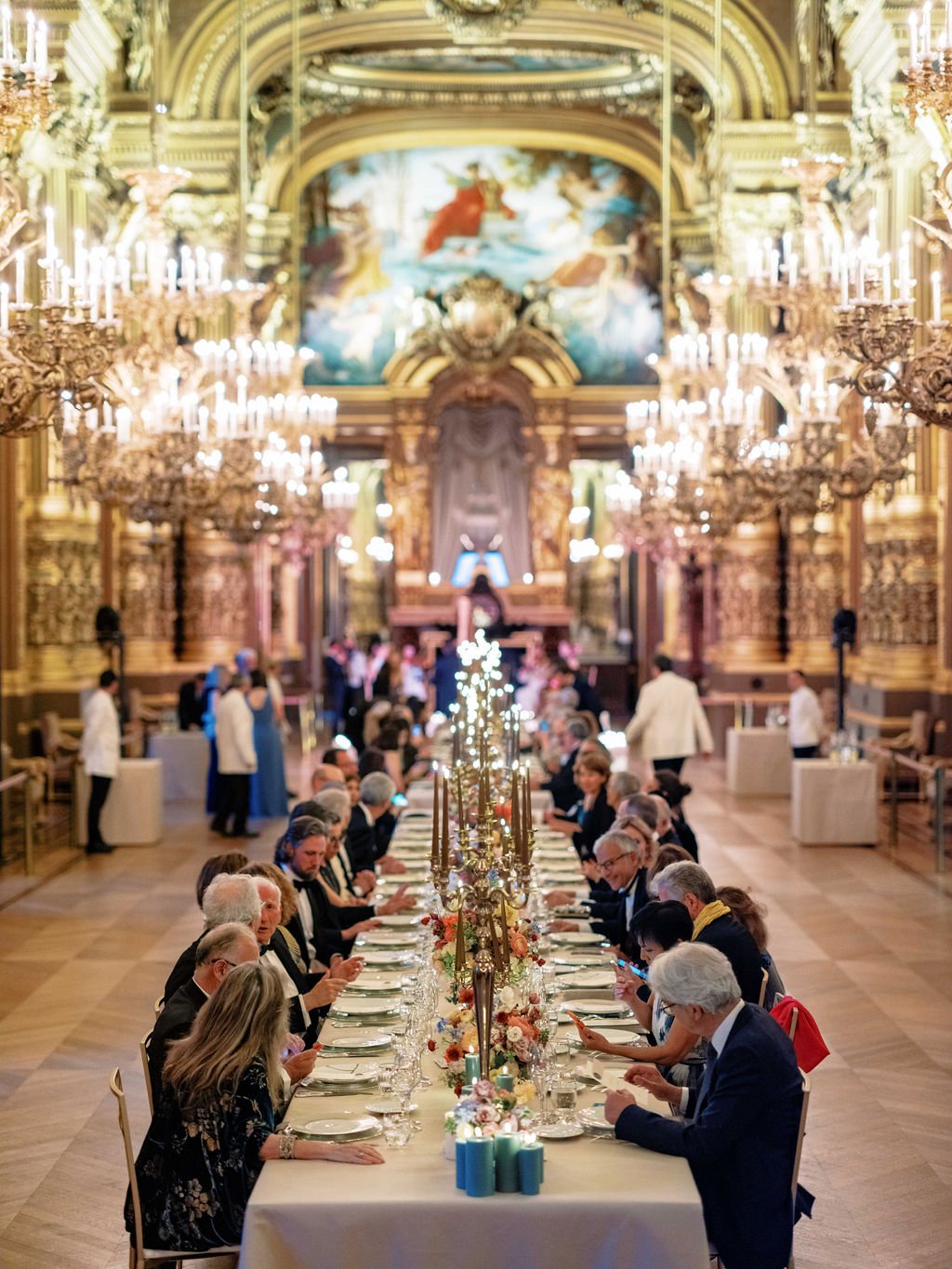
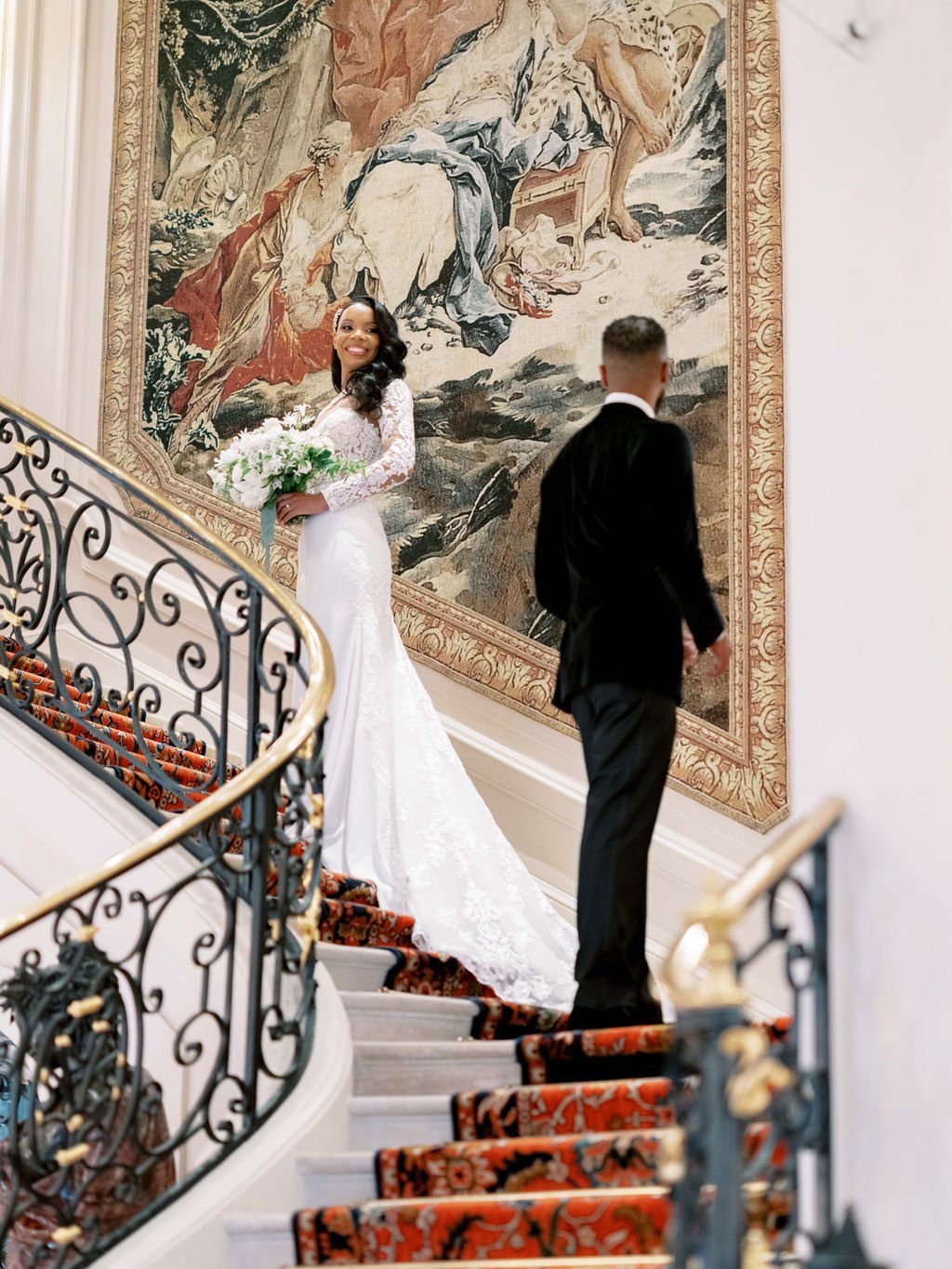
Nothing prepares you for the Grand Escalier. I’ve shot there multiple times and my heart still races when the couple walks down those marble steps. The challenge is the mixed lighting: warm incandescent chandeliers against cool window light from above. I’ve learned to embrace it rather than fight it. The result is this moody, painterly quality that feels like a Renaissance canvas.
The trick with Opéra is to arrive early. Security is strict, timing is tight, and you need to scout the corners where the crowd thins out. Some of my most intimate shots from grand venues were taken in the quiet hallways nobody thinks to explore.
Shangri-La Palace
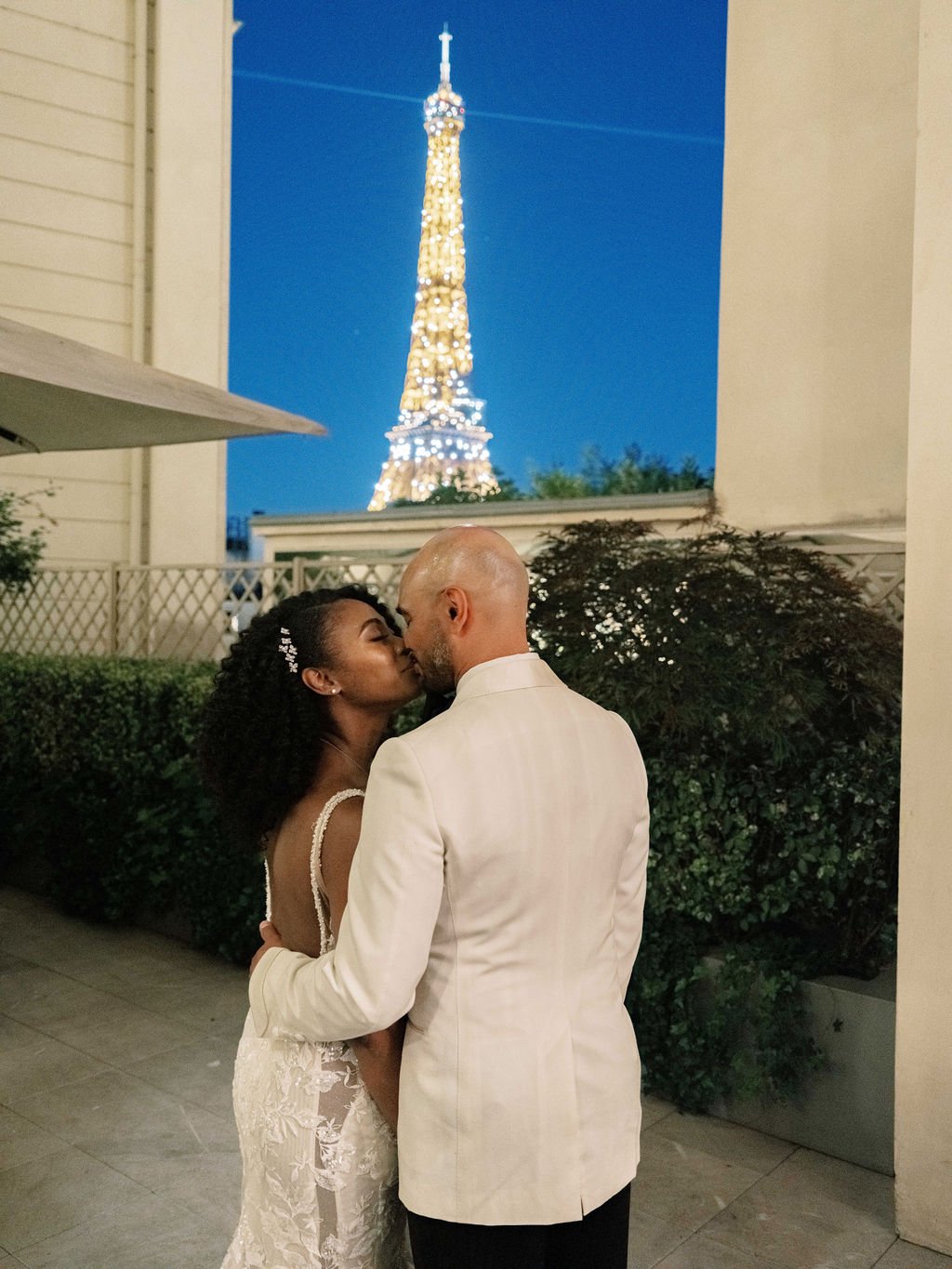
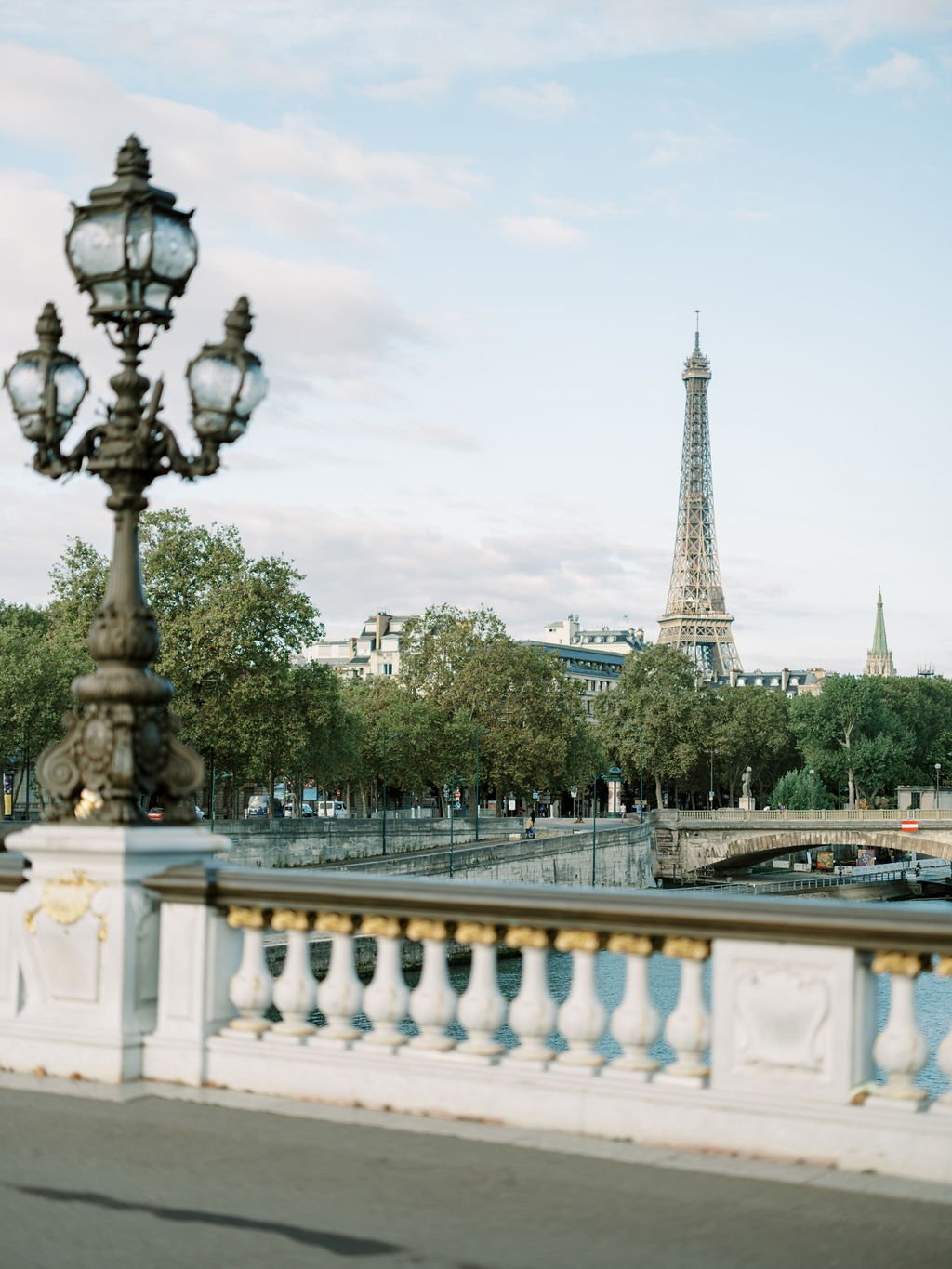
The view from the Shangri-La terraces is, I think, the most beautiful framing of the Eiffel Tower in Paris. Not the most famous (that belongs to the Trocadéro). But the most beautiful. Because you’re elevated, surrounded by elegance, and the Tower sits perfectly between the rooflines.
I photographed a wedding there that taught me something I carry with me now. The bride was getting ready and asked me to photograph her reflection in the window. Behind her reflection: the Eiffel Tower. Behind the Tower: a pink sunset. Three layers: the woman, the monument, the sky. One frame. That’s what Paris does when you stay patient.
Hôtel de Crillon
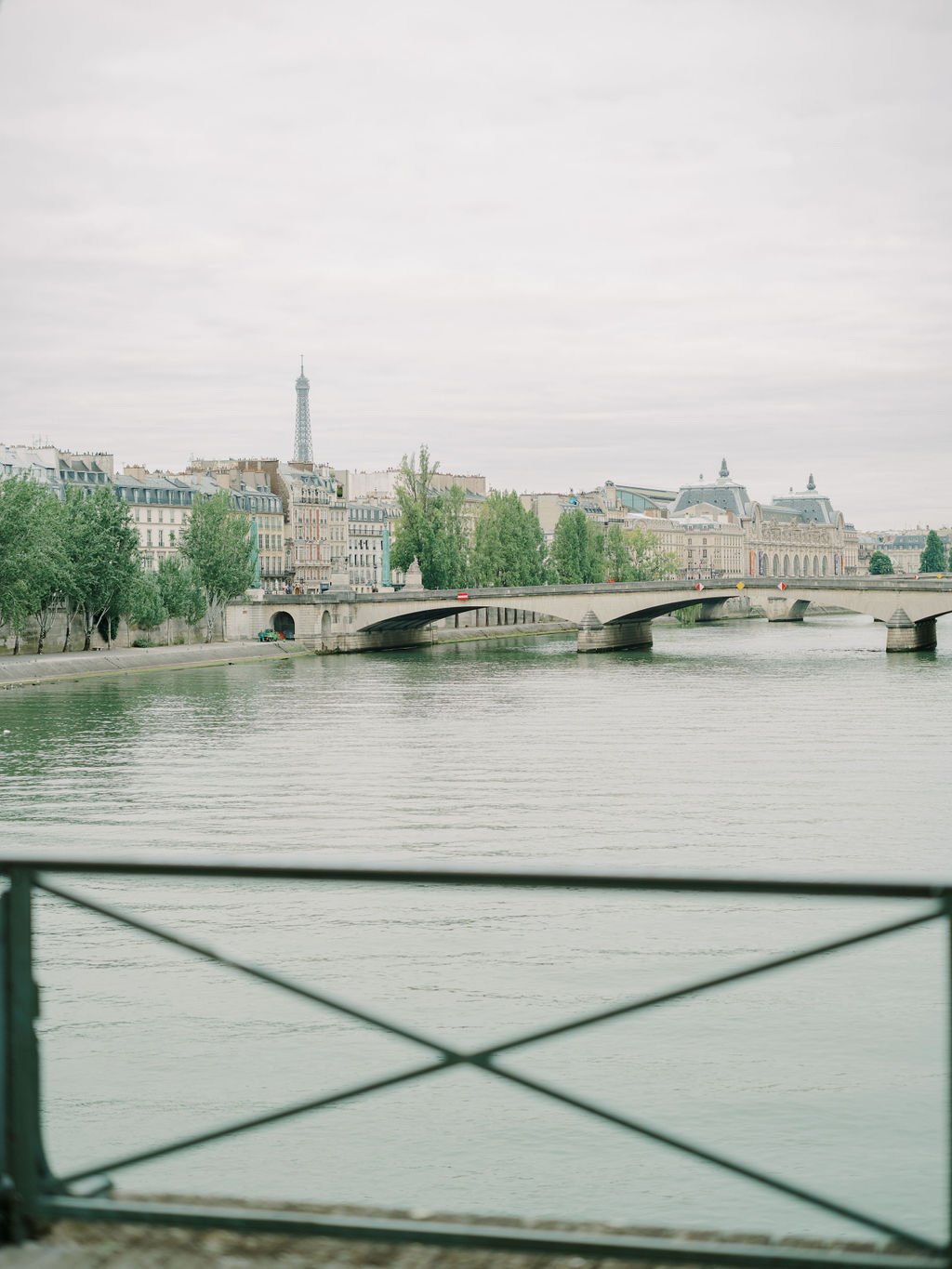
The Crillon underwent a four-year renovation and reopened as one of the most stunning hotel interiors I’ve ever seen. The Salon des Batailles, with its 18th-century murals and natural daylight flooding through the tall windows, is a photographer’s gift.
What I love about the Crillon is the contrast. The architecture is deliberately classical, almost austere in its perfection. But weddings are messy, emotional, unpredictable. That tension between the composed setting and the raw human experience: that’s where the best images live.


Beyond the palaces
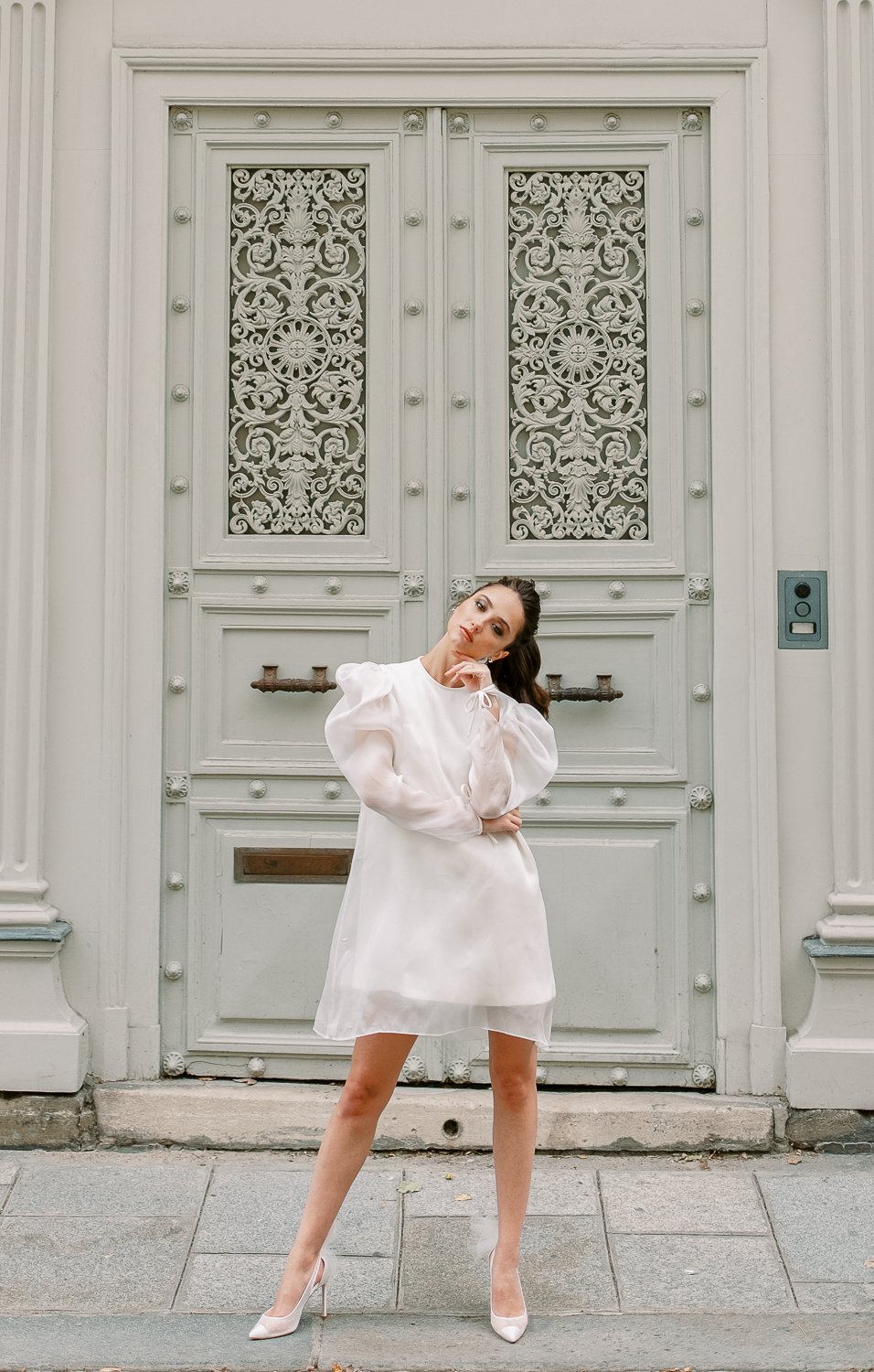
Not every Paris wedding happens in a palace, and honestly, some of my favourite work has been in unexpected places. A rooftop in Montmartre at sunset. A private courtyard in Le Marais where the ivy was so thick it filtered the light green. A tiny mairie in the 6ème where the civil ceremony lasted twelve minutes and the couple cried through all of them.
Paris is generous with its beauty. You don’t need a venue budget to find it.
What makes Paris photography different
The light changes constantly
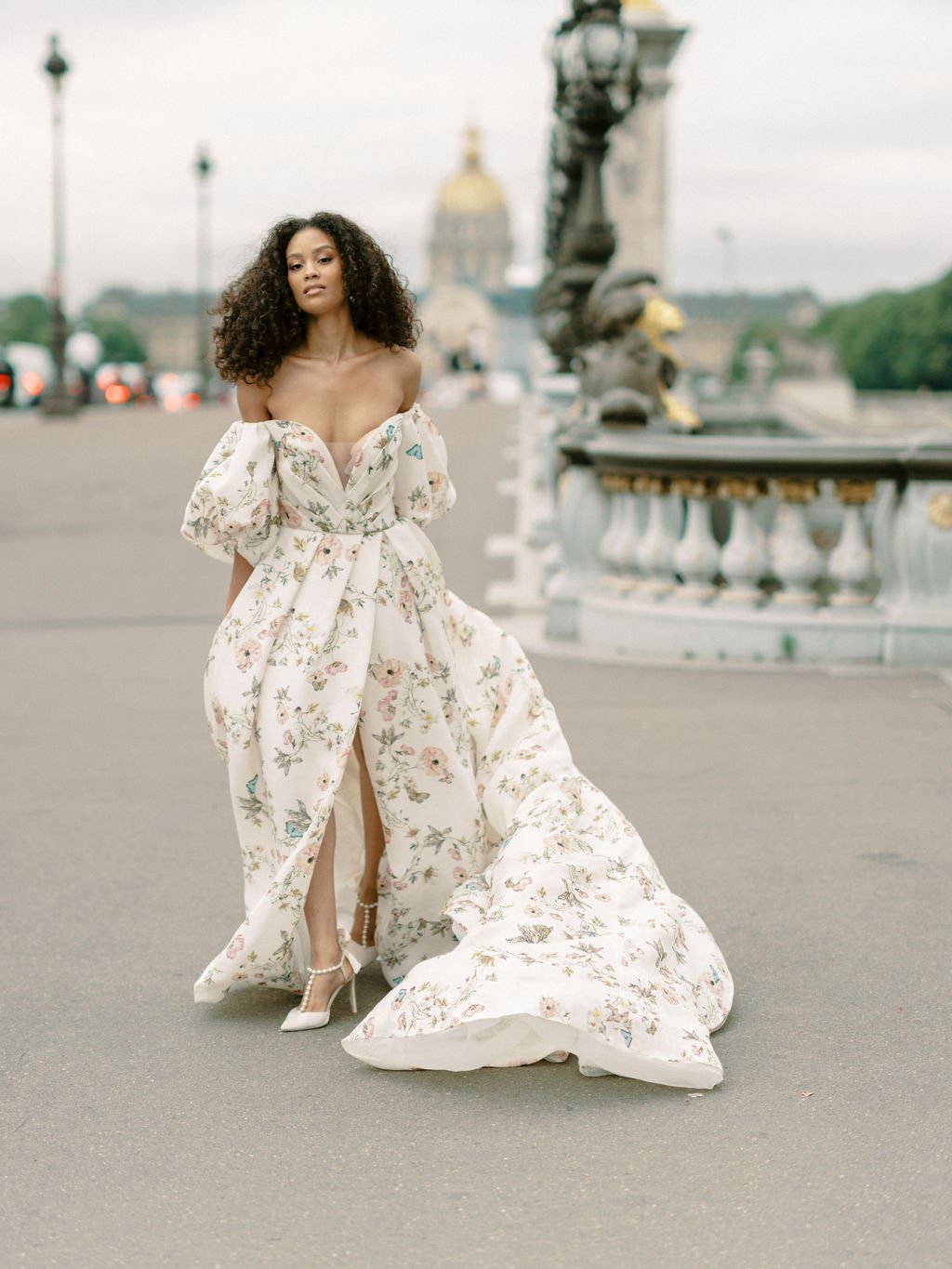
Parisian light is soft, diffused, and moody, but it shifts quickly. A cloud passes over during the ceremony and suddenly the warm golden tone you were metering for becomes a cool, silvery grey. I’ve learned to work with both. My editing style leans into these shifts rather than correcting them to a uniform warmth. Paris isn’t supposed to look like California.
Architecture requires precision
When you’re shooting in a space designed by people who spent decades on the proportions, your composition needs to respect that. A slightly tilted horizon that you’d never notice in a field becomes jarring in front of symmetrical columns. I shoot with the Fujifilm GFX medium format precisely for this reason: the resolution and the wide dynamic range give me the precision these spaces demand.
Logistics are a real challenge
This is the part nobody writes about. Permits, security, traffic, narrow staircases for dress transport, rain plans for outdoor ceremonies at châteaux… Paris weddings require planning that starts months in advance. I work closely with wedding planners, and I always recommend couples invest in one. A great planner doesn’t just organize the day. They create the conditions for beautiful photography to happen naturally.
The question everyone asks me
« How many photos will we get? »
It’s a fair question, but I think it misses the point. I typically deliver between 50 and 80 edited images per hour of coverage. For a full day, that’s 500 to 800 photographs. But the number I care about is different: how many images make you feel something when you see them five years from now? Ten years from now?
I’d rather deliver 600 images that each tell a piece of your story than 1,200 technically correct photos that you scroll past. My editing process is slow and deliberate. Every image is individually graded to match the mood of that specific moment. No batch presets. No AI auto-edit.
For couples considering Paris
If you’re reading this and imagining your wedding in this city, here’s what I’d want you to know.
First, Paris is worth it. Understanding why wedding photography costs what it does helps put the investment in travel, in a venue that takes your breath away, in a photographer who knows the city’s rhythms, it pays back every time you open your album.
Second, timing matters. May through October is peak season, and the best venues book 12 to 18 months out. If you have a dream date, start early.
Third, your photographer should know Paris. Not just the landmarks: the light, the back streets, the timing of golden hour in each season, which venues have the best window light at which time of day. This comes from experience, not from Google.
And finally: enjoy it. I’ve seen couples so focused on the logistics that they forget to feel the moment. My job is to capture what happens when you stop performing and start living your wedding day. The less you think about the camera, the better the photos will be.
Let’s talk about your Paris wedding
I respond to every inquiry personally, usually within 24 hours. If Paris is calling you, or if you’re still deciding and want to talk it through, I’m here. You might also want to read my guide on the best engagement session locations in Paris.
Venues featured: Opéra Garnier · Shangri-La Palace · Hôtel de Crillon · Various private venues, Paris
Published in: Vogue · Brides · Wedding Sparrow · Carats & Cake
Photography: Franklyn K Photography