Paris, France · April 2026 · 6 min read
The first engagement session I shot in Paris started at the Trocadéro at noon, in July, with the Eiffel Tower bleached out in overhead light. The couple were tense. I was tense. The pictures were flat, a folder full of postcards and a quiet lesson I’ve been working from ever since.
Years later, my approach has changed completely. I no longer think of engagement sessions as a preview of the wedding day, or as content for a save-the-date, or as a nice-to-have on the list. I think of them as a rehearsal. The couple rehearses what it feels like to be photographed as a couple. I rehearse how to photograph them, how they stand, how they laugh, how one of them holds back while the other leans in. By the wedding day, none of us is guessing.
What the session actually does
Wedding days are long, loud, and occupied. You are not thinking about how your hand sits on your partner’s waist. You are thinking about the ceremony, the timeline, the guest who forgot the hotel key, the speech your brother may or may not deliver. The camera is one more thing you do not have the capacity to think about.
An engagement session is the one afternoon where the camera is the only thing. Two hours, sometimes three, where I watch you and you get used to being watched, and we learn the mechanics of each other. What you do with your hands when you don’t know what to do with your hands. Which angle of your face you quietly prefer. Whether you two laugh easily together, or whether you need a prompt first. Whether silence makes you nervous or comfortable.
All of that becomes muscle memory. On the morning of the wedding, I already know how to read you. I know when you need a pause and when you are about to crack up. I know which one of you will cry during the vows and which one will be watching the other cry. That knowledge is worth more than any second photographer or extra lens.
Getting comfortable with the camera (and with me)
Most couples tell me the same thing in the first twenty minutes: we are terrible in photos. What they mean is that every photo they have of themselves together is a phone selfie or a group picture at a party. They have no reference for what it feels like to be photographed with intention.
I don’t rush this part. I talk more than I shoot in the first ten minutes. I ask questions I already know the answers to, how they met, who proposed, who planned the trip that sealed it, because the answers are less important than the relaxation that settles over their faces while they tell the story. The body I shoot with is medium format, slow, quiet. It does not rattle off twenty frames per second. It makes a single, considered sound, and people relax around it.
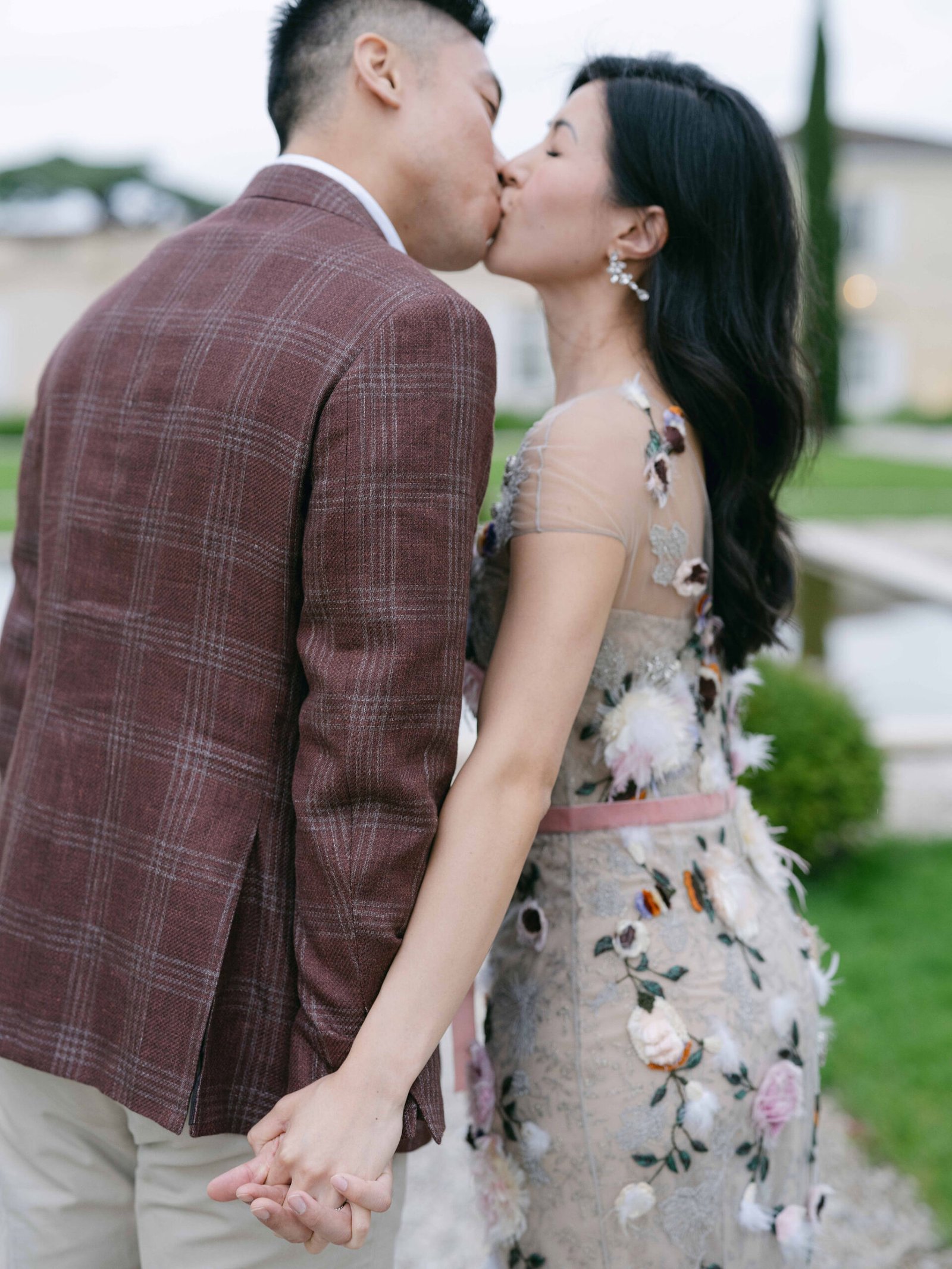
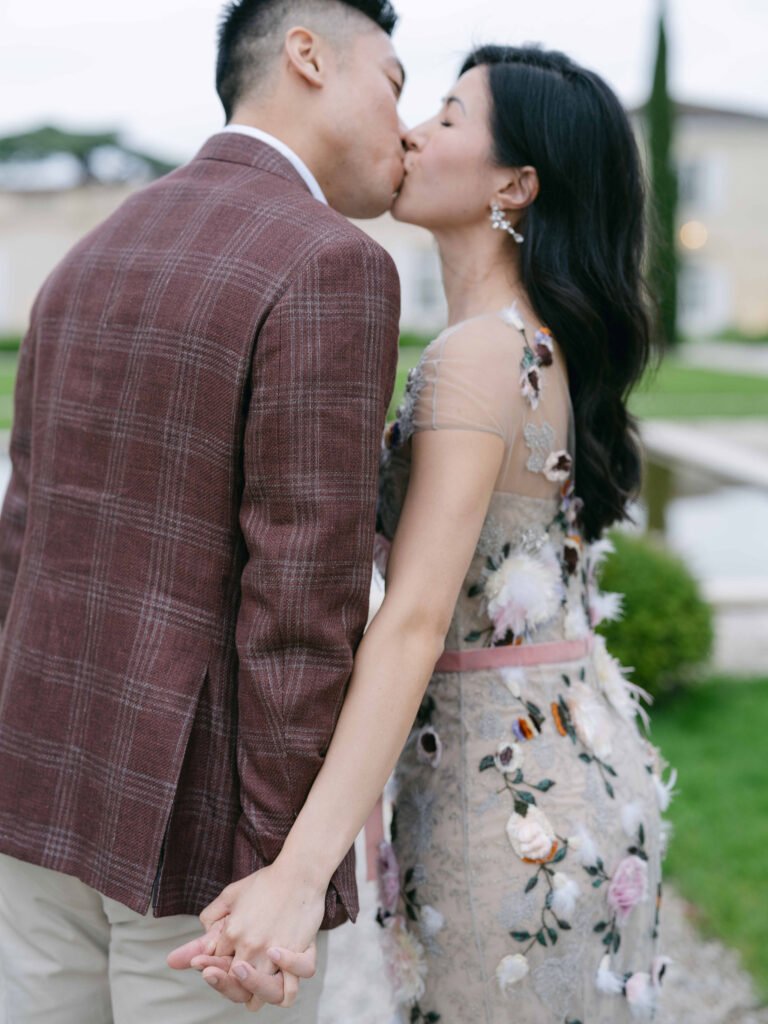
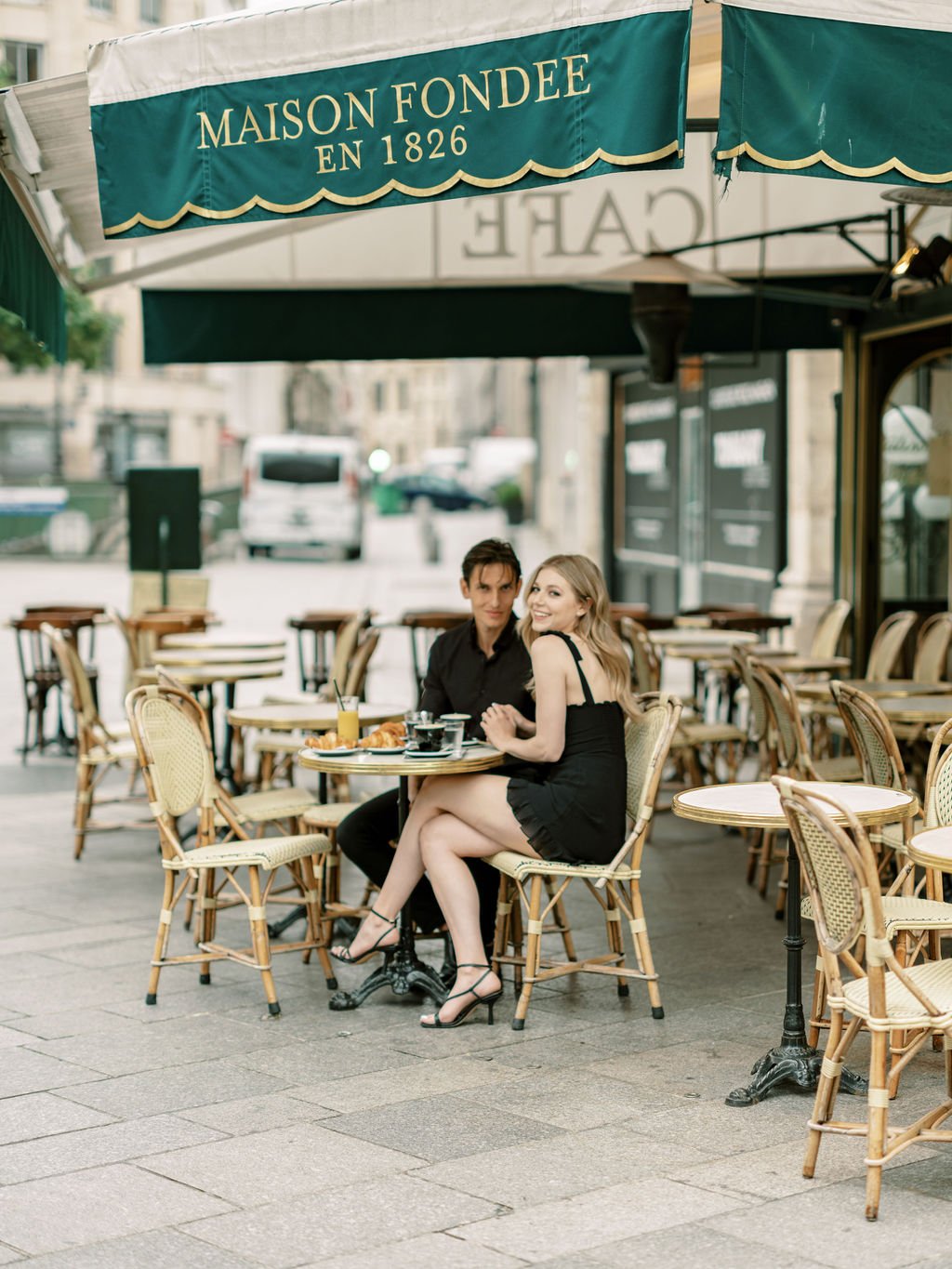
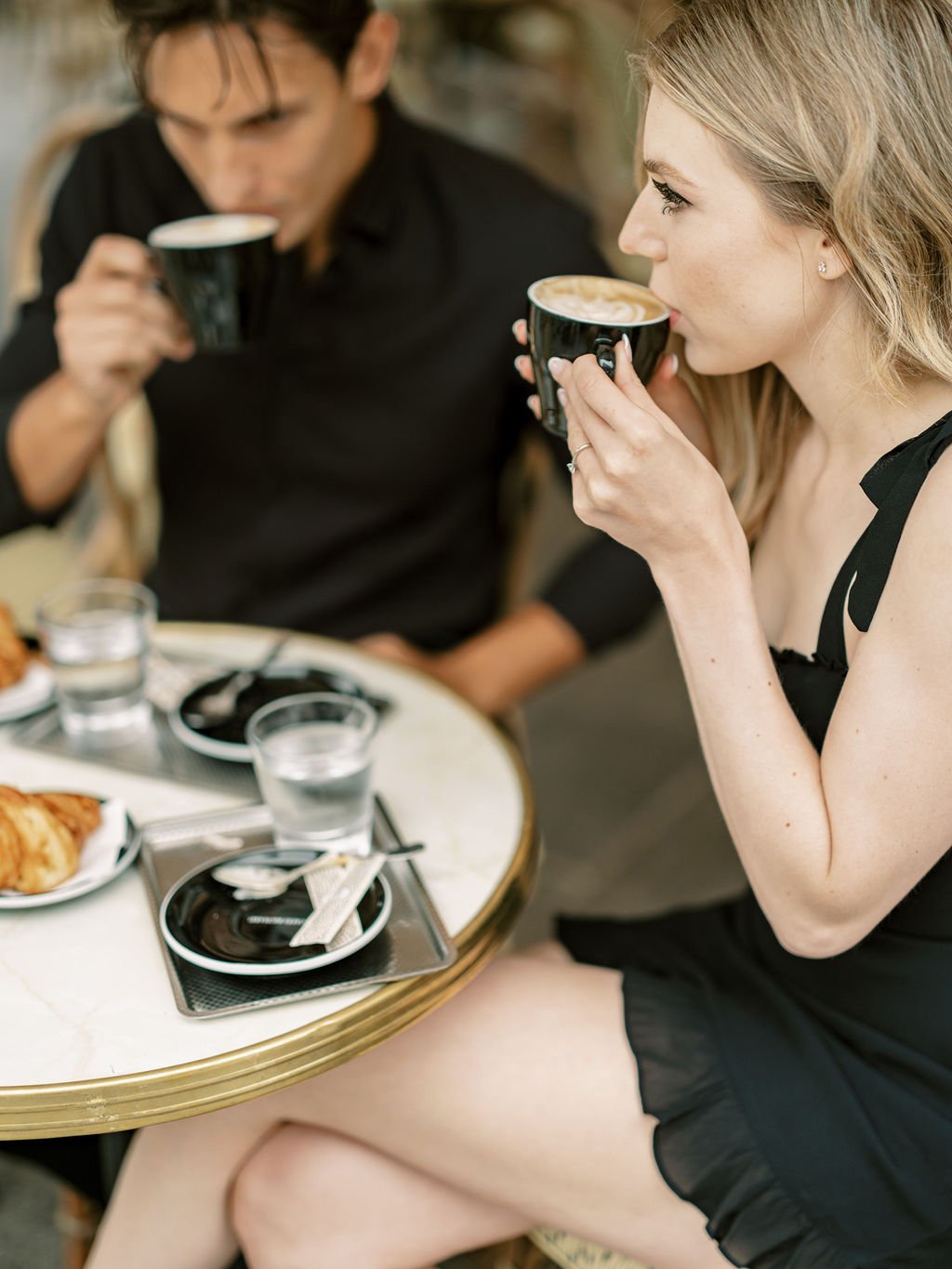
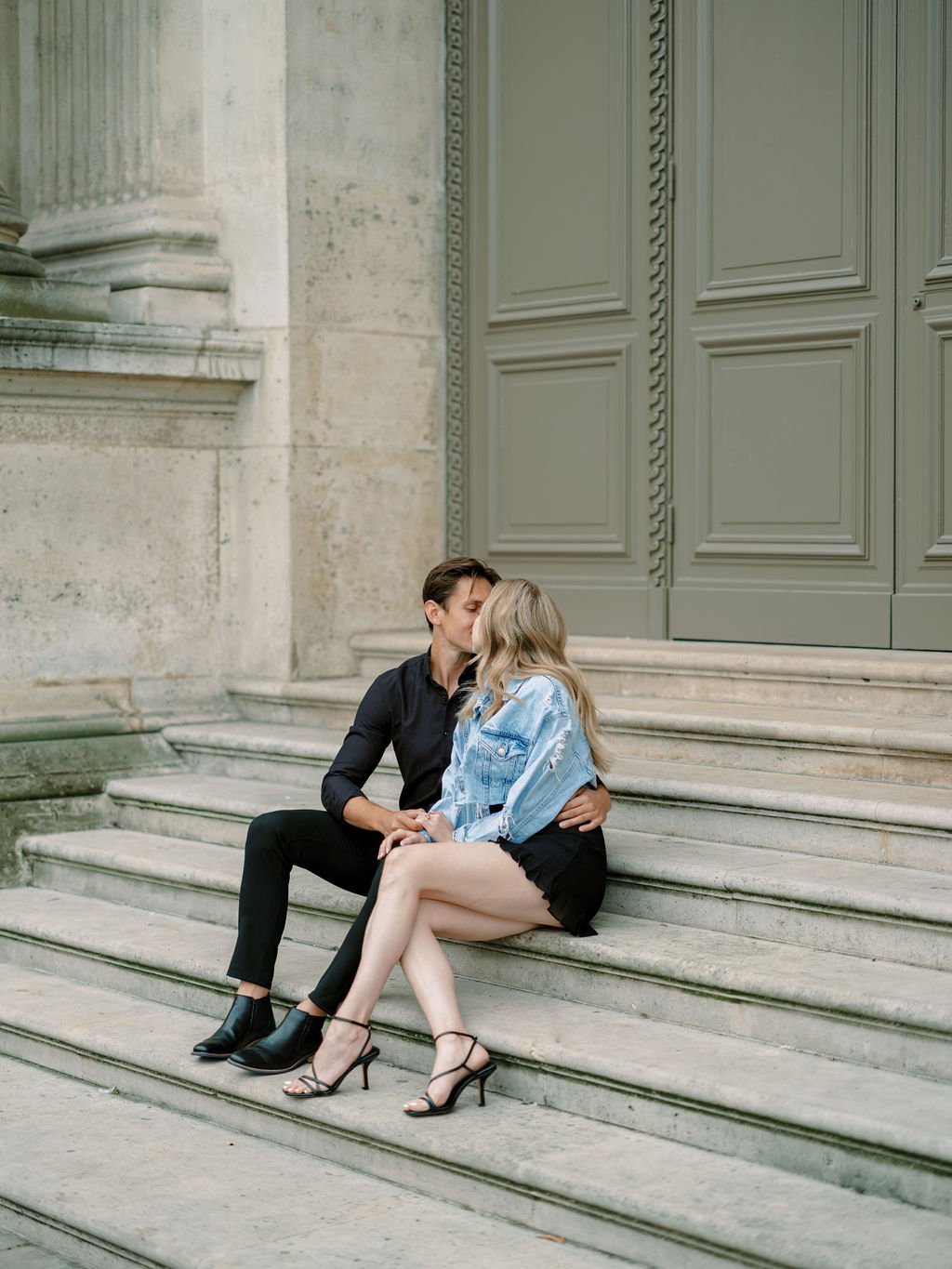
By the end of the session, the couple who told me they were terrible in photos are sprawled on a café terrace or leaning on a bridge railing, mid-conversation, ignoring the camera completely. Those are the frames that end up framed on the wall.
Choosing where to do it
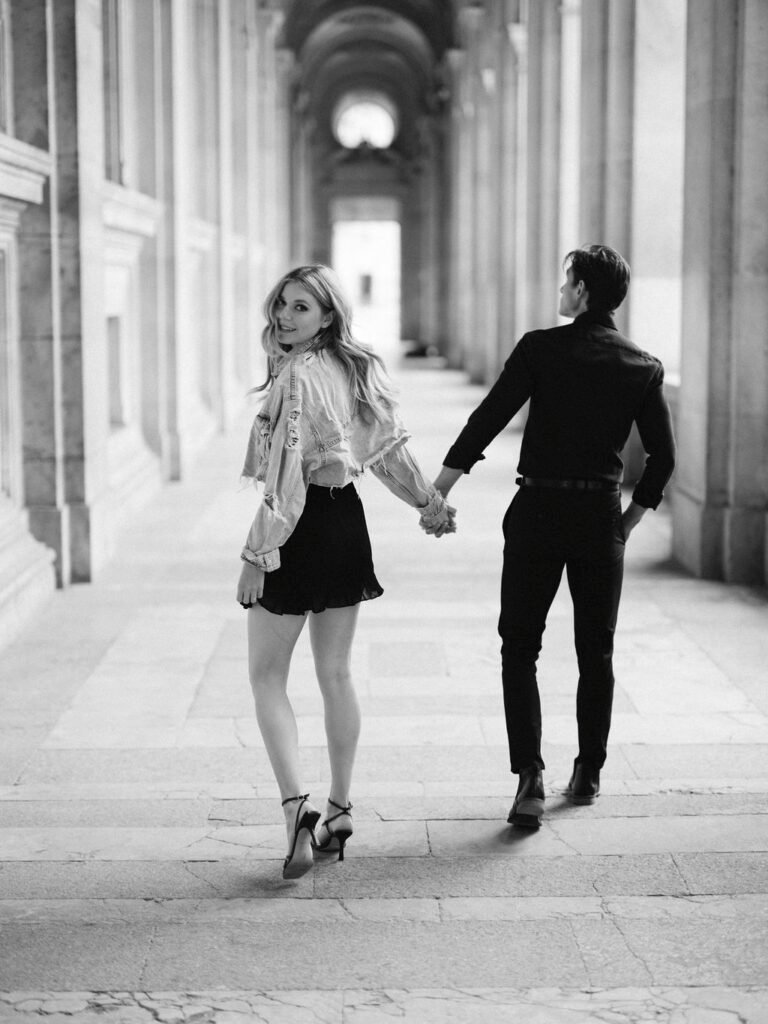
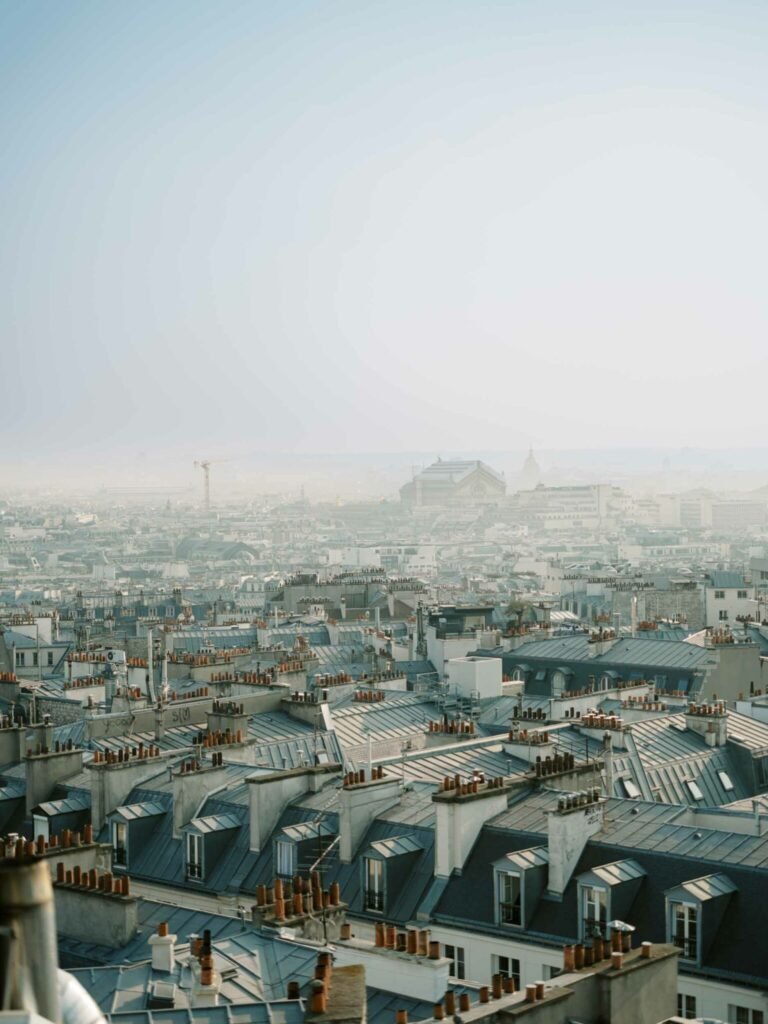
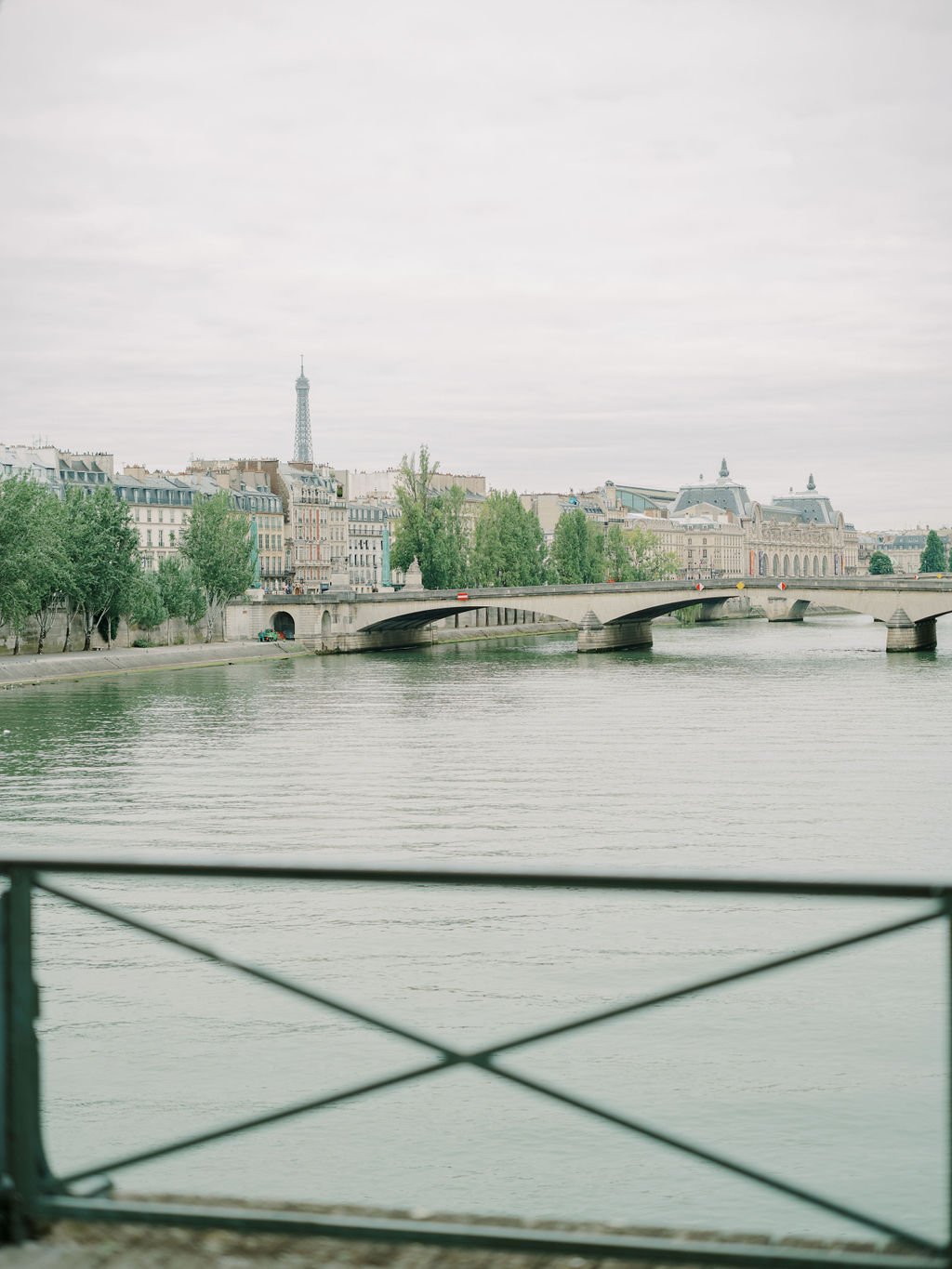
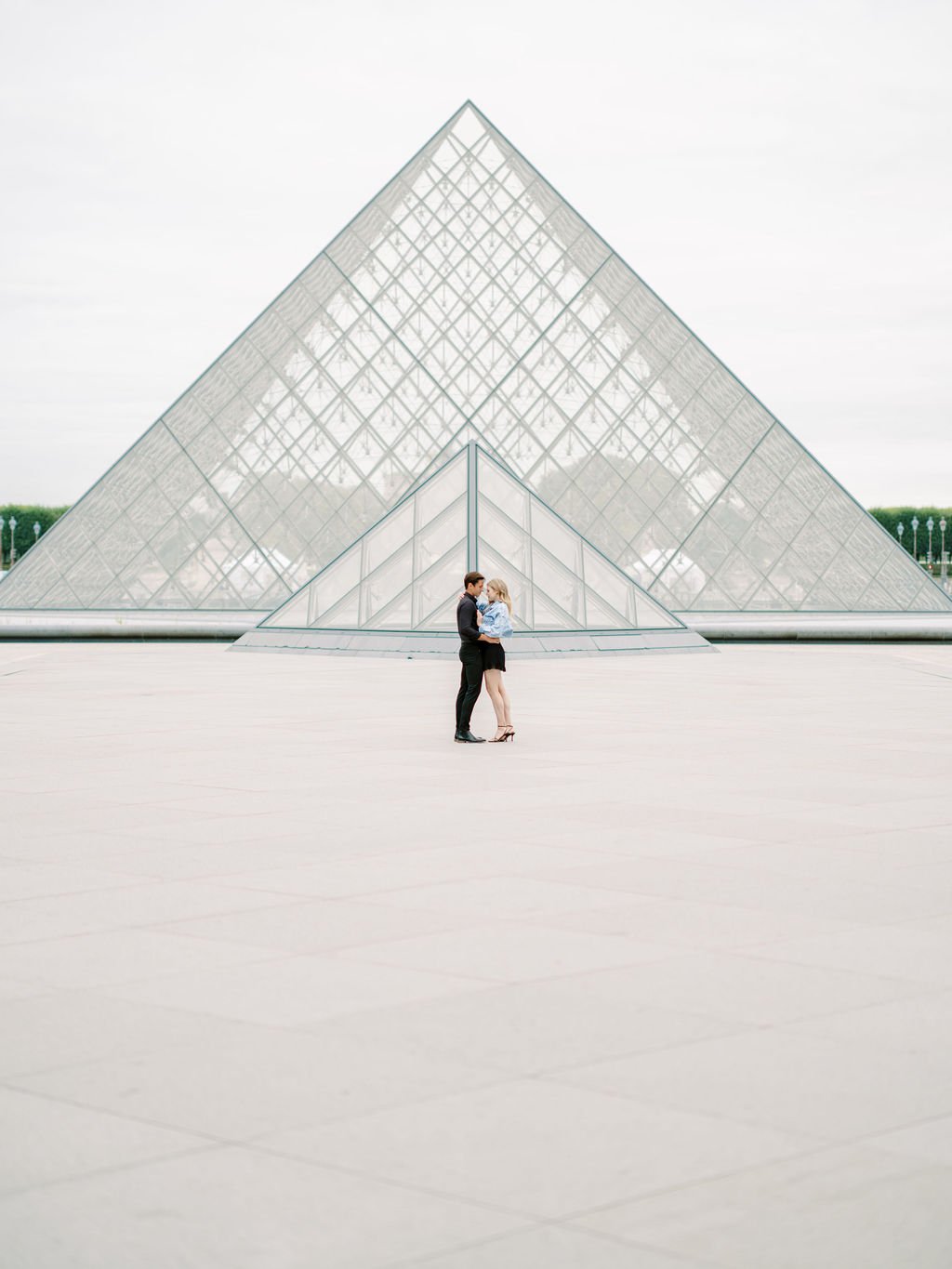
I have opinions about Paris locations, and I share them when couples ask. The Trocadéro at sunrise is worth the 5:45 a.m. alarm. The Trocadéro at any other hour is a crowd-management problem. The Bir-Hakeim bridge is photogenic and it is also a TikTok set now, budget for patience. The Louvre courtyard before 8 a.m. is astonishing and mostly empty. The Palais-Royal gardens under the black-and-white Buren columns work better in late-afternoon light than at midday. The Luxembourg Gardens are unbeatable in early October.
I steer couples away from the shot-list approach. A session that touches six monuments in three hours looks like a tourist brochure. A session that stays in one or two neighbourhoods, the 1st and 6th, or the Marais and the Seine, looks like your story. I pick two locations with the couple, and we stay in them.
If you want a longer read on specific spots, I wrote a detailed piece on eleven engagement locations in Paris, with honest notes on light, crowds, and which ones hold up in bad weather.
When destination is the point
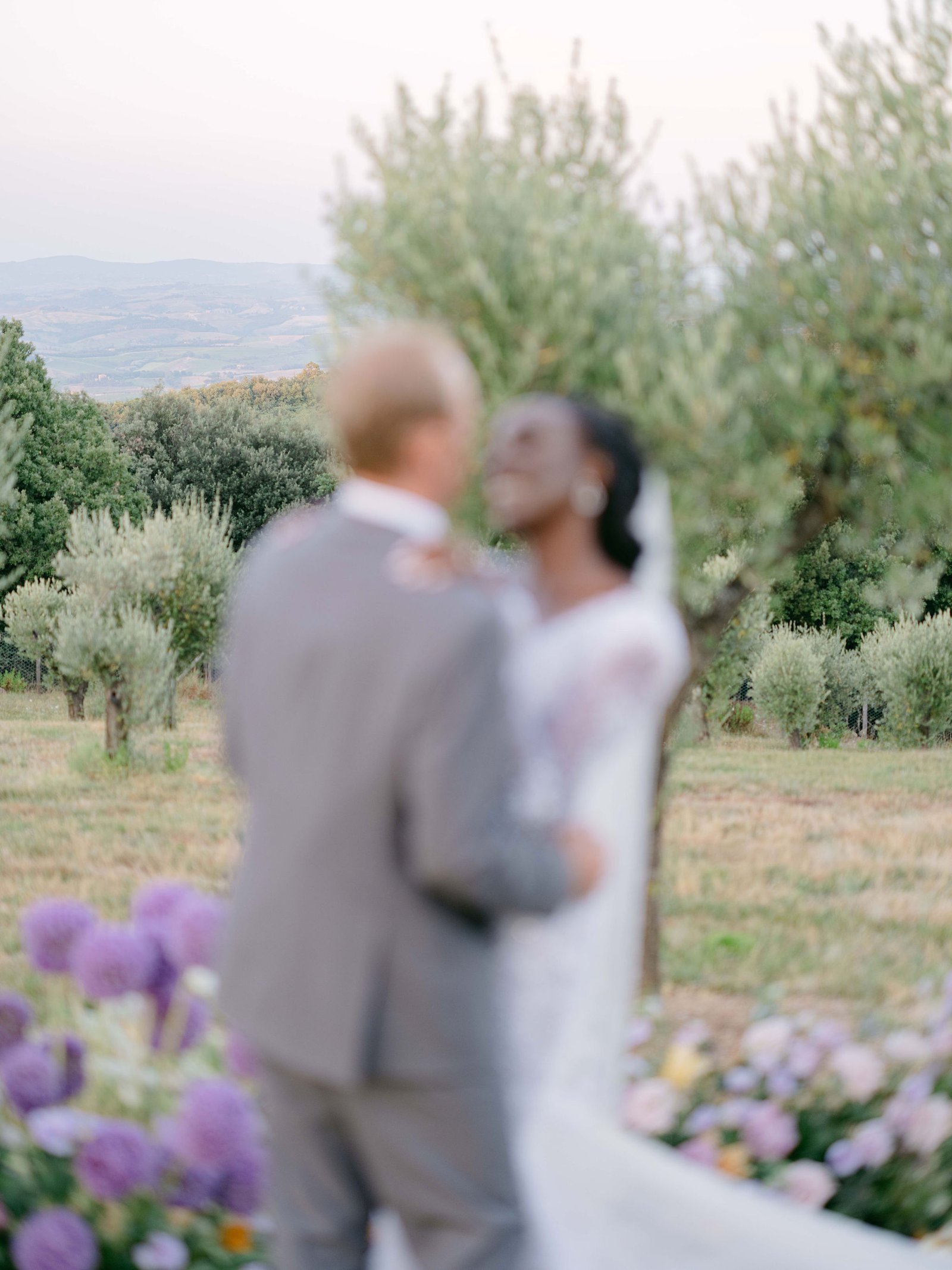
Not everyone wants a Paris session. Some couples want an engagement shoot in the place that actually matters to them, the village in Provence where one partner’s grandparents lived, the coastline in Liguria where they took their first trip together, the Côte d’Azur weekend where the proposal happened. I photograph those too, and they tend to produce my favourite work, because the location is not decoration. It is narrative.
A destination engagement session is an investment, and I’m direct with couples about that. Flights, a night or two of accommodation, the photographer’s time on the ground, it adds up. What you gain is a body of images that reads as a chapter of your relationship rather than a pretty afternoon. For couples planning a destination wedding in France or Italy, the session often doubles as a location scout for the wedding day itself.
What the images become
The practical uses are real. Save-the-dates, wedding-website hero images, invitation inserts, framed prints for the welcome dinner, the first photograph the two of you hang in your first apartment. I deliver engagement galleries in the same week I shoot them, because couples tend to want to use the images quickly.
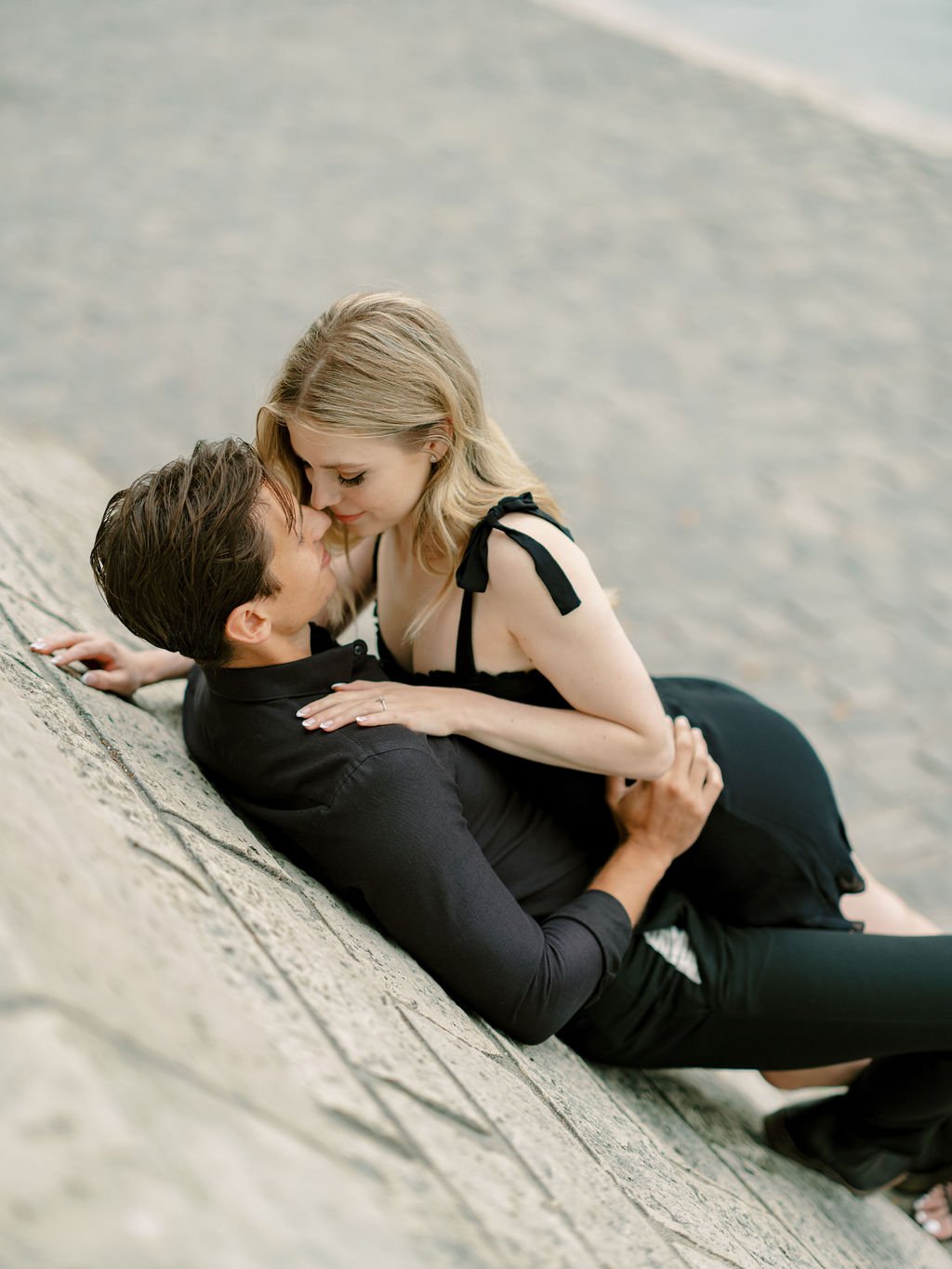
The less practical use is the one most couples don’t anticipate. The engagement portrait, a single, quiet image of the two of you, often becomes the photograph you keep forever. Not the posed ring shot, not the elaborate scene at a monument. The one where you were looking at each other mid-sentence and I was far enough away that you forgot I was there. That is the one that lives on a mantel for thirty years.
When to schedule it
The short answer: six to eight months before the wedding, in the season you love. That gives you room to use the images on save-the-dates, and it means the photographs show you as you actually look during this stretch of life.
The longer answer: whenever you can. I have photographed couples two years before a wedding, and they told me it was the first honest photograph of them as a couple they had ever owned. That alone is a reason.
If you are early in planning and thinking about photographers more generally, I wrote a piece on how to choose a wedding photographer and another on the questions to ask before you commit. Both are worth reading before the first call.
The working relationship
Here is what I have learned after years of shooting these. Engagement sessions do not matter because of the images. They matter because of what happens during them. The working relationship you build with your photographer in those two hours is the thing that will, on a specific morning nine months later, translate into how natural you look in the pictures of your first look.
A couple I photographed last year told me afterward that by the wedding day, I felt less like a vendor and more like a friend with a camera. That is the sentence I am trying to earn at every engagement session, because a friend with a camera photographs the wedding differently from a stranger with a camera. The images know the difference.
A last word
If you’d like to talk about an engagement session in Paris or elsewhere, the contact page has a short form. I reply within 48 hours, and every enquiry begins with a 30-minute call before anything else. That call is the first part of the rehearsal too.
Paris, France · Photography: Franklyn K Photography · Published in: Vogue · Brides · Wedding Sparrow · Carats & Cake · Martha Stewart Weddings