There is a particular shade of gold that only exists in the Dordogne. Not the sharp, bleached gold of the Côte d’Azur, not the muted ochre of Provence, something warmer, softer, almost honeyed. I first noticed it the moment I stepped out of my car at Château de la Durantie, late afternoon in October, when the sun was low enough to turn the limestone façade into something that looked like it had been lit from within. I remember thinking: this is going to be one of those weddings where the venue does half the work for me. I was right, and I was also completely wrong, because what happened over the next twelve hours went far beyond what any building could do on its own.
The Château
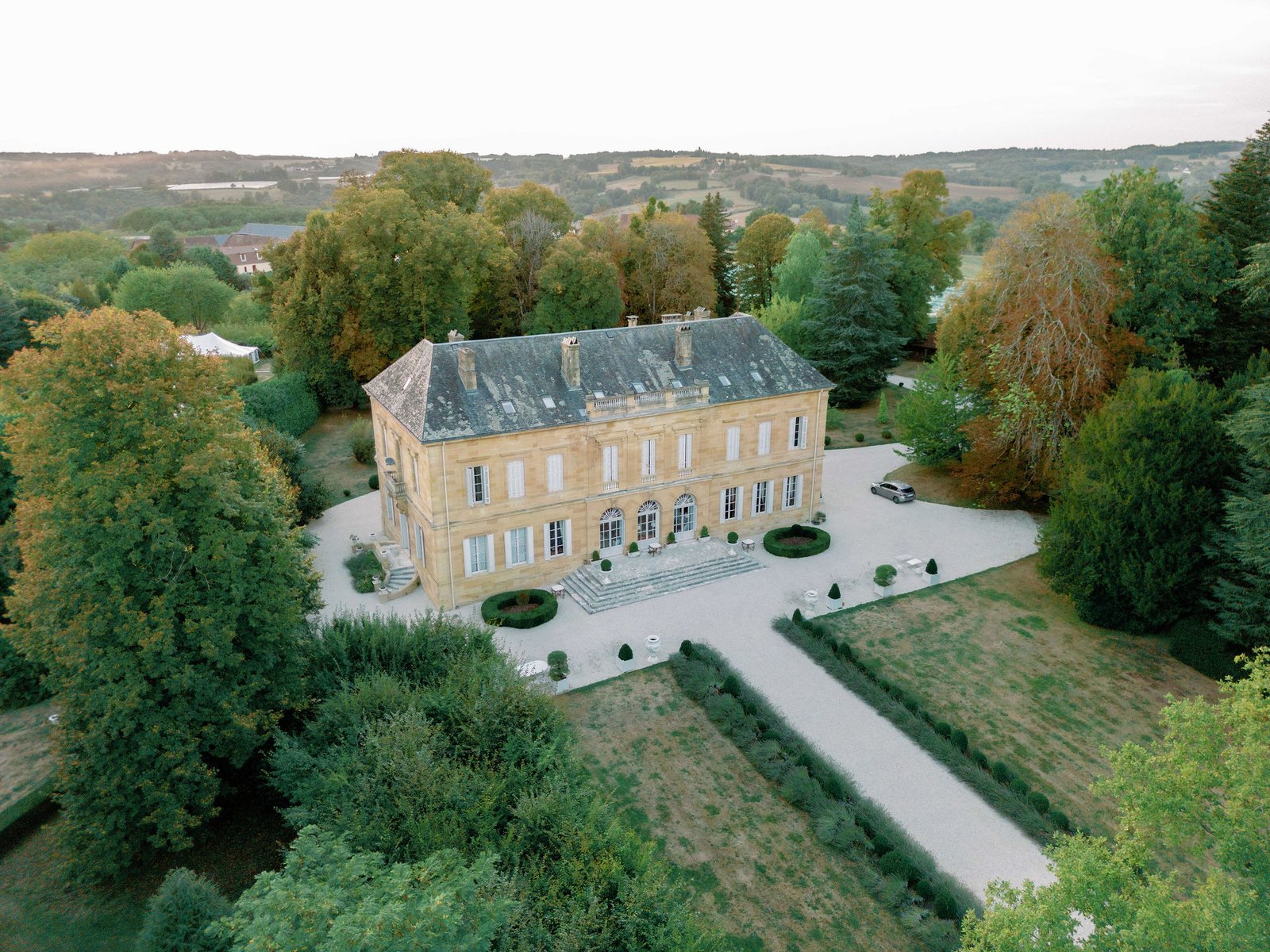
Château de la Durantie sits in the rolling countryside of southwestern France, surrounded by the kind of landscape that makes you want to sell your apartment and become a winemaker. The estate is old, genuinely old, not renovated-to-look-old, and you feel that history in every corridor. The golden limestone walls have been absorbing sunlight for centuries, and they give it back generously when the afternoon turns soft. Walking through the grounds for the first time, I kept pausing to photograph details I had not planned for: the way moss crept between the stone arches, the iron hardware on a chapel door worn smooth by hundreds of hands.
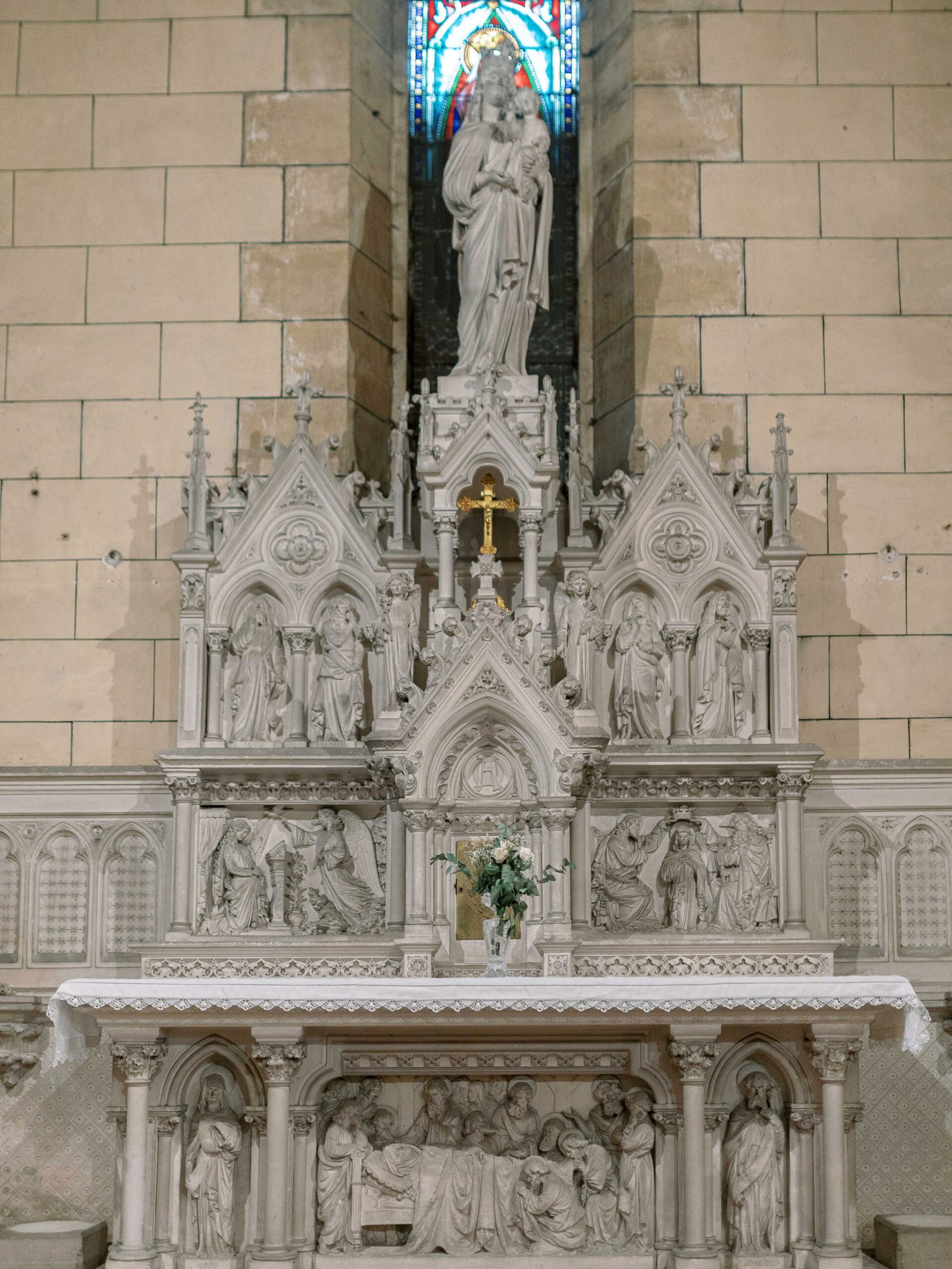
The gothic chapel is the heart of the property, and it earns that title. Ornate stonework frames the altar, and the light that filters through the narrow windows creates patterns on the floor that shift throughout the day. I have photographed ceremonies in some of the most celebrated chapels in France, from Château de Tourreau in Provence to private estates in the Loire, and La Durantie’s chapel holds its own against any of them. There is an intimacy to its proportions that larger churches cannot replicate. When you stand at the altar, you feel held, not dwarfed.
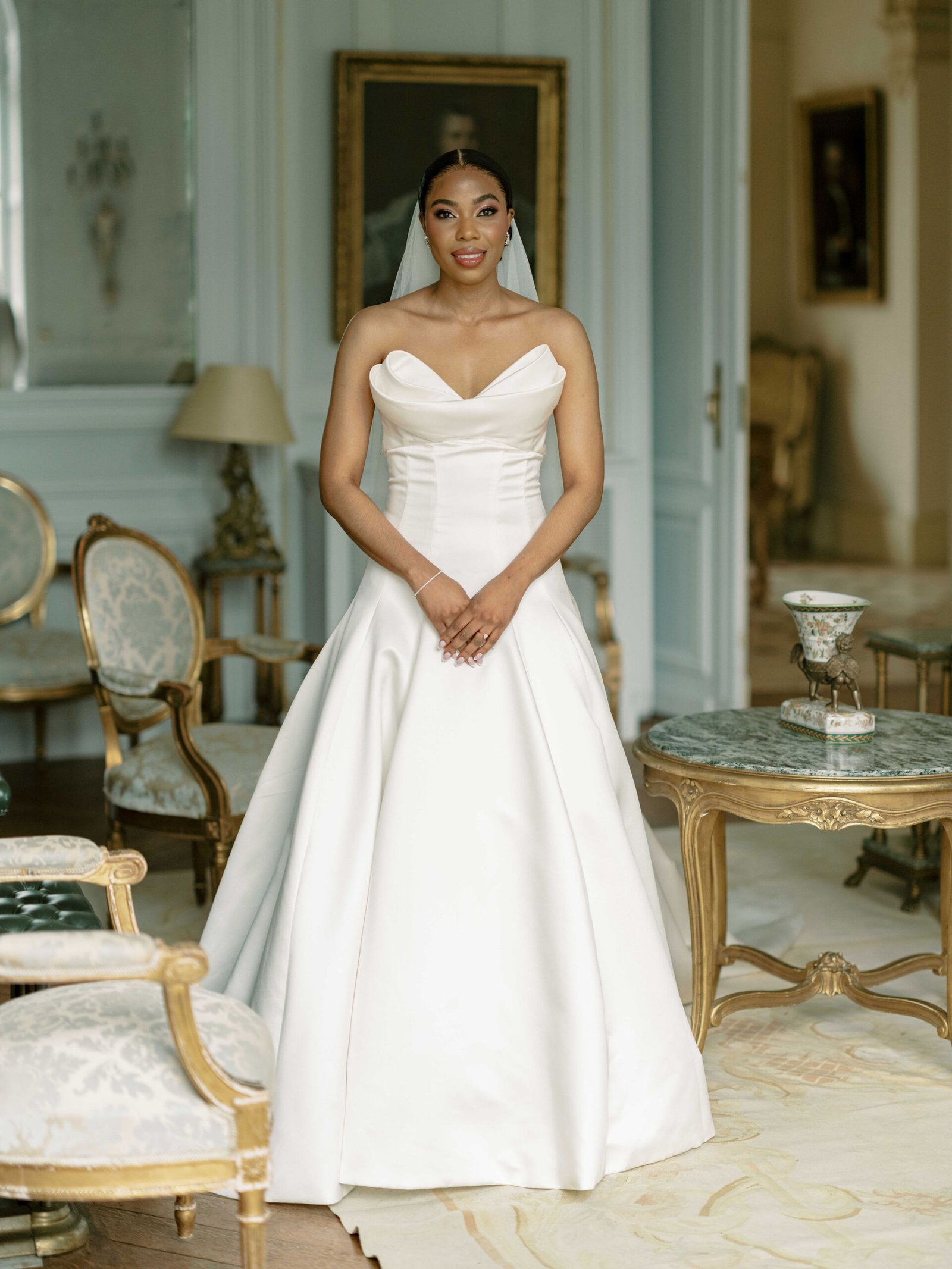
Then there is the Louis XV salon, which served as the bridal suite for the morning preparations. Gilded mirrors, faded silk wallpaper, furniture that belongs in a museum but somehow still feels lived-in. The salon faces east, which means the morning light is generous and warm without being harsh. For bridal portraits, it is close to ideal, the kind of room where you can use natural light alone and the results look like they were art-directed by a Renaissance painter. I do not say that lightly. I am critical of interiors. This one delivers.
The Day
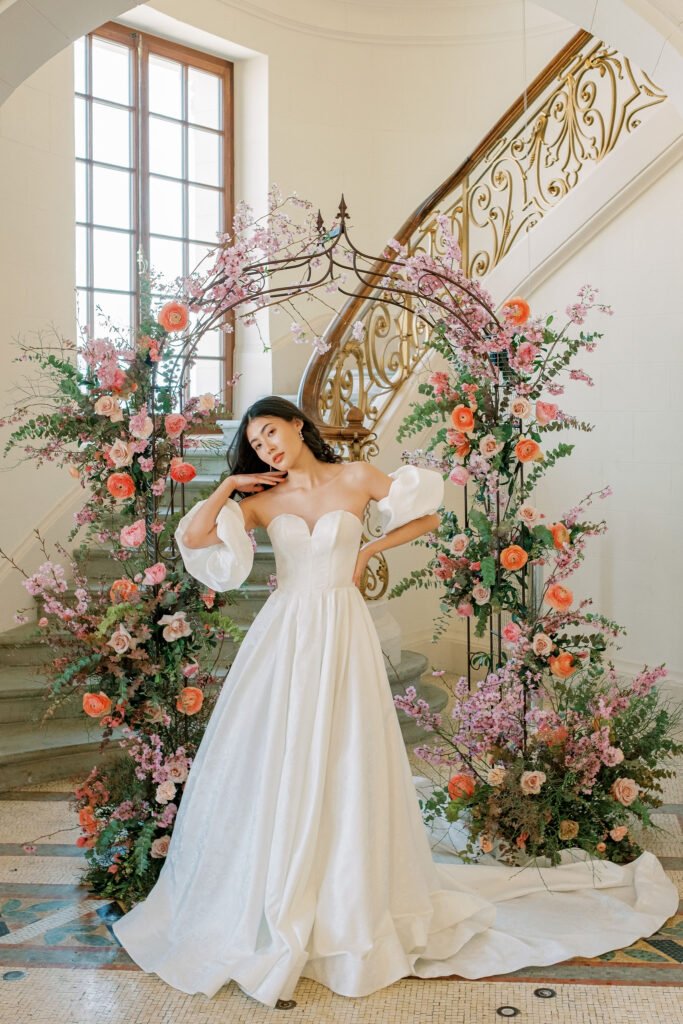
The bride got ready in the Louis XV salon with her mother and two sisters. I always prefer small getting-ready groups. Fewer people means less chaos, more genuine emotion, and better photographs. She wore a ballgown with a cathedral-length train that pooled across the parquet floor like spilled cream. I spent twenty minutes on her bridal portrait alone, which might sound excessive, but the light in that room was doing something extraordinary and I was not about to rush it. There are mornings when you have to fight for every frame, and mornings when the room hands you the photograph. This was the latter.
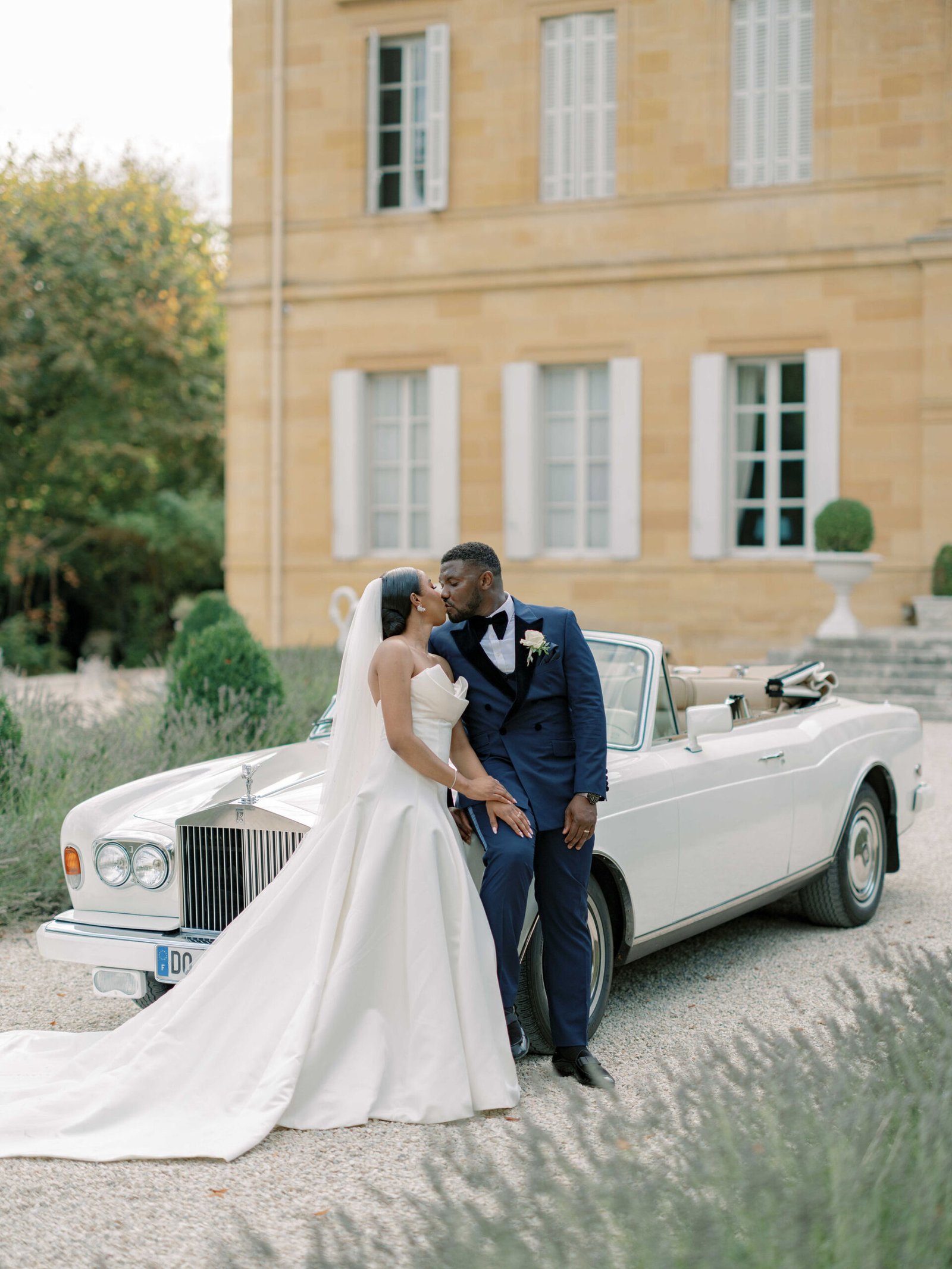
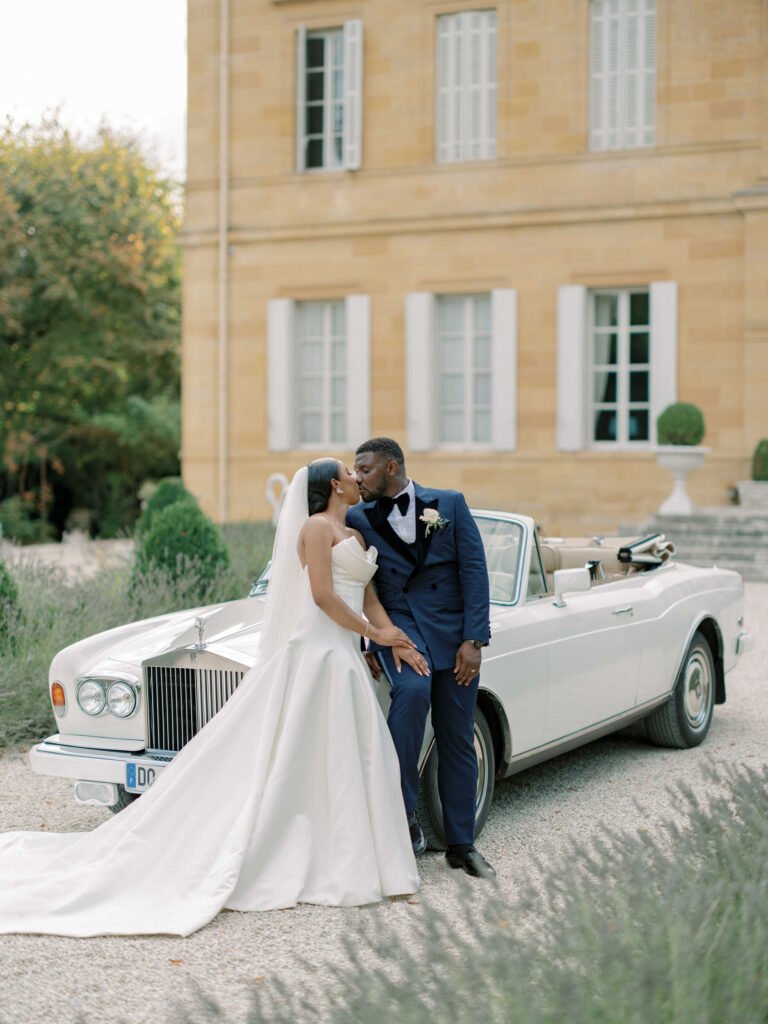
The arrival was by vintage Rolls-Royce, cream and burgundy, polished to a mirror finish, the kind of car that makes everyone stop and stare regardless of whether they care about cars. I positioned myself at the end of the gravel drive where the château façade fills the background, and waited. The moment the car appeared through the tree-lined approach, framed by the autumn canopy, I knew the image would work. Some arrivals are ceremonial. This one felt cinematic. The couple stepped out into the late afternoon sun, and the limestone behind them caught the light in a way that made the entire scene glow.
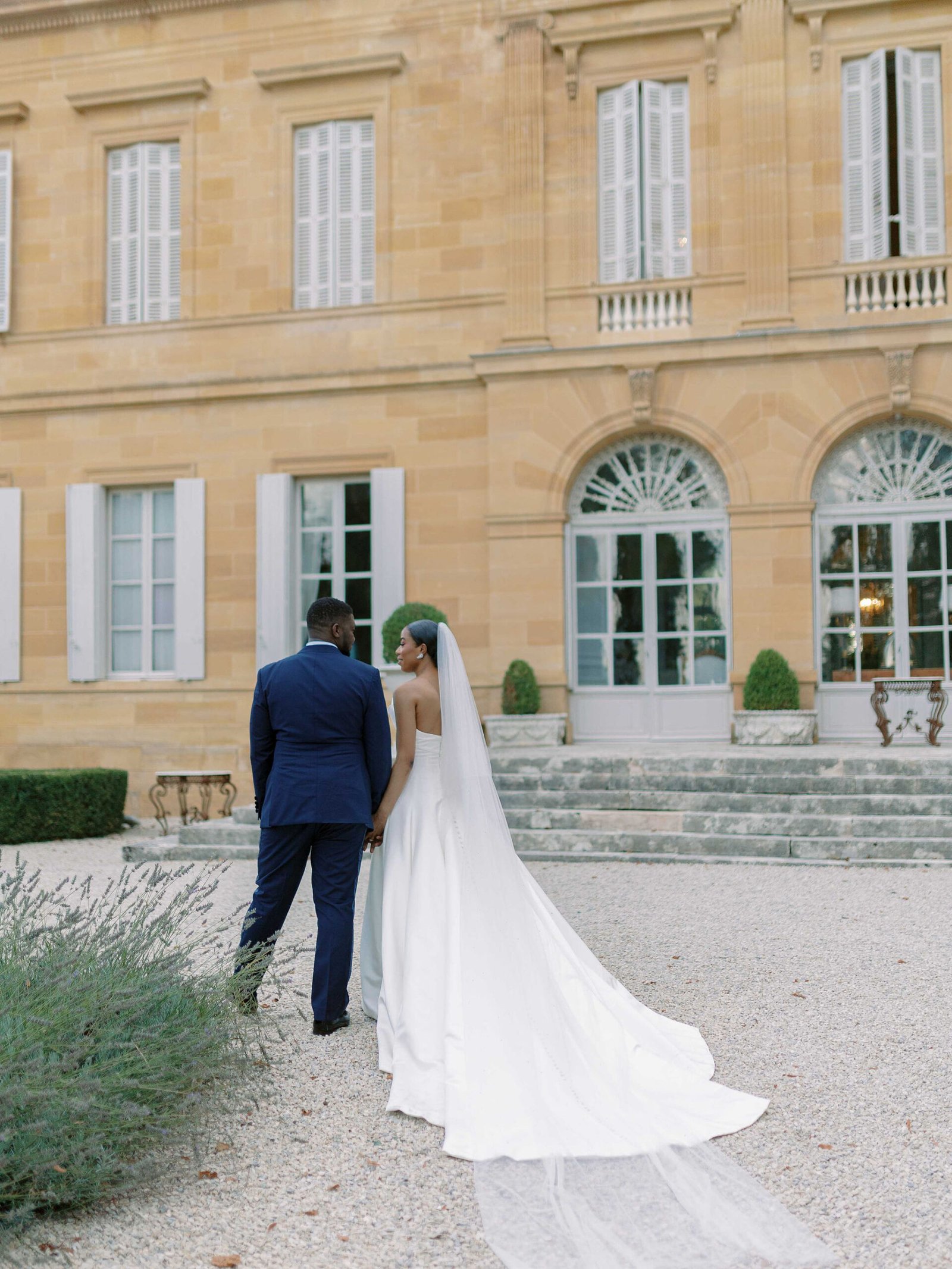
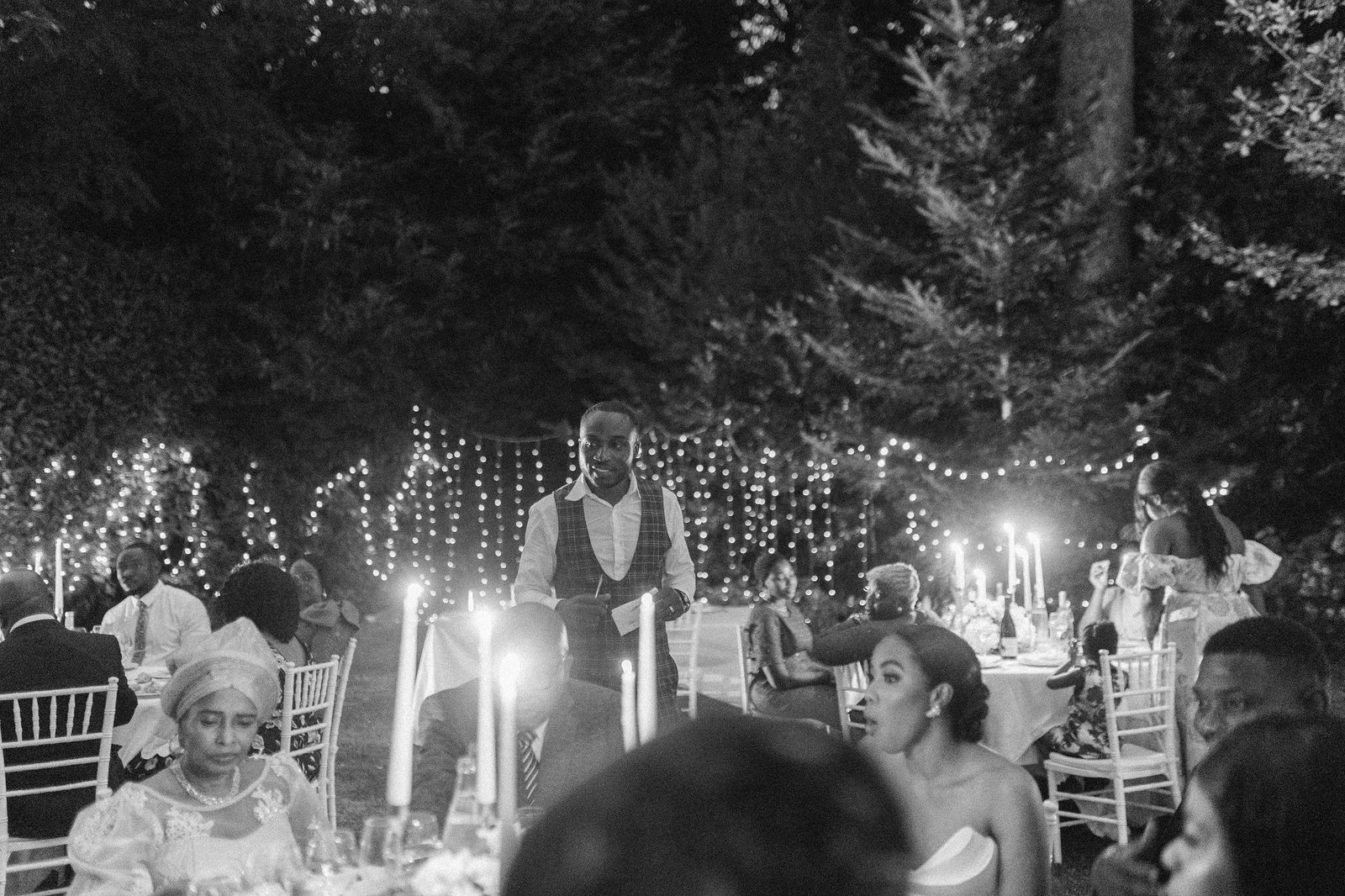
The ceremony in the gothic chapel was emotional in the quiet, concentrated way that small chapels encourage. Voices carry differently in stone rooms, every word felt weighted, deliberate. Afterward, I took the couple to the main façade for portraits. The bride’s cathedral train spread across the stone steps, and the warm Dordogne light was doing exactly what I had hoped it would do. We worked quickly and calmly. I gave minimal direction. With a backdrop like that, overposing would have been a mistake. The evening reception unfolded under the stone arches, strung with fairy lights and lit by candlelight. Speeches were given, tears were shed, and the dancing went on long past the point where I should have stopped shooting. I did not stop.
The Light
I shoot with a Fujifilm GFX medium format system, and one of the things I love about that sensor is how it handles warm tones. In the Dordogne in October, warm tones are all there is. The golden hour here is not a brief window. It is a slow, extended event. The sun drops gradually behind the hills, and the limestone walls act almost like reflectors, bouncing that amber light back into every shadow. Skin tones go rich and luminous. Fabrics pick up a warmth that no filter could replicate. I made a conscious decision early in the day to let the environment dictate my color palette rather than imposing my own, and I am glad I did. The Dordogne autumn light is so specific, so particular to this region, that fighting it would have been foolish.
What I find fascinating about photographing at La Durantie is the way the stone changes throughout the day. In the morning, it reads almost white: clean, cool, architectural. By mid-afternoon, it starts to warm. And by golden hour, it becomes this deep, saturated honey tone that makes everything in front of it look like an oil painting. I shot sixty-two images for the final wedding gallery, and the color shift from first frame to last tells the entire story of the day without a single word.
What This Wedding Taught Me
I have a tendency to over-plan. I arrive at venues with shot lists, lighting diagrams, and backup plans for my backup plans. At La Durantie, I learned, again, because I apparently need to relearn this regularly, that the best photographs often come from slowing down and responding to what is actually in front of me. The bridal portrait in the Louis XV salon was not on my shot list. The Rolls-Royce framed by the autumn canopy was a last-second decision. The aerial of the estate at dusk was something I almost did not attempt because I was worried about losing the remaining light for ground-level portraits. Every one of those images ended up among my favorites from the day.
The couple said something in their review that has stayed with me: « Franklyn captured the soul of our celebration. Every photo transports us back to that magical autumn day in Dordogne. » I think what they are responding to is not technical skill. It is presence. Being there fully, with the camera as an extension of attention rather than a barrier to it. La Durantie made that easy. The venue is so visually generous that it freed me to focus on emotion rather than composition. That is a rare gift, and I do not take it for granted.
For Couples Considering La Durantie
If you are planning a wedding at Château de la Durantie, my honest advice is this: trust the venue. Do not overload it with décor it does not need. The stone arches, the chapel, the limestone façade: they are the décor. Keep your florals organic and tonal. Schedule your ceremony for late afternoon if at all possible, because the chapel light between four and six in the evening is extraordinary. And if you are considering a vintage car for the arrival, do it. The gravel drive and the château backdrop were made for that moment. I would love to return to this estate. If you are drawn to the Dordogne and want photographs that feel like they belong to this particular landscape, let us talk about it.
Venue: Château de la Durantie | Photography: Franklyn K Photography
Published in: Vogue · Brides · Wedding Sparrow · Carats & Cake