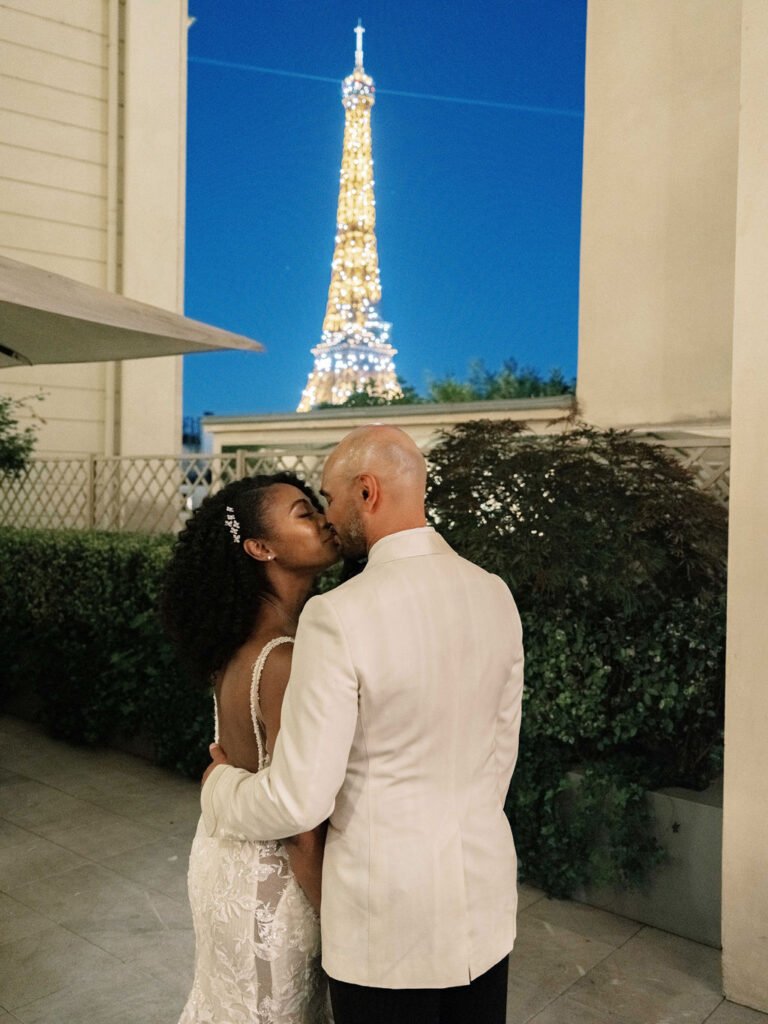
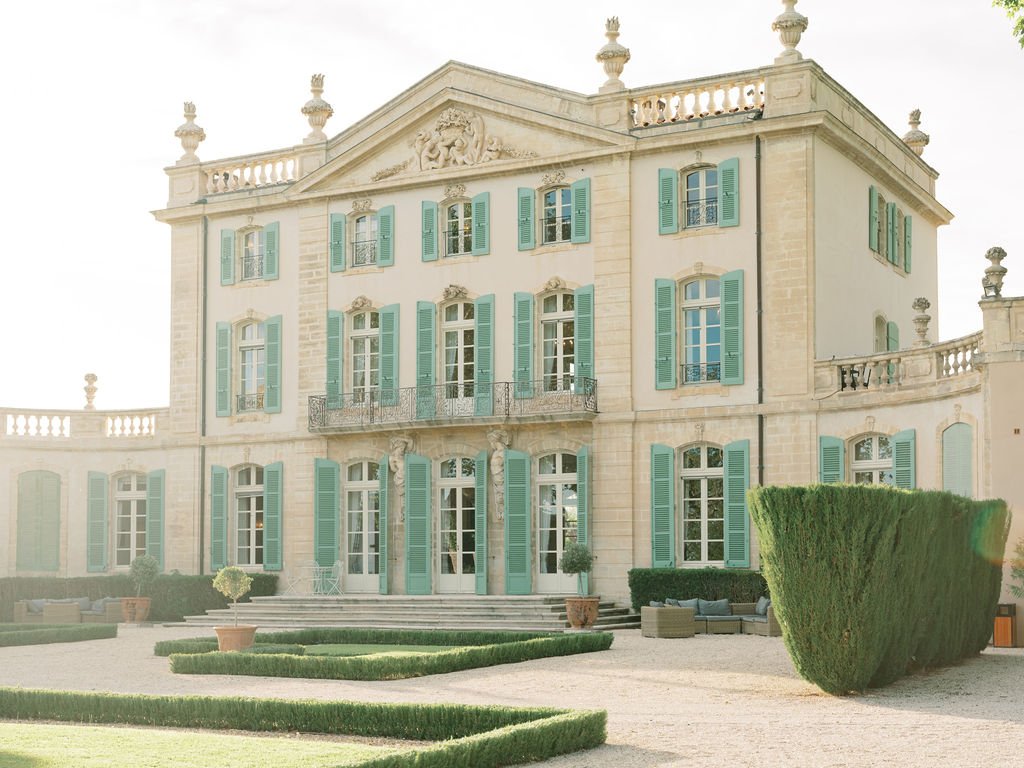
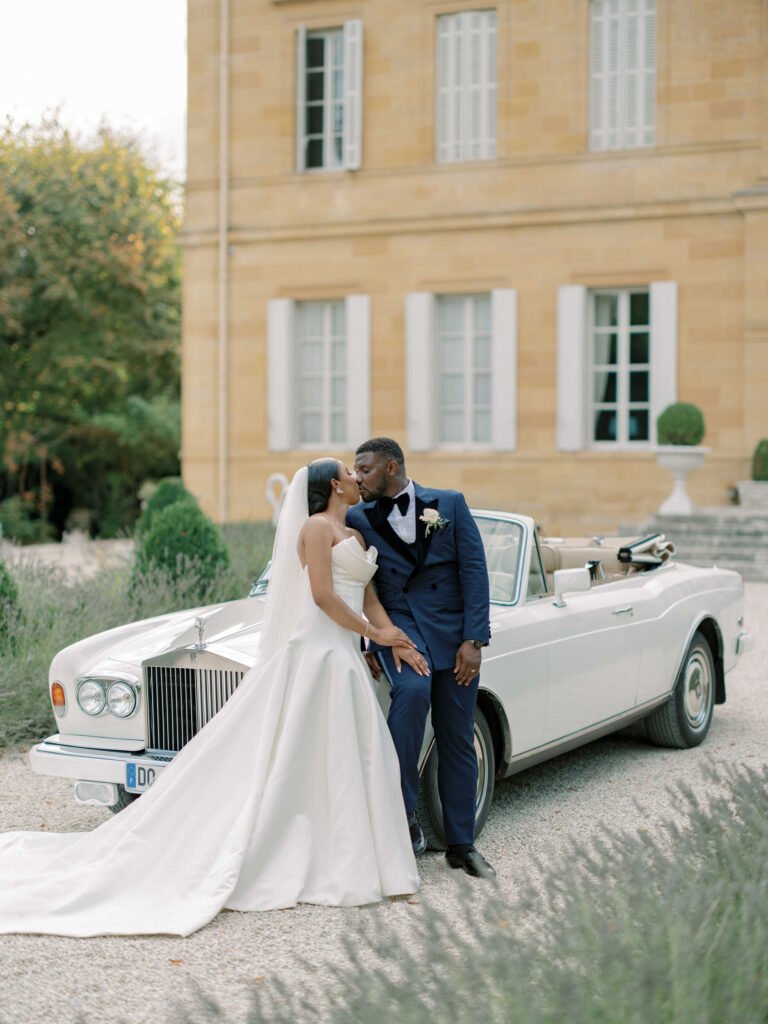
There are châteaux in France that whisper. And then there is Vaux-le-Vicomte, which does not whisper at all. It announces itself with the confidence of a man who built the most beautiful house in the kingdom and dared the king to be jealous. Nicolas Fouquet commissioned this place in 1656, assembling the greatest creative minds of his century: Le Vau for the architecture, Le Brun for the interiors, Le Nôtre for the gardens. The result was so magnificent that Louis XIV, seething with envy, had Fouquet arrested and hired the same trio to build Versailles. Every French person knows this story. Few pause to consider what it means: Vaux-le-Vicomte is the original. Versailles is the copy.
I have photographed weddings in dozens of historic venues across France and Europe. I keep returning to Vaux-le-Vicomte because no other place combines theatrical grandeur with genuine intimacy the way this château does. It is not a museum posing as a wedding venue. It is a living stage, and when the right couple steps onto it, something extraordinary happens.
The Château That Invented French Grandeur
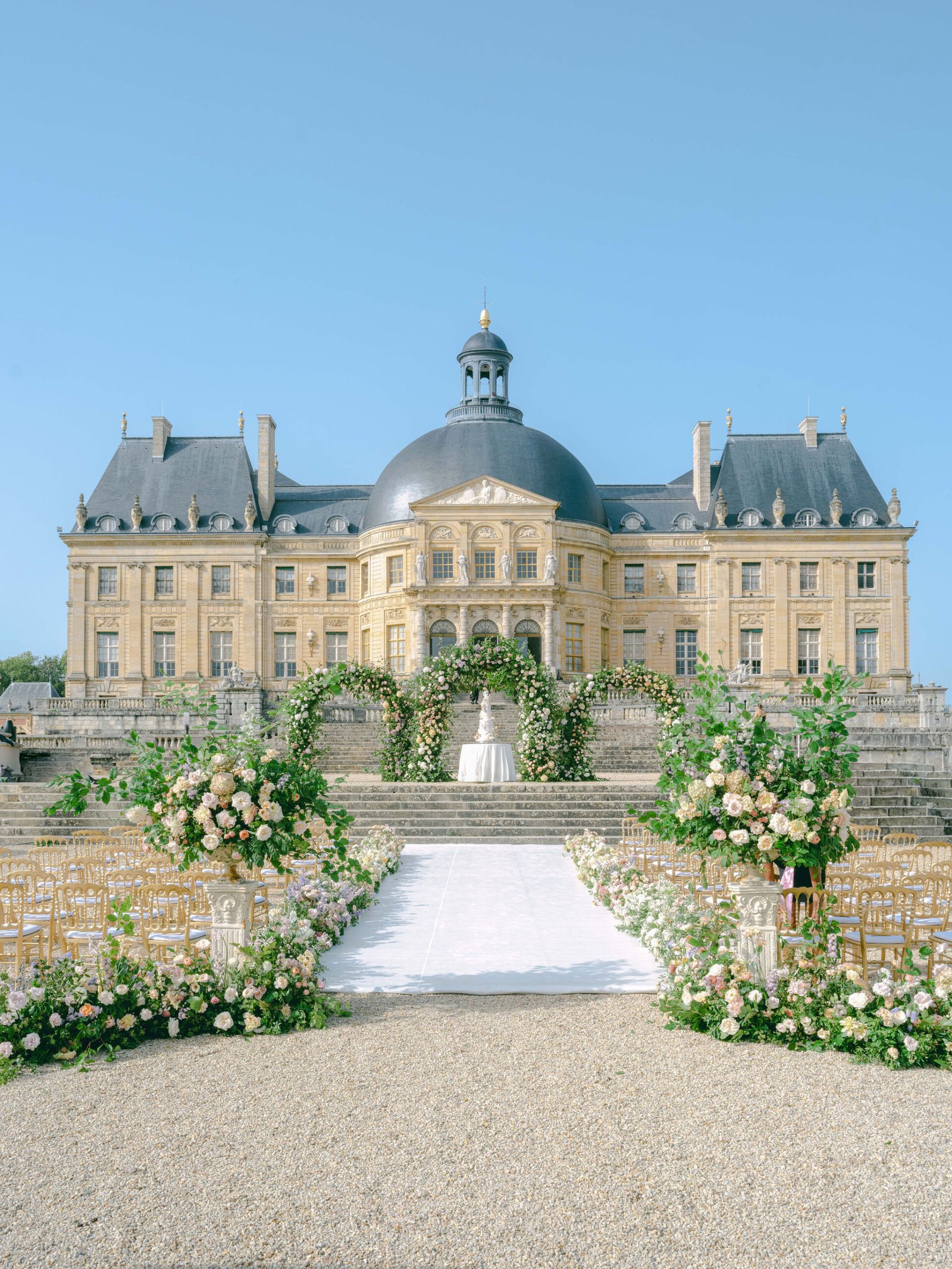
You approach Vaux-le-Vicomte along a tree-lined drive that reveals the château gradually, almost cinematically. The façade appears first as a pale shape against the sky, then sharpens into honey-coloured stone, tall windows, and that famous dome, the Dome Ovale, rising from the centre of the building like a crown. It is theatrical by design. Fouquet wanted his guests to gasp, and four centuries later, they still do.
The Dome Ovale is the architectural heart of the château and, for a wedding photographer, it is close to sacred ground. The room is an oval rotunda that soars three stories to a coffered ceiling painted by Le Brun. Light enters from high windows and falls in long, shifting columns that move across the stone floor as the day progresses. In the morning, the light is cool and directional, carving sharp lines across the caryatids that support the gallery above. By late afternoon, it warms to amber and fills the space like liquid gold. I have stood in this room at every hour and never seen it look the same way twice.
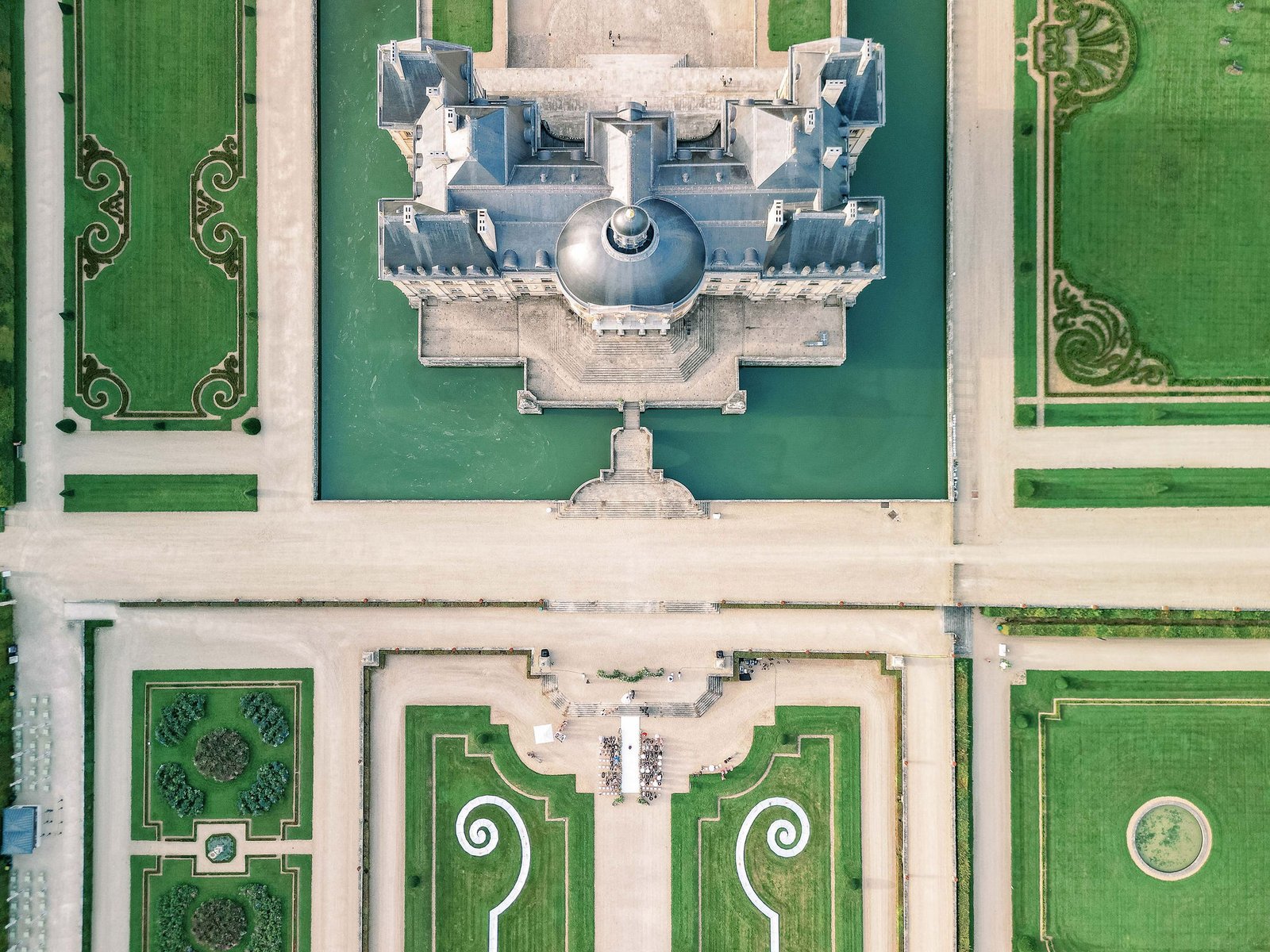
Beyond the château, the gardens of André Le Nôtre stretch south for nearly a kilometre in a masterwork of French formal design. Parterres of clipped boxwood, still water canals, fountains, and gravel allées radiate outward in perfect symmetry. From the air, the geometry is almost hypnotic: concentric circles, chevrons of green hedging, and long diagonal sight lines that pull the eye toward the horizon. At ground level, the effect is different but equally powerful. You feel held by the landscape, framed by it, as though Le Nôtre designed these gardens knowing that people would one day walk through them in white dresses and dark suits, needing a backdrop worthy of the occasion.
The Day
The ceremony took place at the foot of the grand staircase, framed by a floral arch that echoed the baroque curves of the architecture around it. I am particular about ceremony placement. Where you say your vows determines the visual language of the most important images from your wedding day, and this couple understood that instinctively. The staircase at Vaux-le-Vicomte is not merely a set of steps. It is a piece of theatre in stone: a double sweep of carved balustrades rising to the piano nobile, with enough visual depth behind the couple to create natural layers in every frame. The floral arch softened the formality just enough to keep the scene human, which is always the balance I am looking for.
After the ceremony, guests moved into the jardins for cocktails. There is a particular stretch of the garden between the first and second parterre where the light, on a clear afternoon in Île-de-France, does something I can only describe as cinematic. The hedges create a natural vignette. The pale gravel throws soft fill light upward onto faces. And because the gardens are so vast, groups of guests spread out organically, creating the kind of layered, spontaneous compositions that no amount of direction could manufacture. I moved through these moments quietly, working with a long lens to compress the architecture behind the guests and keep the focus intimate.
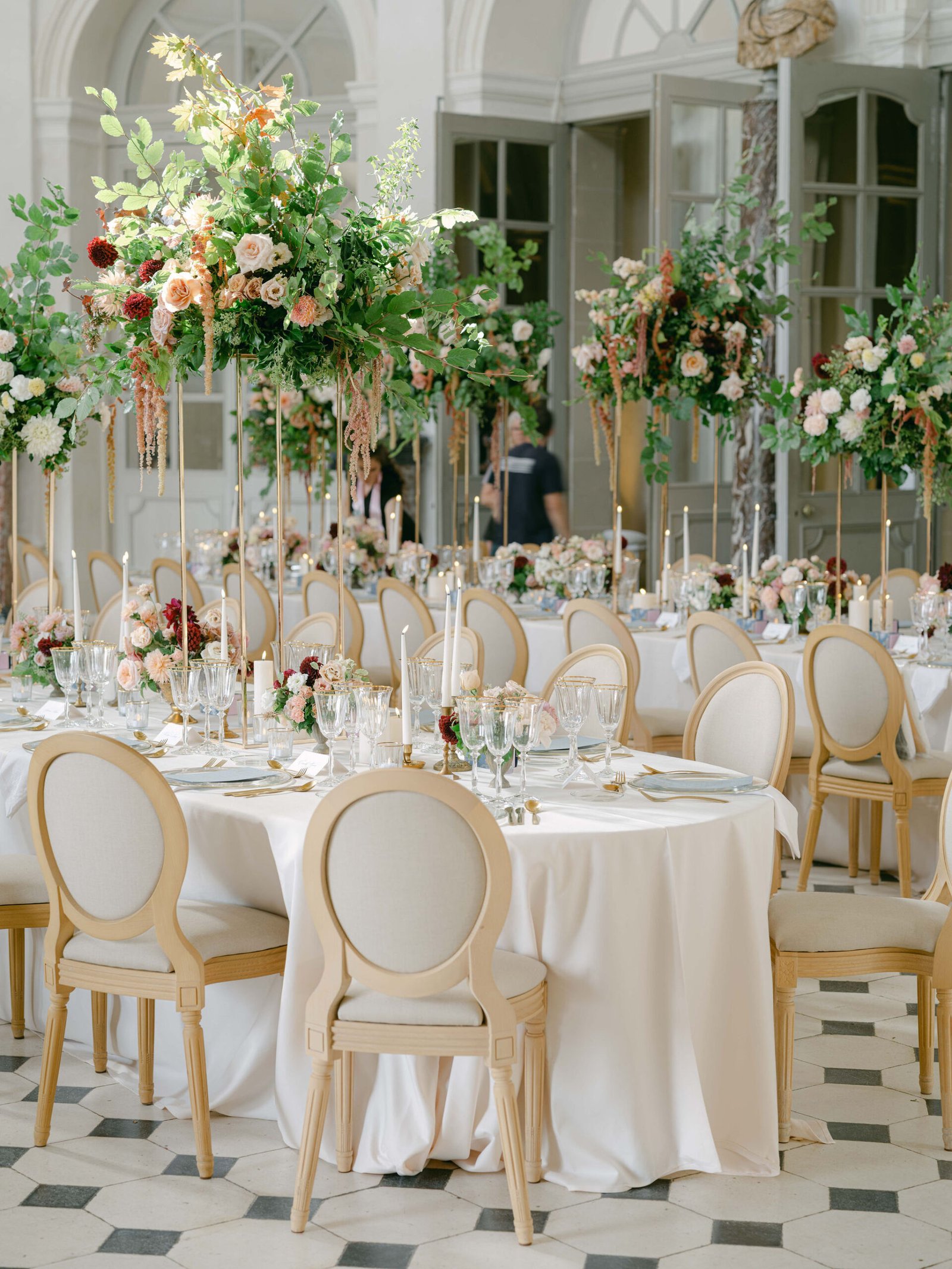
The reception dinner was set in one of the gilded salons on the ground floor, a long room with tall windows on one side and painted panels on the other. Tall floral centerpieces rose from the tables like baroque columns in miniature, their proportions deliberately scaled to match the height of the room. Candlelight reflected off the gilded mouldings and multiplied in the windowpanes, creating the impression that the room extended infinitely in every direction. This is the kind of detail that makes Vaux-le-Vicomte remarkable as a wedding venue: the interiors were designed to amplify light and drama, and when you add a hundred candles and the right flowers, they do exactly what Fouquet intended them to do three and a half centuries ago.
The Light and the Challenge
Vaux-le-Vicomte is not an easy place to photograph. I say this with admiration, not complaint. The interiors are magnificent but often dark. The gilded ceilings, which look radiant to the eye, can throw unpredictable colour casts onto skin tones. The contrast between the bright windows and the shadowed corners of a baroque salon can span eight or nine stops of dynamic range, which exceeds the latitude of most camera systems.
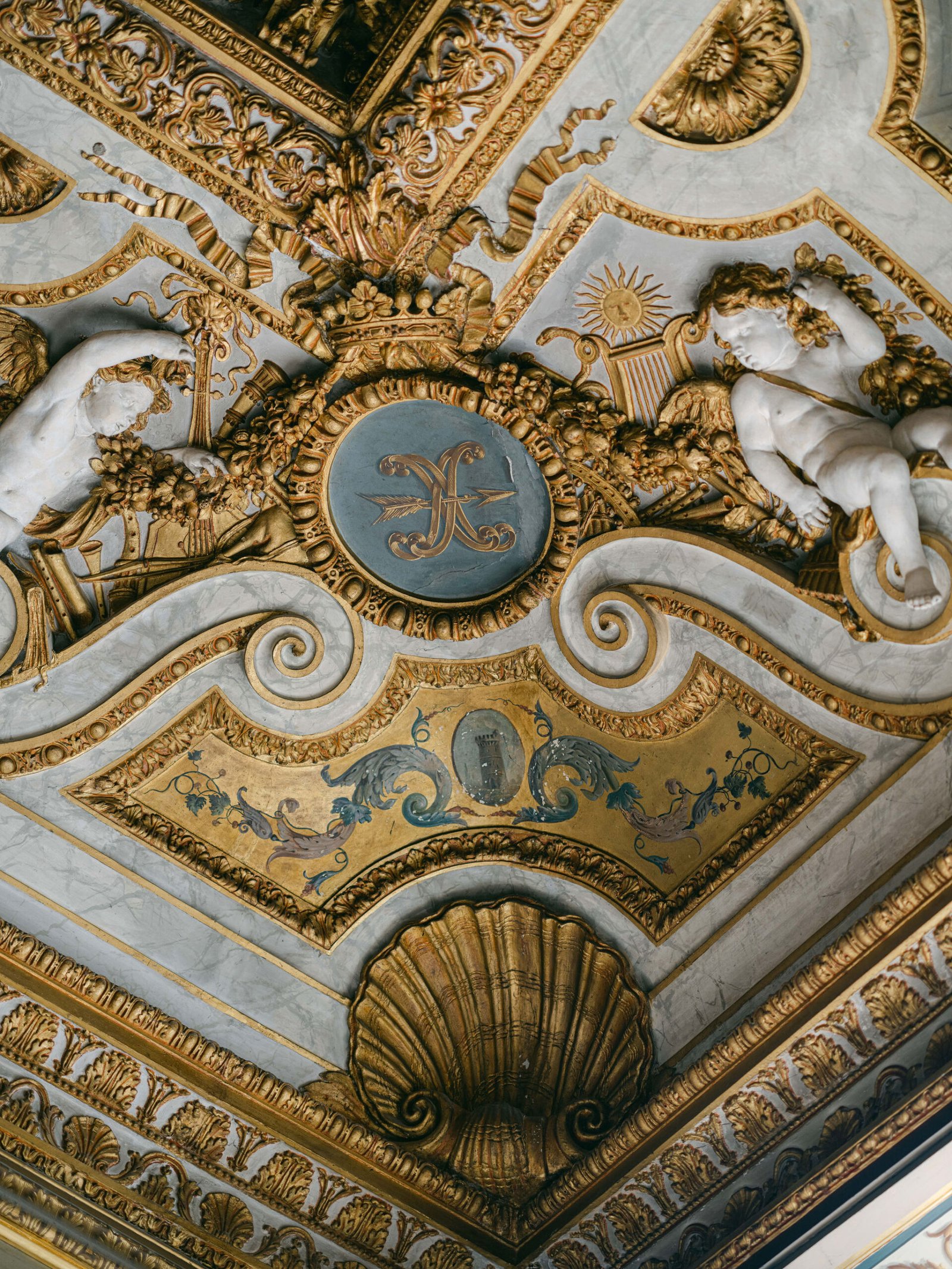
I shoot exclusively with the Fujifilm GFX medium format system, and Vaux-le-Vicomte is one of the venues where I am most grateful for that choice. The larger sensor captures shadow detail and highlight rolloff in a way that preserves the atmosphere of these rooms without sacrificing the luminosity of skin or fabric. In the Dome Ovale, I worked almost entirely with natural light, using the high windows as my key source and letting the curved walls act as enormous reflectors. The result is a quality of light that feels painterly, which is appropriate, given that Le Brun painted the ceiling above.
The gilded salon presented a different challenge. During the candlelit dinner, the ambient light was warm and low, and the gold leaf on the ceiling panels bounced that warmth back into the room in a way that could easily overwhelm a frame. I exposed for the candlelight itself, letting the gold recede into a soft halo rather than competing with the faces at the tables. The trick with interiors like these is to remember that the architecture is the supporting actor, not the lead. The people are the lead. The building simply gives them the best stage in France.
A Reflection on Theatre and Truth
Fouquet built Vaux-le-Vicomte to impress, and it cost him everything. There is a lesson in that story for anyone planning a wedding, though perhaps not the obvious one. The lesson is not about restraint. It is about intention. Fouquet did not build a modest house and hope people would notice. He built the most theatrical house in France and dared the world to look away. His mistake was political, not aesthetic. The aesthetic was perfect.
A wedding at Vaux-le-Vicomte works when a couple approaches it with that same conviction. Not arrogance, but clarity. You are choosing a venue that does not fade into the background. It participates. It performs alongside you. And when you meet that energy with your own authenticity, the result is something far more powerful than decoration. It is a day that feels as deliberate and confident as the architecture that surrounds it.
This is what I look for as a Vaux-le-Vicomte wedding photographer: the moments where the grandeur of the setting and the honesty of the emotion exist in the same frame, each making the other more vivid.
For Couples Considering Vaux-le-Vicomte
The château is located in Maincy, about fifty kilometres southeast of Paris, which places it within comfortable reach of the city while offering the seclusion that a private wedding demands. The venue accommodates both intimate ceremonies and large celebrations, with indoor and outdoor options that shift beautifully with the seasons. I recommend a late spring or early autumn date if you want the gardens at their most photogenic and the light at its most forgiving. Summer works well too, though the midday sun in the open parterre can be harsh, so I typically plan couple portraits for early morning or the hour before sunset.
If Vaux-le-Vicomte speaks to you, I would suggest also exploring Château de Villette, another extraordinary Île-de-France property with its own distinct character. Both venues reward a couple who appreciates French architecture and wants a wedding that feels rooted in history without being stiff or overly formal.
You can see the full gallery from this wedding on the Vaux-le-Vicomte gallery page.
If you are planning a wedding at Vaux-le-Vicomte or another historic French venue and want editorial photography that honours both the architecture and the people inside it, I would love to hear from you. Get in touch here and tell me about your plans.
Venue: Vaux-le-Vicomte | Photography: Franklyn K Photography
Published in: Vogue · Brides · Wedding Sparrow · Carats & Cake